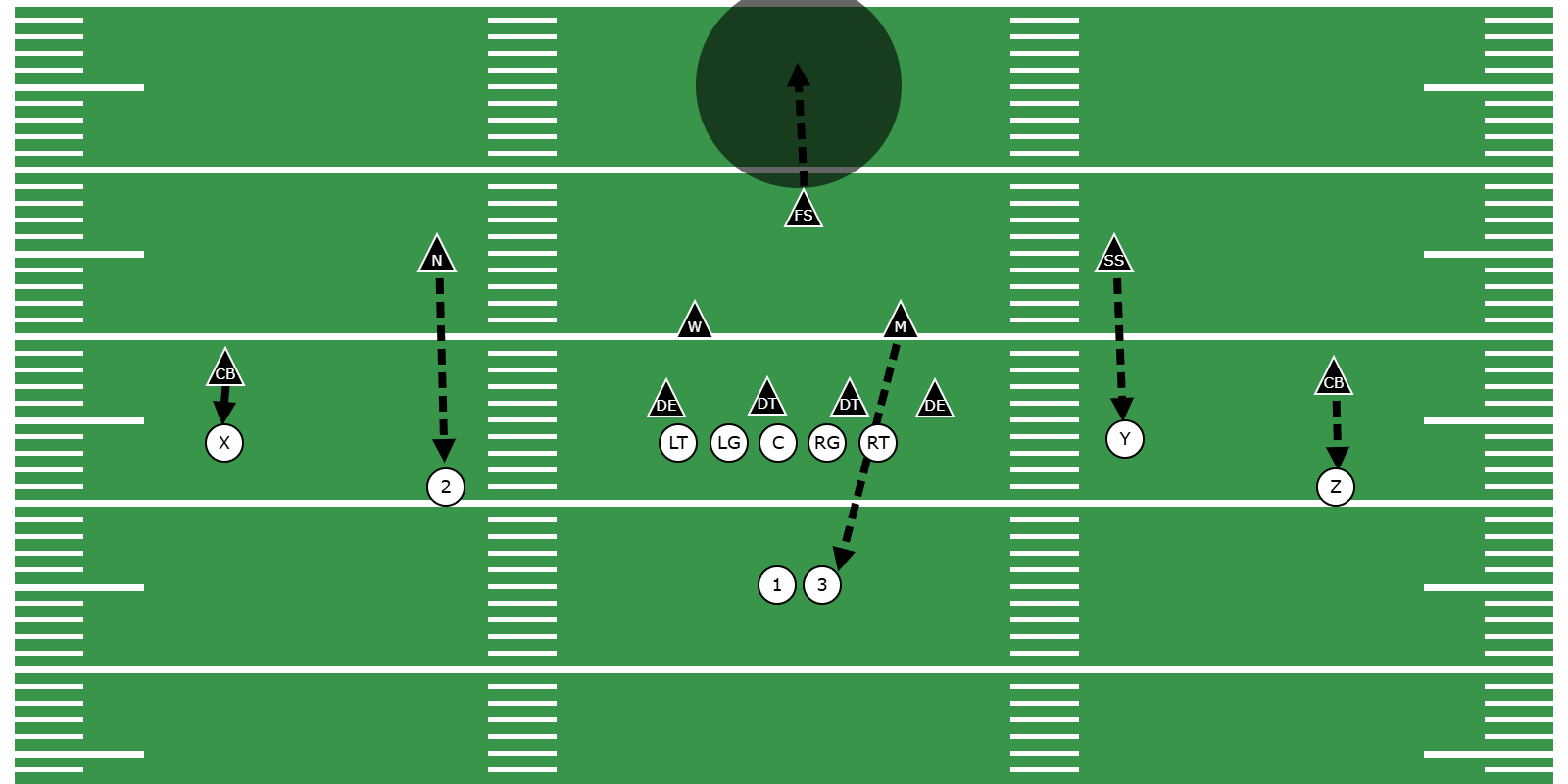
Cover 0
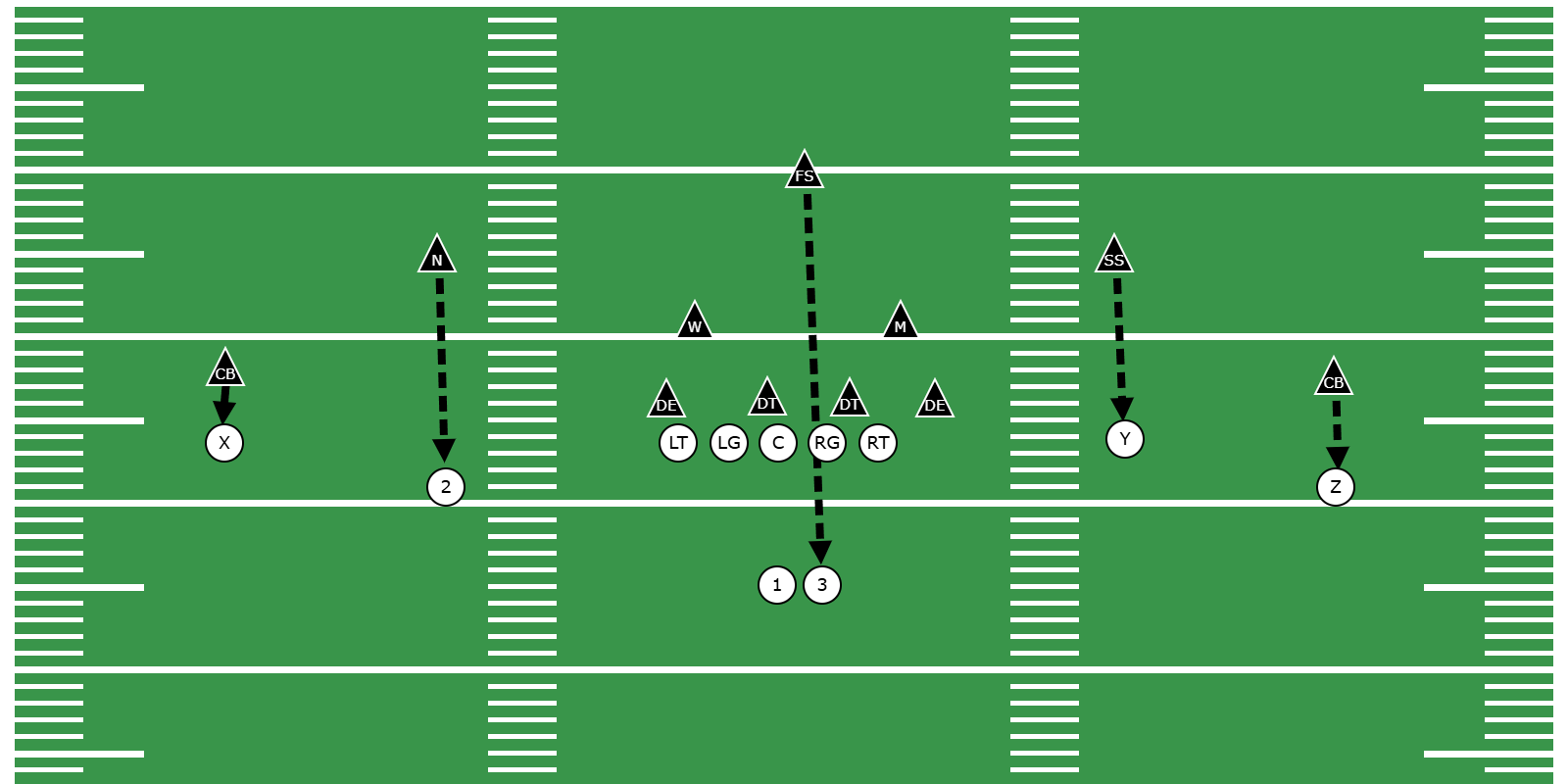
What Is Cover 0?
The easiest way to understand Cover 0 is by looking at the number of deep defenders.
In Cover 1, one safety normally protects the deep middle of the field. In Cover 2, two defenders divide the deep field. In Cover 0, there are zero dedicated deep-zone defenders.
Instead, the defense matches eligible receivers man-to-man.
Against an offense with five eligible receivers, five defenders may be assigned to those five receivers. The remaining defenders can then be committed to the pass rush or another defensive responsibility.
This is why Cover 0 is frequently associated with blitz pressure. Removing deep safety help gives the defense an additional player—or players—to attack the protection.
Basic Cover 0 Structure
The exact alignment depends on the defensive front, offensive formation, and pressure being called, but the structure follows several basic rules:
- Each eligible receiver must be accounted for in man coverage.
- Coverage defenders are responsible for their assigned receiver wherever that receiver goes.
- There is no dedicated deep safety helping the entire secondary.
- Unassigned defenders can rush the quarterback or participate in the run fit.
- Motion, shifts, bunch formations, and backfield releases require clear communication.
From a 4-2-5 defense, for example, the secondary and linebackers can match the offense’s eligible receivers while one or more remaining defenders join the four defensive linemen in the rush.
The important point is not which position blitzes. The defining feature is that the coverage has no deep zone help behind the man defenders.
Defender Responsibilities
Cornerbacks
Cornerbacks usually match the outside receivers. Because they do not have a deep safety protecting them, they must play with disciplined leverage and cannot casually allow a receiver to run past them.
Their technique may vary according to the call. A coach can use press, press-bail, or off-man technique, but the corner must understand that he owns the receiver vertically.
Safeties and Nickel Defenders
Safeties and nickel defenders may cover slot receivers, tight ends, or backs depending on the offensive formation and the defense’s matchup rules.
In many Cover 0 pressures, one of these defenders may also become a blitzer. When that happens, another defender must still account for every eligible receiver.
Linebackers
Linebackers commonly match running backs or tight ends. Their responsibility becomes especially important when a back releases late from the backfield.
A linebacker cannot become so focused on the blitz or run action that he loses his man assignment.
Pass Rushers
The rush must complement the coverage. Cover 0 is most effective when the quarterback feels pressure quickly. If the defense sends extra rushers but they are slow getting to the quarterback, the secondary is forced to survive in isolated man coverage for too long.
Leverage in Cover 0
Leverage is critical because defenders do not have universal safety help.
The exact leverage rule should be determined by the defensive system and the offensive threat. A defender may align inside to discourage an immediate slant, for example, or use outside leverage when help is intentionally being created elsewhere.
Whatever rule the defense chooses, it must be consistent.
Young defenders should know three things before the snap:
- Who is my man?
- What leverage am I playing?
- What do I do if the offense motions or changes the formation?
If those answers are unclear, the defense is not ready to play Cover 0 aggressively.
Why Defenses Use Cover 0
The primary advantage of Cover 0 is numbers.
By eliminating a dedicated deep safety, the defense can commit more players to pressure or the run fit. This can create several benefits.
Extra Pass Rushers
Cover 0 allows the defense to send more rushers than many protections are prepared to block. Even when the offense technically has enough blockers, the pressure can create difficult one-on-one protection assignments.
Fast Quarterback Decisions
The quarterback knows pressure may arrive quickly. That can force hurried throws, poor mechanics, protection mistakes, or incorrect reads.
Aggressive Run Support
Because defenders are not dropping into deep zones, the defense can fit the run aggressively. This can be valuable against offenses that rely heavily on the running game.
Simple Coverage Rules
At its most basic level, the coverage rule is easy to understand: cover your assigned player. That does not make Cover 0 easy to execute, but it can reduce some of the spatial decision-making required by more complicated zone-match systems.
Strengths of Cover 0
Cover 0 is particularly useful when the defense wants to dictate the play rather than react to it.
Its major strengths include:
- Maximum pressure potential. The defense can bring additional rushers without vacating a traditional deep zone.
- Strong numbers against the run. Defenders can attack their fits aggressively.
- Clear man assignments. Each coverage defender knows which offensive player he is responsible for.
- Useful against slow-developing plays. Play-action passes, deep route combinations, and longer quarterback drops can become difficult when pressure arrives immediately.
- Effective as a changeup. Even a defense that rarely uses Cover 0 can force an offense to prepare for it.
Weaknesses of Cover 0
The same structure that makes Cover 0 aggressive also creates its greatest risks.
No Deep Safety Help
If a cornerback is beaten vertically, there may be nobody behind him. A missed jam, bad angle, or lost step can become a touchdown.
Vulnerable to Man-Beating Routes
Slants, crossing routes, drags, pivots, and other routes designed to create separation against man coverage can be effective if the quarterback has time to throw.
Rubs, Picks, Bunches, and Stacks
Offenses can create traffic that makes it difficult for defenders to stay attached to their assignments. Youth defenses must have a simple plan for bunch and stack formations rather than trying to improvise after the snap.
Mobile Quarterbacks
When defenders turn and run with receivers, fewer eyes may remain on the quarterback. If the rush creates an escape lane instead of containing the quarterback, a mobile quarterback can find open grass.
Missed Tackles
A completed short pass can become a large gain because other defenders may be occupied by their own man assignments. Open-field tackling is therefore extremely important.
Try The Interactive Playbook Tool: Cover 0
Draw your own Cover 0 concept based play diagram right here using our embedded interactive play designer demo:
GET STARTED: To get started simply click on any of the player icons in the diagram.
Start drawing your own plays like this and build your playbook with CoachYouths Playbook Designer.
Cover 0 Against Common Offensive Concepts
Quick Slants
Quick slants can punish defenders who give too much cushion or lose inside leverage. Pressure must arrive quickly, and defenders must understand how the defense wants to protect the inside release.
Mesh and Crossing Routes
Crossers force man defenders to navigate traffic. Communication and practiced rules for avoiding collisions are essential.
Screens
An aggressive rush can create opportunities for screens. Defenders must recognize when blockers release and avoid running themselves completely out of the play.
Running Back Releases
A back who initially appears to stay in protection can release late. The defender responsible for the back must maintain discipline rather than joining the rush unless the defensive rules specifically allow it.
Vertical Routes
Vertical routes test the defining weakness of Cover 0: no deep help. The rush must affect the quarterback before receivers can separate downfield.
Cover 0 and Pressure
Cover 0 does not automatically mean an all-out blitz, but the coverage is naturally suited to pressure.
A defense can pair Cover 0 with:
- A-Gap pressure
- Double A-Gap pressure
- Linebacker blitzes
- Nickel or corner pressure
- Overload pressure
- Run-focused pressure calls
The coverage and pressure should be installed together. Coaches should not teach the secondary one thing and then simply add blitzers later without explaining how the pressure changes timing and responsibilities.
The rush must also maintain lane integrity. Sending six defenders does little good if they all attack the same space and give the quarterback an easy escape route.
Pre-Snap Communication
Cover 0 can become difficult when the offense uses motion, shifts, bunches, or empty formations.
Before using the coverage in games, establish simple rules for:
- Who travels with motion.
- Whether the defense bumps assignments instead of traveling.
- How backs are assigned.
- How bunch formations are handled.
- How stack releases are handled.
- What happens when a tight end shifts across the formation.
For youth teams, fewer rules are usually better. A simple rule that every defender can execute at full speed is more valuable than a sophisticated adjustment that produces hesitation.
Coaching Cover 0 in Youth Football
Cover 0 should be taught from the coverage responsibilities outward, not from the blitz inward.
Young defenders often become excited about pressure and forget that the coverage must still account for every eligible receiver. Before adding an aggressive blitz package, coaches should make sure players can identify eligible receivers, communicate assignments, maintain leverage, and tackle in space.
A useful installation progression is:
- Align against a basic formation with no motion.
- Assign every eligible receiver.
- Practice man technique without a pass rush.
- Add running back releases.
- Add motion.
- Add bunch or stack formations if opponents use them.
- Install the pressure that will accompany the coverage.
- Practice the complete call at game speed.
If the team cannot consistently handle steps 1 through 4, adding more pressure will usually make the defense less reliable rather than more aggressive.
Common Youth Football Mistakes
Losing the Running Back
Linebackers frequently see the back block initially and immediately attack the quarterback. If the back then releases, nobody is left to cover him.
Watching the Quarterback
In man coverage, defenders can lose their assignment when they stare into the backfield. Teach defenders when they can safely locate the football and when their eyes must remain on their man.
Giving Away the Blitz
Young players often creep toward the line of scrimmage long before the snap. If disguise matters to the call, teach players to hold their normal alignment until the proper time.
Poor Rush Lanes
Extra pressure does not excuse poor fundamentals. Blitzers still need assigned paths and must understand quarterback contain.
No Plan for Motion
A Cover 0 call can collapse before the snap if two defenders point at each other while a receiver motions across the formation. Motion rules must be practiced, not merely discussed.
When to Call Cover 0
Cover 0 can be a useful call when:
- The defense wants immediate pressure.
- The offense is facing a long-yardage situation.
- The quarterback struggles when pressured.
- The offense uses slow-developing pass concepts.
- The defense has favorable man-to-man matchups.
- The offense is heavily committed to the run and the defense wants an extra fitter.
It may be a poor choice when the defense cannot match the offense’s receivers, when the offense consistently wins with quick man-beating routes, or when the defense has not practiced the communication required by the offensive formation.
Cover 0 vs. Cover 1
Cover 0 and Cover 1 both commonly use man coverage underneath, but the difference is significant.
Cover 0: No dedicated deep safety. The defense gains another player for pressure or another responsibility, but every coverage defender has less protection against a vertical loss.
Cover 1: One defender typically plays the deep middle. The defense sacrifices one potential rusher to gain a safety net over the top.
That tradeoff makes Cover 0 the more aggressive of the two structures.
Key Coaching Points
- Account for every eligible receiver before the snap.
- Make man assignments unmistakably clear.
- Establish leverage rules and teach why they matter.
- Practice running back releases and offensive motion.
- Do not allow blitzers to destroy rush-lane integrity.
- Teach open-field tackling because help may be occupied elsewhere.
- Have a specific answer for bunch and stack formations.
- Make the pressure arrive quickly enough to justify removing deep help.
- Keep youth adjustments simple enough to execute without hesitation.
Final Thoughts
Cover 0 is an aggressive coverage built around a straightforward tradeoff: the defense gives up deep safety help in exchange for an additional defender who can pressure the quarterback, strengthen the run fit, or serve another immediate responsibility.
When the rush and coverage work together, Cover 0 can disrupt timing and force an offense to react quickly. When the pressure fails or a defender loses his matchup, the absence of deep help can turn a small mistake into an explosive play.
For youth coaches, the goal should not be to make Cover 0 complicated. Teach clear man assignments, disciplined leverage, sound tackling, simple adjustment rules, and a coordinated rush. Once those fundamentals are dependable, Cover 0 can become a useful aggressive tool rather than a gamble.
Related Articles
Published by CoachYouths Staff on 08/25/2026
You are NOT currently logged in, you may login or signup for FREE at any time: