Cover 1
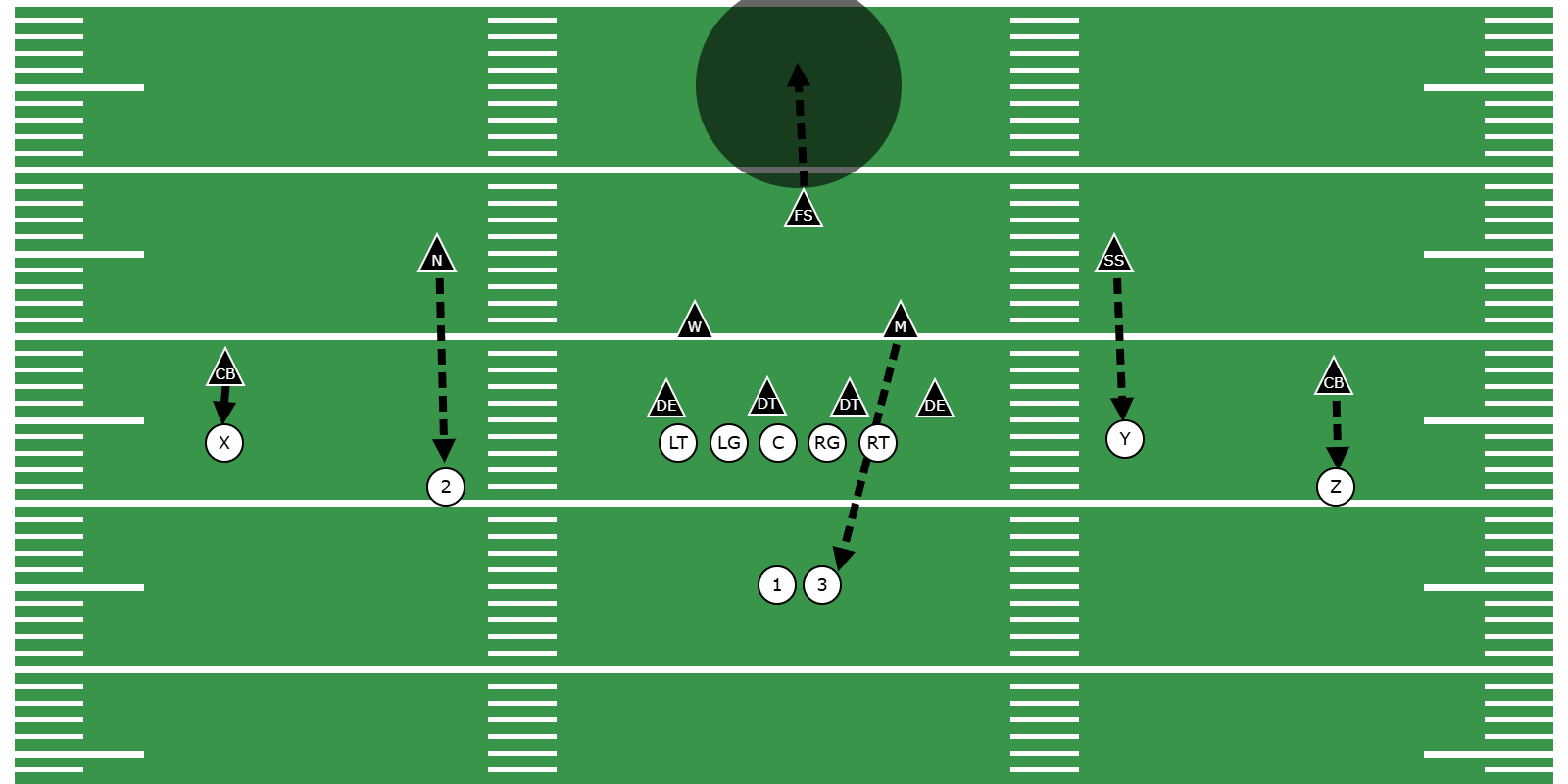
What Is Cover 1?
The number in a coverage name generally identifies the number of defenders responsible for the deep portion of the field.
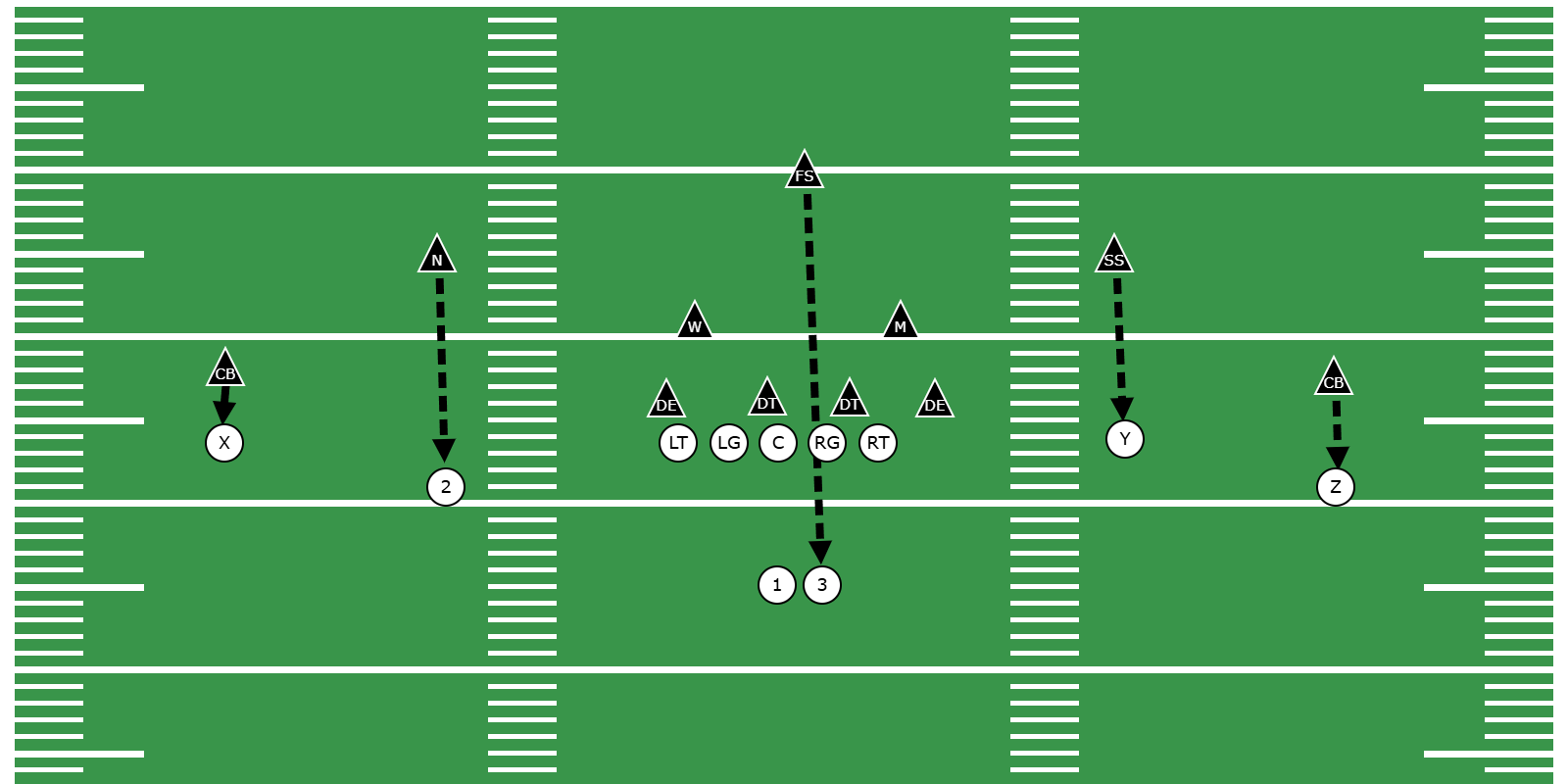
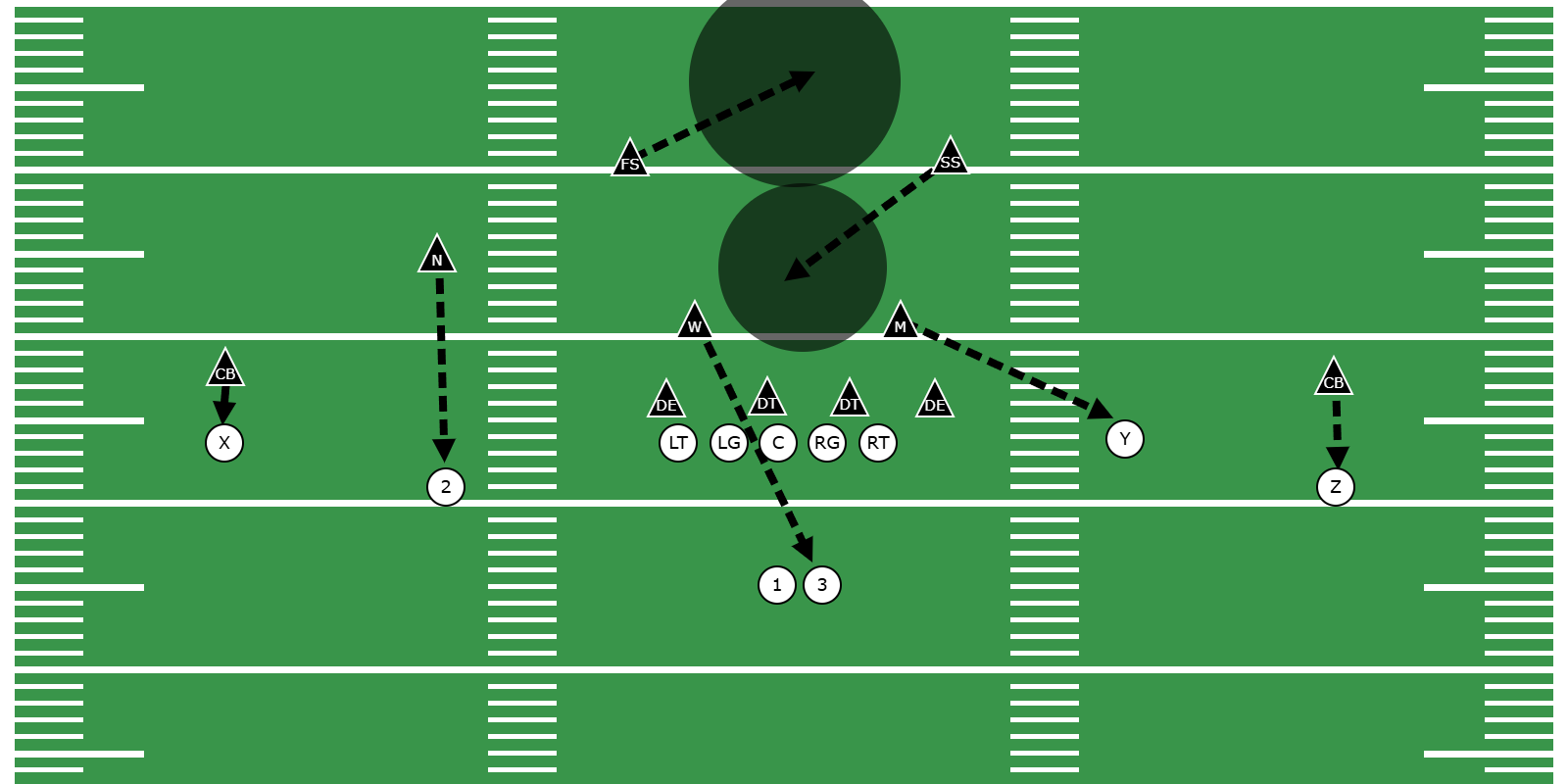
In Cover 1, one defender—usually a safety—plays the deep middle.
The other coverage defenders are assigned man-to-man responsibilities against eligible receivers.
Against an offense with five eligible receivers, five defenders can match those receivers while one safety protects the deep middle. The remaining defenders are available for the pass rush, quarterback responsibility, underneath help, or the run fit depending on the defensive call.
This makes Cover 1 different from Cover 0.
Cover 0 has no dedicated deep safety. Cover 1 sacrifices one potential rusher or underneath defender in exchange for protection against explosive vertical plays.
Basic Cover 1 Structure
Although exact assignments depend on personnel and formation, the basic structure includes:
- One deep middle safety.
- Man coverage on eligible receivers.
- Defined leverage rules for each man defender.
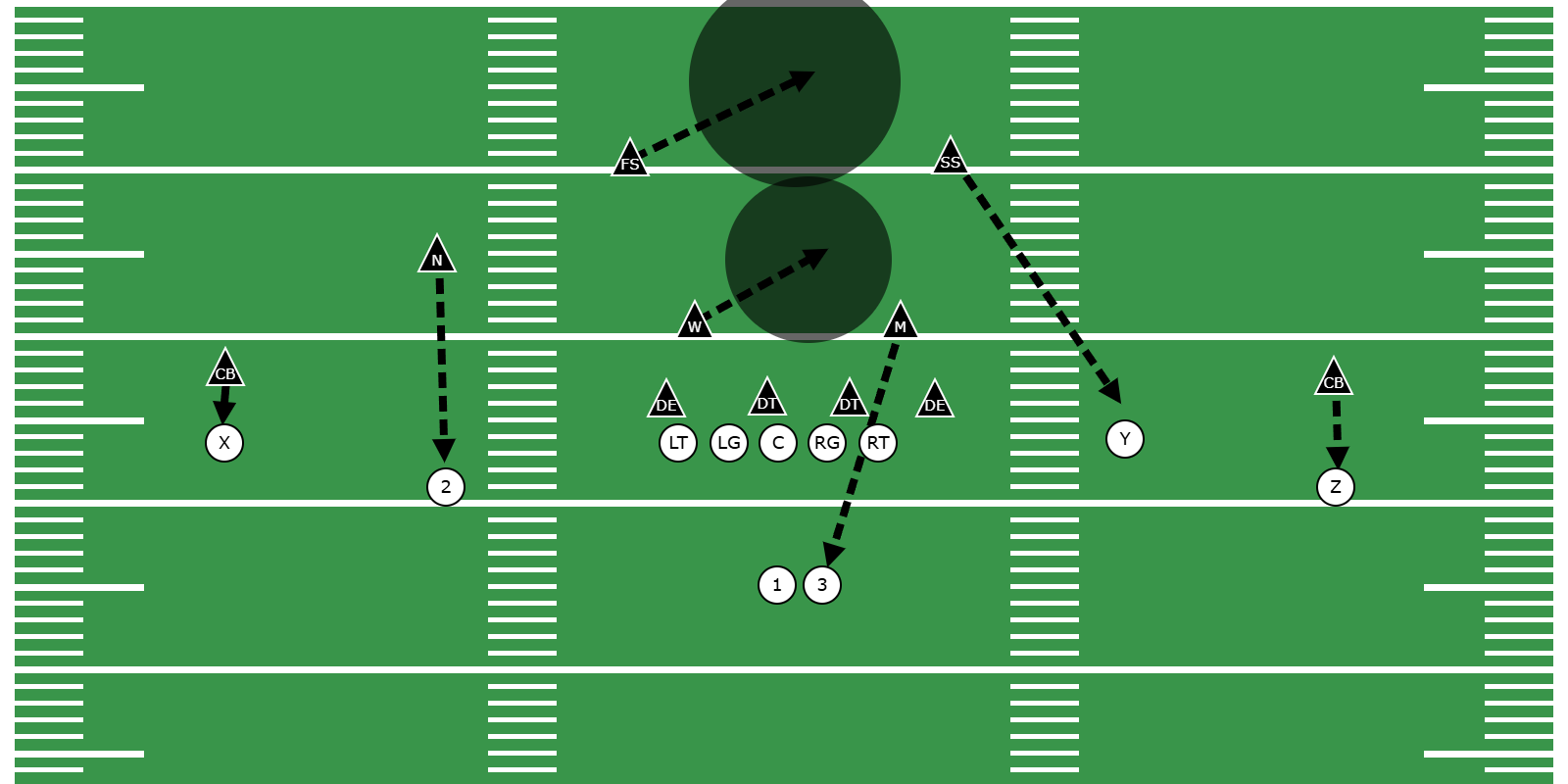
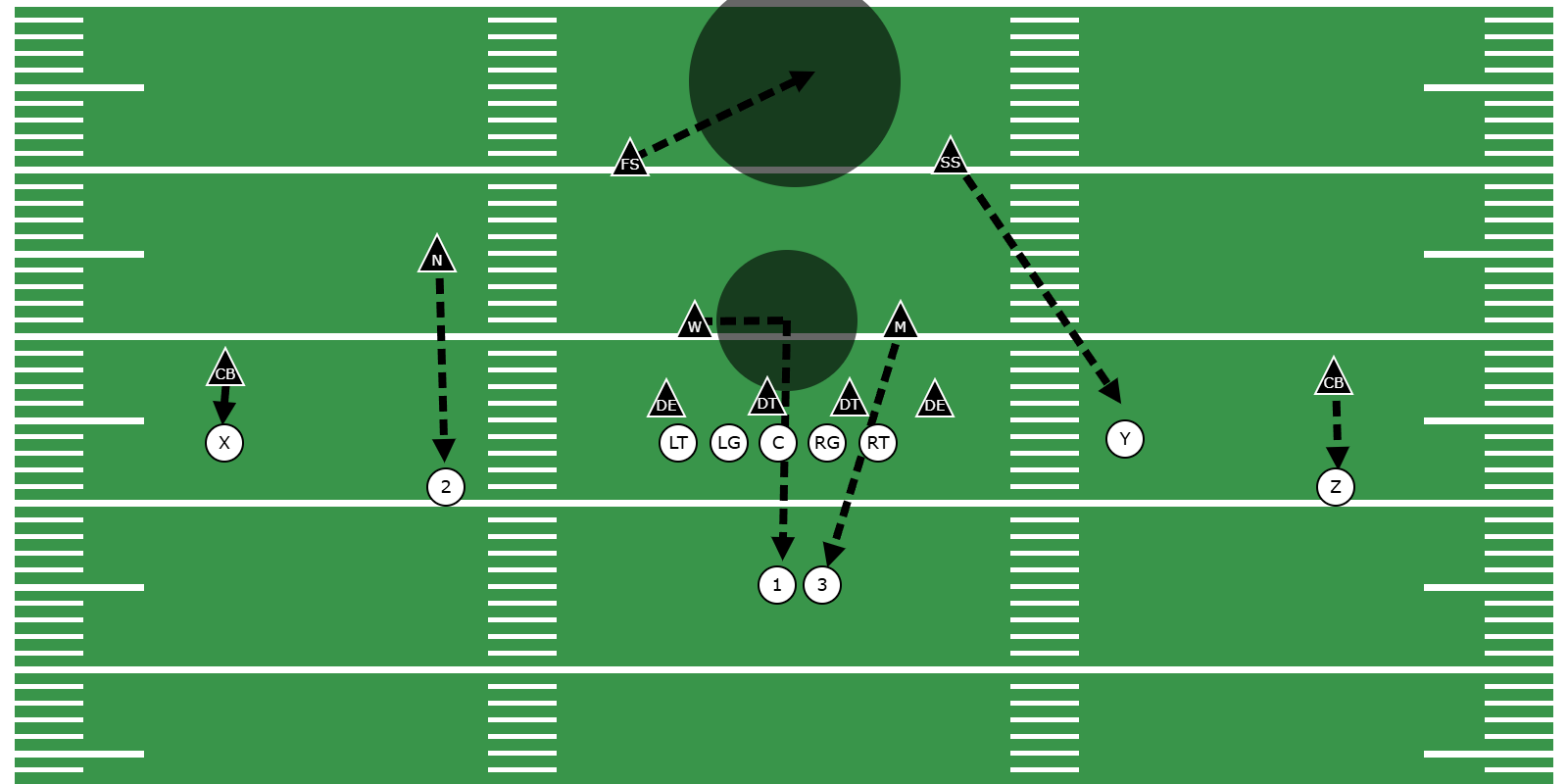
- Remaining defenders assigned to rush, run fits, quarterback responsibility, or another underneath role.
- Clear rules for motion, shifts, bunches, and backfield releases.
A 4-2-5 defense is a natural example because its five defensive backs can provide flexible matchup options against spread formations while a safety can remain in the deep middle.
Cover 1, however, is a coverage concept rather than a specific formation. It can be played from many defensive fronts and personnel groupings.
The Deep Safety’s Responsibility
The post safety is what separates Cover 1 from pure Cover 0.
His first responsibility is to stay deeper than the deepest receiver and prevent an easy touchdown over the top.
The safety should read the developing route distribution and quarterback while maintaining enough depth to help either side of the field.
He cannot chase every short route.
If the safety drives aggressively on an underneath throw and allows a receiver to run behind him, the defense has lost the primary protection built into the coverage.
Useful Safety Coaching Rules
For young safeties, simple rules are often best:
- Stay deeper than the deepest receiver.
- Do not allow the ball over your head.
- Read through the quarterback to the routes when possible.
- Maintain a good angle to either side of the field.
- Break downhill only when the throw declares.
The safety’s presence does not mean the cornerbacks can intentionally allow vertical separation. Safety help is assistance, not a replacement for sound man coverage.
Cornerback Responsibilities
Cornerbacks commonly match outside receivers.
Because there is a safety in the deep middle, corners can often use leverage that helps funnel receivers toward that safety. The exact technique depends on the defensive system, but inside help can influence how aggressively a corner protects certain releases.
Corners still need to:
- Maintain their assigned leverage.
- Stay in phase on vertical routes.
- Play through the receiver’s hands when the ball arrives.
- Avoid unnecessary eye contact with the quarterback.
- Finish with sound tackling when the pass is completed.
A corner who assumes the safety will cover his receiver for him will quickly create problems.
Linebacker Responsibilities
Linebackers may cover running backs, tight ends, or occasionally other eligible receivers depending on the offensive formation.
They must recognize that man coverage requires disciplined eyes.
If a linebacker is responsible for the running back, he cannot attack play-action or join the pass rush simply because the back initially stays near the quarterback. The back may release late.
Against a tight end, the linebacker must understand his leverage and avoid being beaten immediately across his face.
Cover 1 becomes much more reliable when linebackers clearly understand who they own before the snap.
Nickel and Safety Matchups
Modern formations frequently place athletic receivers in the slot, making nickel defenders and safeties important Cover 1 matchup players.
They may be responsible for:
- Slot receivers.
- Tight ends.
- Running backs displaced from the backfield.
- Receivers created by motion.
Coaches should consider personnel matchups when deciding who covers whom. Asking a slower linebacker to carry a fast slot receiver simply because it makes the chalkboard assignment easy may create a matchup the offense can exploit repeatedly.
Leverage in Cover 1
Leverage tells a defender which side of the receiver he is trying hardest to protect.
Because Cover 1 has a deep middle safety, underneath defenders can often use that help when establishing leverage. However, the exact rule should be consistent with the defensive system.
For example, a defense may teach corners to influence vertical releases toward the middle where the post safety can help. Another defense may alter leverage based on receiver split, formation, or offensive tendency.
Youth coaches do not need a complicated leverage system.
Every defender should simply know:
- Who is my man?
- Where is my help?
- Which leverage am I responsible for maintaining?
- What happens if my man motions?
Those four answers solve many Cover 1 problems before the ball is snapped.
Why Defenses Use Cover 1
Cover 1 provides an attractive balance between aggression and protection.
Man Coverage Underneath
Defenders can challenge routes directly rather than defending large areas of grass.
Deep-Middle Protection
The post safety reduces some of the risk associated with Cover 0 by protecting against vertical routes and helping erase certain mistakes.
Pressure Flexibility
Because the coverage structure does not require multiple defenders in underneath zones, the defense can still bring five-man pressure or create other aggressive rush packages.
Strong Run Support
Man defenders can react aggressively when their assigned receiver blocks, while the defense can use available front-seven players in the run fit.
Clear Matchup Responsibilities
Players can often understand the basic rule quickly: cover your assigned receiver while the safety protects the deep middle.
Strengths of Cover 1
Cover 1 can be effective against many offensive structures because it combines tight underneath coverage with a deep defender.
Its primary strengths include:
- Protection against vertical touchdowns. The post safety provides help that Cover 0 lacks.
- Aggressive underneath coverage. Defenders can challenge receivers directly.
- Pressure flexibility. The defense can still commit additional players to the rush.
- Strong run support. Man defenders can trigger quickly when their receiver blocks.
- Useful against formations with clear matchups. The defense can assign favorable defenders to offensive threats.
- Flexible technique. Corners can play press, off-man, or other man techniques within the coverage structure.
Weaknesses of Cover 1
Cover 1 still relies heavily on individual man coverage.
Crossing Routes
Drags, mesh concepts, and deeper crossers can create separation as defenders chase receivers across the field.
Rub and Pick Concepts
Bunches and stacks can create traffic that interferes with man defenders.
Mismatches
The offense can use formation and motion to isolate a favorable matchup, such as a running back against a linebacker or a fast slot receiver against a slower defender.
Away From the Post Safety
The safety can only help one direction at a time. Good quarterbacks can manipulate the safety with their eyes and attack the opposite side.
Quarterback Scrambles
When defenders turn their backs to follow receivers, a mobile quarterback may find running space if the pass rush loses containment.
Try The Interactive Playbook Tool: Cover 1
Draw your own Cover 1 concept based play diagram right here using our embedded interactive play designer demo:
GET STARTED: To get started simply click on any of the player icons in the diagram.
Start drawing your own plays like this and build your playbook with CoachYouths Playbook Designer.
Cover 1 Against Common Offensive Concepts
Slants
Slants test inside leverage. Defenders must avoid allowing an uncontested release across their face while understanding where the post safety can and cannot help.
Mesh
Mesh creates natural traffic for man defenders. Defenses need practiced rules for navigating crossing receivers without colliding with teammates.
Four Verticals
The post safety becomes heavily stressed because multiple receivers can threaten deep space simultaneously. Man defenders must carry their assignments; the safety cannot cover every vertical route.
Running Back Option Routes
A running back isolated against a linebacker can create a difficult matchup. The defender must maintain leverage and avoid overcommitting before the route declares.
Play Action
Man defenders must remain disciplined. If their assigned player releases into a route, they cannot become trapped watching the backfield.
Cover 1 Against Motion
Motion is frequently used to identify and attack man coverage.
If a defender follows a receiver across the formation, the offense may recognize man coverage before the snap.
A youth defense should decide how it will handle motion before installing Cover 1 extensively.
Common approaches include:
- Travel: The assigned defender follows the receiver.
- Bump: Defenders exchange assignments as the formation changes.
- Check: The defense changes the coverage or adjustment based on motion.
Travel is often easiest to teach, although it can reveal the coverage. More sophisticated exchange rules may disguise the defense better but require additional practice and communication.
Cover 1 Against Bunch and Stack Formations
Bunch and stack formations are designed partly to make man coverage difficult.
If three receivers release from a tight bunch, defenders can collide or become screened by other routes.
Coaches need a specific plan.
Depending on the defensive system, defenders may:
- Lock onto individual receivers.
- Use banjo or switch rules.
- Play different levels to avoid traffic.
- Check into another coverage.
For younger teams, the best solution is usually the one players can communicate and execute consistently.
Cover 1 and the Run Game
Cover 1 can provide strong run support because defenders are matched directly to offensive players.
If a receiver blocks, his defender can often become involved in the run fit quickly.
However, man defenders must use disciplined eyes. A receiver can show a block temporarily before releasing downfield, and play-action can punish defenders who abandon their assignments too early.
The deep safety also needs a clear run-support rule. He should not attack downhill so quickly that play-action creates an uncontested vertical throw behind him.
Cover 1 and Pressure
Cover 1 pairs naturally with pressure because the defense can rush additional players while keeping one deep safety.
Possible combinations include:
- Linebacker blitzes.
- Nickel pressure.
- Safety pressure from a non-post defender.
- A-Gap pressure.
- Five-man overload pressure.
The advantage compared with Cover 0 is that the defense still has a deep-middle player if the quarterback gets the throw away.
That does not eliminate the risk. If pressure fails, underneath defenders may still be isolated for an extended period.
Coaching Cover 1 in Youth Football
Cover 1 should be installed by teaching the coverage before adding elaborate pressure packages.
A useful progression is:
- Identify all eligible receivers.
- Assign each receiver to a defender.
- Install the post safety’s deep-middle responsibility.
- Teach basic leverage.
- Practice man technique without a rush.
- Add running back and tight end releases.
- Introduce motion.
- Practice bunch and stack adjustments.
- Add the pass rush or blitz package.
- Practice complete calls at game speed.
The goal is to make assignments automatic.
If players are still pointing at each other when the ball is snapped, the defense needs simpler rules or more repetitions.
Man-Coverage Technique for Young Defenders
Youth defenders often make the mistake of trying to watch both the quarterback and receiver simultaneously.
That can cause them to lose the receiver completely.
Coaches should teach a progression appropriate to their technique system, but several principles remain useful:
- Maintain leverage.
- Stay balanced through the receiver’s release.
- Do not cross the feet unnecessarily.
- Match the receiver’s acceleration.
- Stay in phase when possible.
- Play the receiver’s hands when unable to locate the ball.
- Finish with a secure tackle.
The goal is not merely to stand near the receiver. The defender must prevent separation and finish the play.
Common Youth Football Mistakes
The Safety Gets Too Shallow
A young safety may chase underneath routes because they appear open. Once he moves forward, the defense loses its only deep protection.
Defenders Assume the Safety Will Save Them
The post safety provides help, but man defenders still own their assignments.
Linebackers Lose Running Backs
Backfield action can distract linebackers. If the back is their man, they must account for him if he releases.
Poor Motion Communication
Two defenders can end up covering the same receiver while another becomes completely uncovered.
Chasing Across Traffic
Against bunches and crossers, defenders may run directly into teammates. These situations must be practiced.
Losing Quarterback Contain
Man coverage can create large scramble lanes because coverage defenders are looking away from the quarterback.
When to Call Cover 1
Cover 1 can be a useful choice when:
- The defense matches up well with the offense’s receivers.
- The defense wants to challenge short and intermediate routes.
- A deep safety is needed to protect against explosive plays.
- The defense wants pressure flexibility without playing Cover 0.
- The offense relies heavily on timing routes.
- The defense wants aggressive run support.
Coaches should be more cautious when the offense has significant matchup advantages, uses extensive bunch and stack formations, or features a quarterback who consistently creates explosive plays with his legs.
Cover 1 vs. Cover 0
The difference is the deep safety.
Cover 0 assigns no defender to a deep zone. That allows the defense to use another player for pressure or run support but leaves man defenders without deep help.
Cover 1 keeps one safety in the deep middle. The defense gives up one potential pressure player in exchange for protection against vertical routes.
Cover 1 is therefore generally less aggressive than Cover 0 but provides a larger margin for error.
Cover 1 vs. Cover 3
Cover 1 and Cover 3 can both present a single-high safety before the snap, but their underneath structures are very different.
Cover 1 primarily uses man coverage underneath.
Cover 3 divides the deep field into three zones and normally uses zone responsibilities underneath.
This similarity in pre-snap structure can be valuable because a defense may show a similar shell while playing very different coverage after the snap.
Key Coaching Points
- Account for every eligible receiver.
- Keep the post safety deeper than the deepest threat.
- Establish simple, consistent leverage rules.
- Make sure defenders understand where their help is located.
- Practice running back and tight end releases.
- Establish motion rules before game day.
- Have an answer for bunch and stack formations.
- Maintain quarterback contain when coverage defenders turn their backs.
- Teach man defenders to finish with sound tackling.
- Add pressure only after the coverage responsibilities are dependable.
Final Thoughts
Cover 1 combines the aggressiveness of man-to-man defense with the protection of a single deep safety. That makes it one of football’s most useful man-coverage structures.
The coverage can challenge receivers, support pressure, and provide strong run support while still keeping a defender in position to prevent many vertical touchdowns. Its effectiveness, however, depends on disciplined man technique, clear leverage rules, reliable communication, and a safety who understands the importance of staying on top of the defense.
For youth coaches, Cover 1 does not need to become complicated. Give every defender a clear matchup, teach where the help is located, protect the deep middle, establish simple rules for motion and bunch formations, and practice those rules repeatedly. When those fundamentals are sound, Cover 1 can become a dependable foundation for an aggressive defensive system.
Related Articles
Published by CoachYouths Staff on 08/25/2026
You are NOT currently logged in, you may login or signup for FREE at any time: