Banjo Coverage
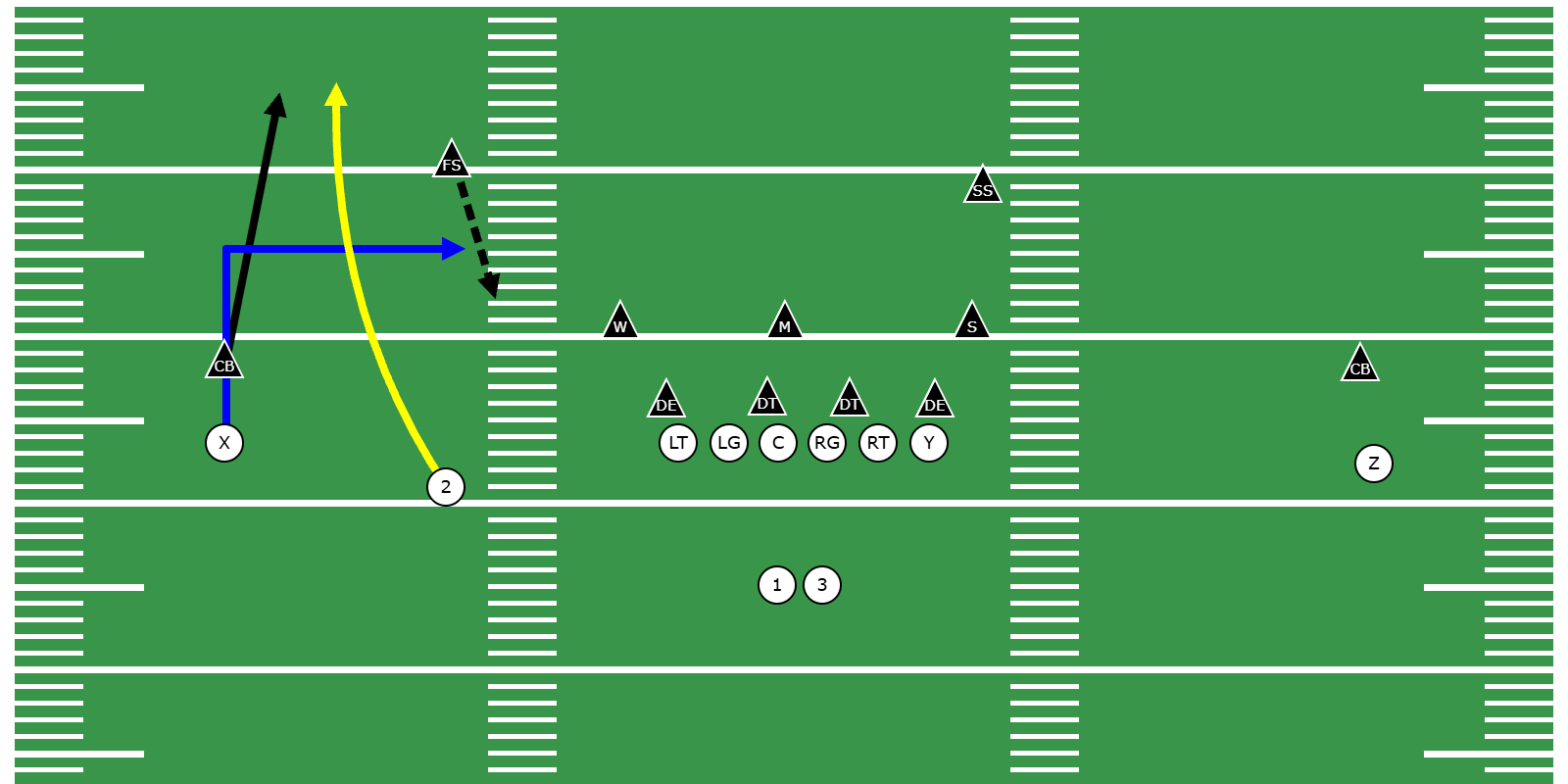
What Is Banjo Coverage?
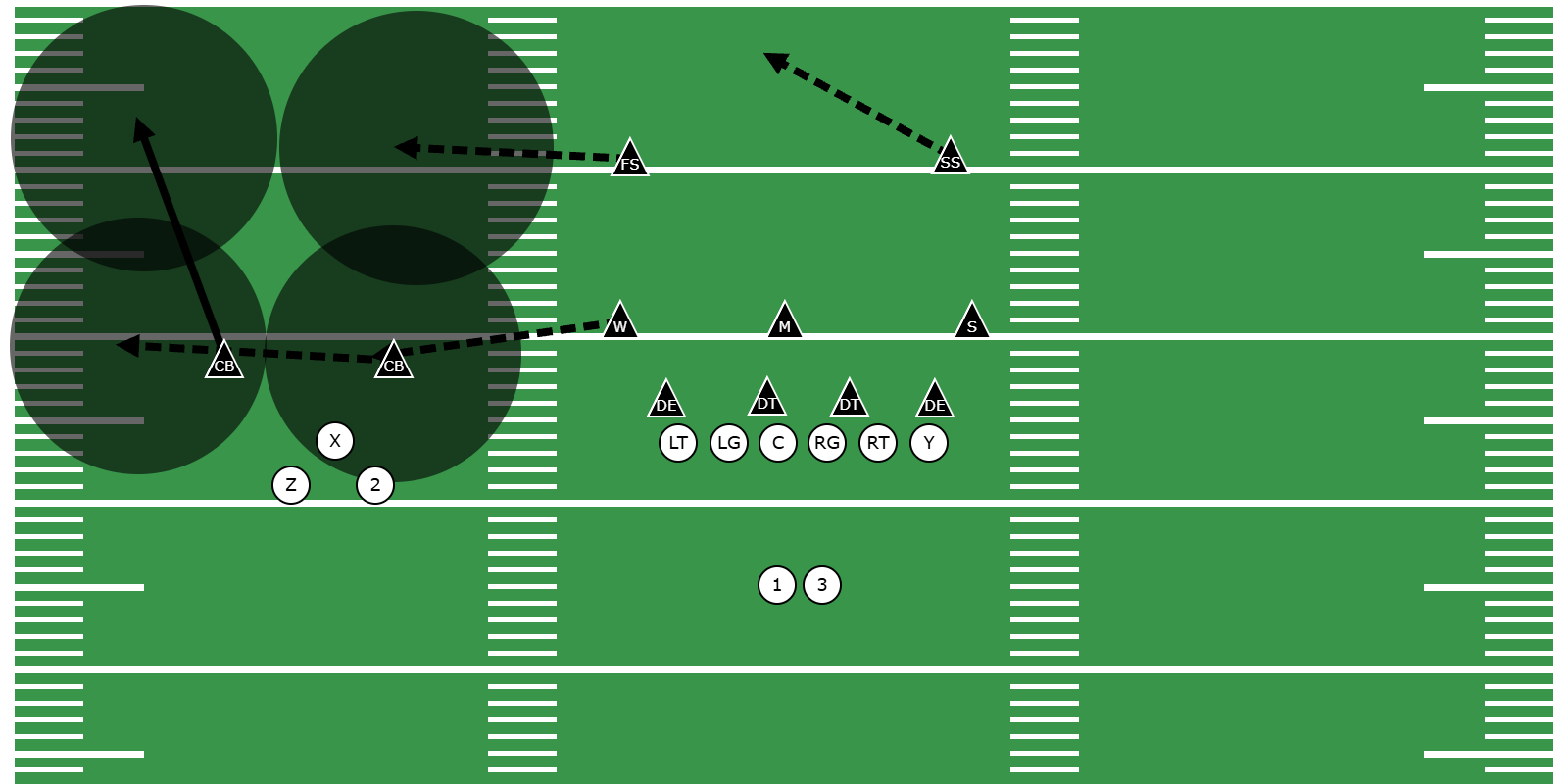
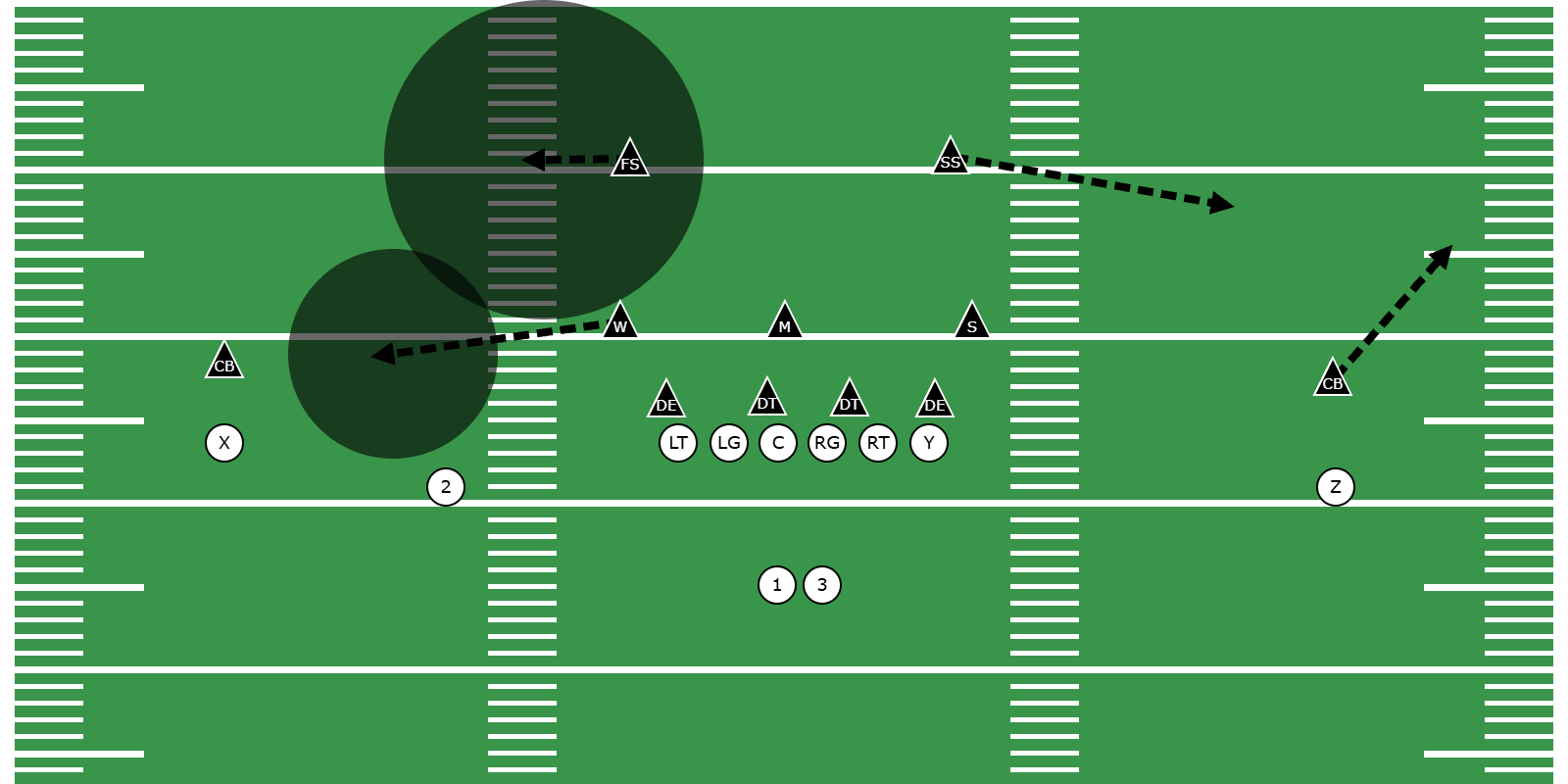
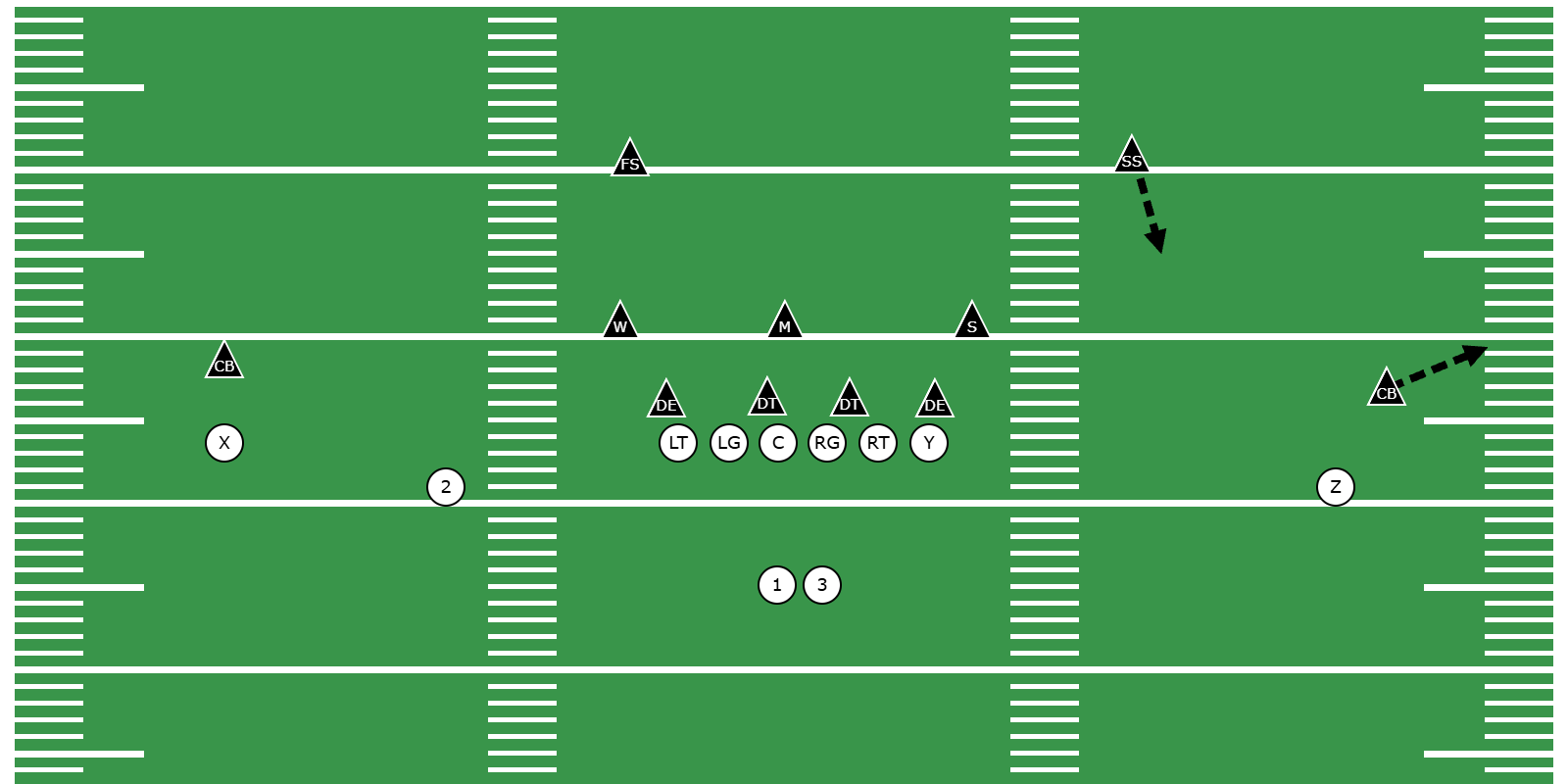
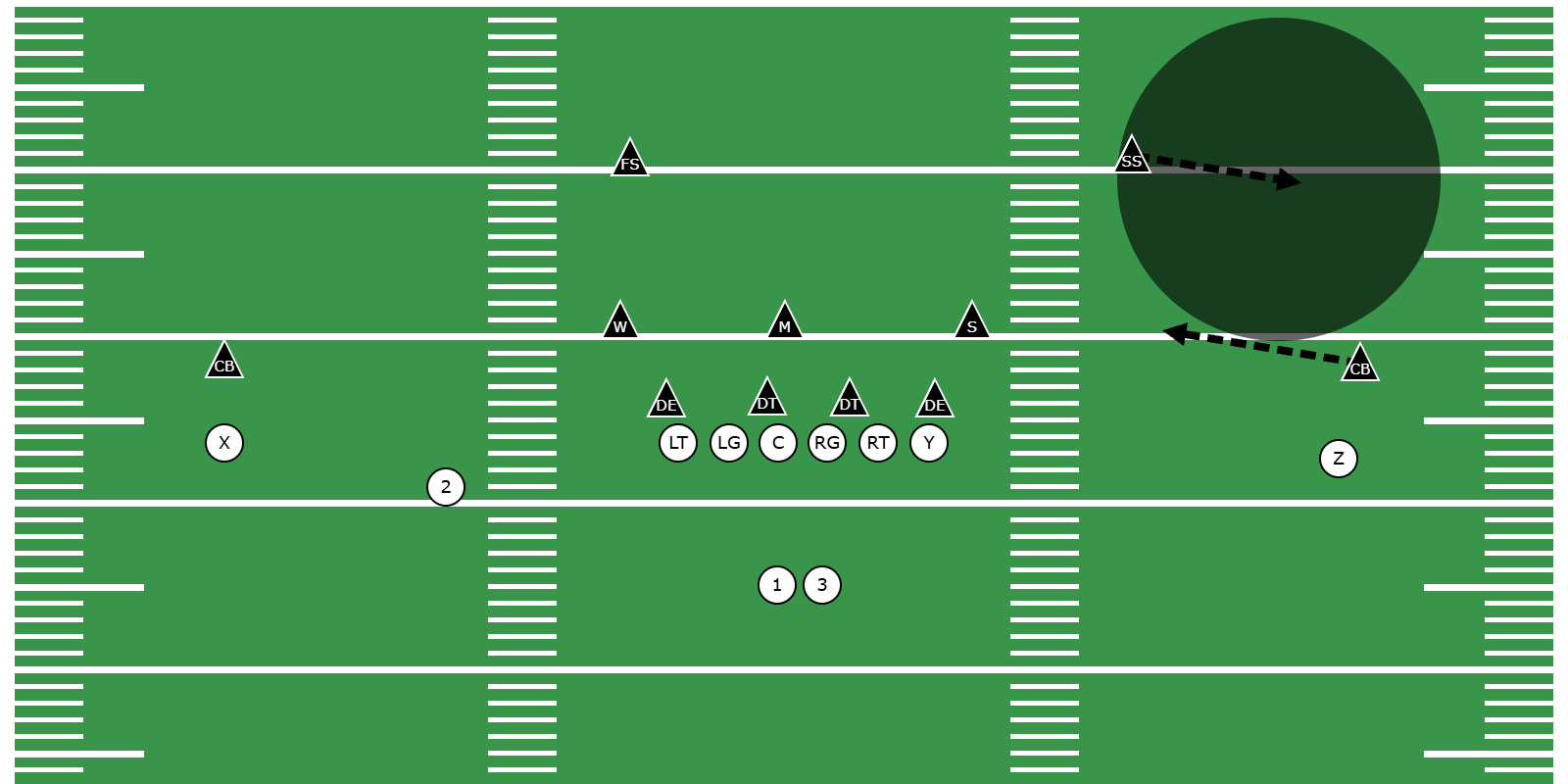
Banjo Coverage is a two-defender route-distribution technique.
Two offensive receivers are treated as a pair.
Two defensive players are also treated as a pair.
Before the snap, the defenders communicate the Banjo call.
After the snap, they identify where the receivers release and distribute them according to predetermined rules.
Instead of:
- Defender A always covering Receiver A.
- Defender B always covering Receiver B.
the assignments may become:
- Defender A takes whichever receiver releases outside.
- Defender B takes whichever receiver releases inside.
The identities of the receivers matter less than where the routes go.
Why Defenses Use Banjo Coverage
Offenses use compressed formations to create traffic.
If two defenders are playing strict man coverage, the offense can align two receivers close together and then cross their releases.
That can force the defenders to:
- Run into each other.
- Run into offensive receivers.
- Navigate a pick.
- Lose leverage.
- Trail the route from behind.
Banjo removes much of that problem.
The defenders stay on their respective sides of the route distribution.
When the receivers cross, the defenders exchange them.
The offense can still create separation, but it cannot rely as easily on the defenders defeating each other through traffic.
The Basic Banjo Rule
The exact terminology varies by defensive system, but a simple Banjo can use two leverage responsibilities.
Outside Defender
The outside defender takes:
- First receiver releasing outside.
Inside Defender
The inside defender takes:
- First receiver releasing inside.
If the receivers release without crossing, each defender may end up covering the receiver originally aligned closest to him.
If the receivers switch, the defenders exchange them.
The key is that the defenders react to the release rather than the receiver’s pre-snap identity.
Banjo Is Not Zone Coverage
Banjo can look like zone coverage immediately after the snap because defenders are reading releases.
However, Banjo is commonly used as a man-match technique.
Once the route distribution declares, the defender may match the receiver in man coverage.
The sequence is:
- Read the release.
- Determine the assignment.
- Match the receiver.
- Finish the route.
The defenders are not necessarily dropping to fixed zone landmarks.
They are using route distribution to determine which receiver becomes theirs.
Banjo Is Not Bracket Coverage
Banjo and bracket coverage both involve defenders working together, but they solve different problems.
Banjo
Two defenders distribute two receivers.
The objective is to prevent:
- Picks.
- Rubs.
- Traffic problems.
- Switch-release confusion.
Bracket
Two defenders concentrate on one receiver.
The objective is to create:
- Inside/outside leverage.
- High/low leverage.
- A two-on-one matchup.
Banjo preserves coverage numbers across two receivers.
Bracket intentionally devotes an extra defender to one receiver.
Pre-Snap Communication
Banjo must be communicated before the snap.
Both defenders need to know the exchange is active.
If one defender plays Banjo while the other plays ordinary man coverage, the result can be disastrous.
Both may cover:
- The same receiver.
while leaving:
- The other receiver completely uncovered.
The call should be:
- Short.
- Loud.
- Consistent.
Youth teams should use one word or signal that every defensive back understands immediately.
Alignment
Banjo alignment should support the exchange rules.
The two defenders generally want enough separation to avoid being picked together.
One defender may align:
- Inside.
The other:
- Outside.
The exact depth can depend on:
- Receiver alignment.
- Down and distance.
- Coverage call.
- Route tendencies.
- Field position.
The defenders should avoid aligning so tightly that one receiver can release through both of them.
Inside Defender Responsibilities
The inside defender should protect against routes entering the interior.
Potential threats include:
- Slant.
- Shallow cross.
- Dig.
- Inside release.
- Seam depending on the call.
He should:
- Maintain inside leverage.
- Read both receivers initially.
- Identify the first inside threat.
- Match that receiver once the distribution declares.
He must avoid chasing an outside release simply because that receiver was originally aligned across from him.
Outside Defender Responsibilities
The outside defender protects the perimeter.
Potential threats include:
- Out.
- Flat.
- Fade.
- Corner.
- Outside release.
He should:
- Maintain outside leverage.
- Read the initial distribution.
- Identify the first outside threat.
- Match the receiver after the release declares.
He should trust the inside defender to handle the route moving inside.
Why Leverage Matters
Banjo works because each defender begins with leverage that supports his assignment.
The inside defender should not allow an inside route to cross his face uncontested.
The outside defender should not allow an outside route to escape without resistance.
The defenders effectively divide the available release space.
That makes the offensive switch less valuable.
The receivers may exchange positions, but they are still releasing into defenders who already own those leverage areas.
Banjo Against a Stack Formation
A two-receiver stack is one of the most common reasons to call Banjo.
The receivers align one behind the other.
The defense may not know which receiver will release:
- Inside.
- Outside.
- Vertical.
Strict man coverage can become difficult because the back receiver can use the front receiver as a natural obstacle.
Banjo allows the defenders to wait for the releases.
If:
- One receiver releases inside.
- One releases outside.
the assignments become obvious.
The defenders avoid chasing through the stack.
Banjo Against Switch Releases
Switch releases are the core problem Banjo is designed to solve.
Suppose:
- Receiver A begins outside.
- Receiver B begins inside.
After the snap:
- Receiver A releases inside.
- Receiver B releases outside.
In strict man coverage, both defenders must cross paths.
In Banjo:
- Inside defender takes Receiver A.
- Outside defender takes Receiver B.
The defenders stay in their leverage areas.
The offensive switch no longer creates the same traffic advantage.
Banjo Against Rub Routes
Rub routes attempt to create separation by forcing one defender through the path of another receiver.
A common example pairs:
- An inside-breaking route.
- An outside-breaking route.
The receivers cross close together.
Banjo allows the defenders to exchange the routes.
The inside defender takes the route moving inside.
The outside defender takes the route moving outside.
Neither defender needs to fight through the intersection.
Banjo Against Pick Concepts
Pick concepts create similar problems.
The offense may intentionally position one route where it interferes with the defender covering another receiver.
The defense should avoid trying to chase through the pick.
Banjo allows defenders to:
- Maintain leverage.
- Exchange receivers.
- Stay clear of traffic.
The technique does not make every pick concept harmless, but it removes much of the structural advantage the offense wants to create.
Banjo Against Slant/Flat
Slant/Flat is a natural Banjo distribution.
One receiver breaks:
- Inside on the slant.
The other releases:
- Outside to the flat.
The inside defender takes the slant.
The outside defender takes the flat.
This allows both defenders to attack routes from favorable leverage.
Neither player needs to cross the other’s path.
Banjo Against Out/In Combinations
An Out/In combination creates the same basic horizontal split.
One route moves outside.
One moves inside.
The defenders distribute accordingly.
The outside defender should:
- Drive the out.
The inside defender should:
- Close the in-breaking route.
The offense cannot easily use the crossing stems to force the defenders into traffic.
Banjo Against Vertical Releases
Two vertical releases require a specific rule.
The defense must determine whether:
- Each defender takes the vertical nearest his leverage.
- The defenders convert to predetermined man assignments.
- Safety help changes the distribution.
Youth teams should make the rule simple.
For example:
- Inside defender takes inside vertical.
- Outside defender takes outside vertical.
The defenders should not hesitate while both receivers run downfield.
Banjo Against Fade/Out
Fade/Out can stress the outside defender because both routes initially threaten the perimeter.
The defense needs a clear distribution rule.
Possible solutions depend on the larger coverage:
- Outside defender takes the first short outside route while another defender handles the fade.
- Outside defender carries the deepest outside threat.
- Safety help allows an underneath exchange.
Banjo cannot be taught independently from the coverage around it.
The defenders need to know where their help exists.
Banjo Against Post/Corner
Post/Corner creates two deep-breaking routes in opposite directions.
The inside defender can match:
- Post.
The outside defender can match:
- Corner.
The defenders should maintain enough depth during the release to prevent either receiver from running past them before the breaks declare.
If both defenders aggressively sit underneath, the offense can convert the stems vertically.
Banjo Against Crossing Routes
Crossing routes are another useful application.
If two receivers cross:
- One moving inside.
- One moving outside or across the formation.
the defenders can exchange them rather than chase.
The exact rule becomes more complicated when both routes continue across the field.
The defense must decide whether:
- The defender carries the route completely.
- The route can be passed again to another defender.
Youth teams should avoid unnecessary multiple exchanges.
One clean Banjo exchange is usually easier to execute.
Banjo Against Mesh
Mesh is designed to create traffic with two shallow crossing routes.
Banjo principles can reduce the effectiveness of the rub.
Instead of following the original receivers through the intersection:
- Defenders can exchange the crossers.
The defenders should:
- Maintain leverage.
- Avoid collisions.
- Communicate.
- Match the receiver entering their responsibility.
Mesh can involve more than two receivers, so the Banjo pair must understand how its exchange fits with the rest of the coverage.
Banjo Against Wheel Routes
Wheel routes can stress Banjo because an outside release may turn vertical.
The outside defender should recognize that his responsibility may continue downfield.
He cannot assume:
- Outside release means short route.
The receiver may run:
- Flat-and-wheel.
- Swing-and-wheel.
- Out-and-up.
The defender must maintain proper leverage after the initial distribution.
Banjo Against Double Moves
Double moves punish defenders who react only to the first break.
Examples include:
- Slant-and-go.
- Out-and-up.
- Hitch-and-go.
Once the Banjo assignment is established, the defender must cover the complete route.
The exchange solves the initial traffic problem.
It does not eliminate normal coverage discipline.
Banjo Against Bunch Formations
Banjo is most naturally a two-on-two technique.
A three-receiver bunch creates a larger route distribution.
The defense may:
- Banjo two receivers within the bunch.
- Use Box Coverage against all three.
- Use another bunch check.
Trying to use a simple two-player Banjo against three receivers without defining the third responsibility can create confusion.
For youth football, Box Coverage may be the cleaner automatic answer to a true three-receiver bunch.
Banjo Within Box Coverage
Banjo principles can exist inside a larger Box structure.
Box Coverage places four defenders around three receivers.
Those defenders may use exchange rules similar to Banjo when routes cross.
The relationship is useful:
Banjo teaches the exchange principle.
Box expands route distribution to a larger receiver group.
A youth defense can teach Banjo first and later use the same language when installing Box Coverage.
Banjo Against Tight Splits
Receivers do not need to be stacked for Banjo to be useful.
Two receivers aligned with tight splits can still create:
- Rubs.
- Crosses.
- Switch releases.
The defense can use Banjo when the receivers are close enough that strict man coverage creates traffic problems.
The coach should establish an alignment rule for when Banjo automatically applies.
For example:
- If two receivers align within a defined distance, check Banjo.
That eliminates the need for a sideline call.
Banjo Against Motion
Motion can create a Banjo situation.
A receiver may motion:
- Into a stack.
- Into a tight split.
- Toward another receiver.
The defenders should recognize the compressed formation and communicate the Banjo call.
The defense must also decide what happens if the receiver motions away again.
Possible rules include:
- Banjo remains active.
- Return to normal man coverage.
- Use another automatic check.
Youth teams should use one consistent answer.
Motion Out of a Stack
The offense may begin stacked and then motion one receiver away.
The defense needs to know whether the Banjo relationship ends.
If the receivers become widely separated, strict man assignments may become easier.
The defense can use a rule such as:
- Banjo only when receivers remain compressed at the snap.
That keeps the adjustment tied to the problem it is designed to solve.
Banjo Against Trips
Trips creates three receivers to one side.
Banjo can still be used between two of them, but the third receiver must be accounted for.
For example, the defense might:
- Banjo #1 and #2.
- Assign another defender to #3.
Or:
- Banjo #2 and #3.
- Play #1 separately.
The exact choice depends on:
- Receiver splits.
- Offensive tendencies.
- Coverage structure.
A complete Trips plan is required.
Banjo Against an Isolated Pair
Some formations create two receivers separated from the rest of the offense.
This is an ideal environment for Banjo.
The two defenders can communicate without interference from a third receiver.
They can distribute:
- Inside.
- Outside.
- Vertical.
This allows the rest of the defense to use a different coverage structure on the opposite side.
Banjo Against a Tight End and Wing
Youth offenses frequently align:
- Tight end.
- Wing.
close together.
Those two players can create natural picks or crossing releases.
Banjo can allow defenders to exchange:
- Tight end inside route.
- Wing outside route.
The defense should still account for the strong running surface created by the tight end and wing.
Coverage alignment cannot weaken the edge of the run defense unnecessarily.
Banjo Against a Slot and Wide Receiver
A slot and outside receiver may reduce their splits to create traffic.
The corner and nickel defender can use Banjo principles.
A simple rule might be:
- Corner takes first outside.
- Nickel takes first inside.
This can help against:
- Slant/Flat.
- Switch verticals.
- Out/In.
- Rub concepts.
Safety help must still be incorporated into the vertical rules.
Banjo and the Run Game
Banjo defenders may also have run responsibilities.
The coverage should define what happens when receivers block.
If the receivers block:
- Outside defender may become force.
- Inside defender may fit inside or replace a crack.
- Another defender may handle alley support.
The defenders should not remain frozen in pass coverage while the offense runs the ball.
Receiver behavior can become a run/pass key.
Crack-Replace Responsibilities
Compressed receivers are often used to crack defensive support players.
A Banjo defender may see his receiver block inside.
The defense should establish:
- Who recognizes the crack.
- Who replaces outside.
- Who fits inside.
The outside defender may need to become force immediately.
The inside defender may need to defeat or avoid the crack.
The exchange principles used in coverage can help players understand replacement responsibilities in the run game.
Banjo Against Play Action
Play-action can delay receiver releases.
The defenders should not exchange assignments before the routes declare.
A receiver may:
- Block initially.
- Release late.
- Leak outside.
- Cross behind the linebackers.
The Banjo defenders should:
- Read their assigned keys.
- Maintain leverage.
- Identify the release.
- Distribute the routes.
The offense may use delayed action specifically to create hesitation.
Banjo Against RPOs
RPOs can combine run action with quick route exchanges.
A common example may use:
- Slant.
- Flat.
- Bubble.
The Banjo defenders need to maintain their coverage leverage while the front handles the run fit.
If one Banjo defender is also the quarterback’s read player, the defense should identify the conflict.
The run fit may need to be adjusted so the coverage defender can remain sound against the pass.
Banjo and the Pass Rush
Banjo can help the pass rush by preventing quick separation from rub routes.
The quarterback may expect the compressed formation to produce an immediate open receiver.
When the defense exchanges the routes cleanly, the quarterback may need to:
- Hold the ball.
- Move to another read.
- Reset.
That extra time helps the rush.
The rush should maintain contain because extended plays can eventually stress any match coverage.
Banjo and Pressure
Banjo can be useful behind pressure because offenses often answer blitzes with:
- Quick picks.
- Slants.
- Flats.
- Rub routes.
If two defenders can exchange those routes cleanly, the quarterback’s hot answer may disappear.
However, pressure reduces the number of available coverage defenders.
The defense must know exactly who is involved in the Banjo and who covers:
- Running back.
- Tight end.
- Remaining receivers.
Banjo on Third Down
Third down is a common time for offenses to use stacks and compressed splits.
They want to create immediate separation for the conversion route.
Banjo can be particularly useful against:
- Slant/Flat.
- Pick routes.
- Mesh variations.
- Option combinations.
- Out/In concepts.
The defense should identify the opponent’s favorite third-down compressed formation and practice the exact route combinations it produces.
Banjo in the Red Zone
The red zone is another common environment for Banjo.
Offenses frequently use compressed formations because:
- Space is limited.
- Picks create quick separation.
- The quarterback needs fast answers.
Banjo allows defenders to exchange:
- Slants.
- Flats.
- Pivots.
- Outs.
- Crossing releases.
The end line reduces the amount of vertical space the defense must protect.
That can allow defenders to play more aggressively once the route distribution declares.
Banjo Near the Goal Line
Near the goal line, communication must happen immediately.
The offense may use:
- Tight stack.
- Sprint-out.
- Pick slant.
- Flat.
- Pivot.
- Switch fade.
The defenders do not have time for complicated post-snap discussion.
The Banjo rule should already be understood:
- Inside takes inside.
- Outside takes outside.
Then both defenders play aggressively.
Banjo and Field Position
Field position changes the amount of space available.
Boundary
The sideline compresses the outside route.
The outside defender can use the boundary as help.
Field
The outside receiver has more room.
The outside defender may need greater width.
The defense should adjust alignment without changing the fundamental Banjo rule.
Disguising Banjo Coverage
Banjo does not necessarily need to be disguised.
The offense may already know the defense plans to exchange the routes.
The value comes from execution.
However, defenders can align in a way that resembles ordinary man coverage.
The quarterback may expect the rub to create separation.
After the snap, the defenders exchange the routes cleanly.
The offense loses the advantage it expected from the formation.
Banjo From Man Coverage
Banjo is commonly used as an adjustment within man coverage.
The defense may play normal man assignments across the formation.
When two receivers align close together, the defenders automatically check Banjo.
That gives the defense:
- Man coverage elsewhere.
- Exchange coverage against the compressed pair.
This makes Banjo a useful situational tool without requiring the entire defense to change calls.
Banjo From Cover 1
Cover 1 is a natural coverage for Banjo adjustments.
The defense can maintain:
- Man coverage underneath.
- Post safety help.
Against a stack or compressed pair, two man defenders use Banjo.
The post safety remains available over the top.
That can make the vertical distribution easier because both defenders know deep help exists.
Banjo From Cover 2 Man
Cover 2 Man can also use Banjo.
The underneath defenders exchange the compressed receivers.
Two deep safeties remain over the top.
This can provide strong protection against:
- Switch verticals.
- Out-and-up.
- Slant-and-go.
The underneath defenders can play aggressive leverage because deep help remains available.
Banjo From Split-Field Coverage
A defense can use Banjo on one side of the formation while using another coverage concept opposite.
For example:
- Banjo against a compressed pair.
- Quarters against two normally spaced receivers.
The coverage halves must still fit together against:
- Crossers.
- Motion.
- Running back releases.
This allows the defense to solve the local formation problem without changing every player’s assignment.
Banjo vs. Box Coverage
Both concepts help defend compressed formations.
Banjo Coverage
Commonly:
- Two defenders.
- Two receivers.
- Exchange based on release.
Box Coverage
Commonly:
- Four defenders.
- Three receivers.
- Four-over-three distribution.
Banjo is often the cleaner answer to:
- Stack.
- Tight two-receiver sets.
Box is often the cleaner answer to:
- Three-receiver bunch.
Banjo vs. Bracket Coverage
Banjo distributes two receivers between two defenders.
Bracket Coverage places two defenders on one receiver.
That distinction matters.
If the defenders misunderstand the call, they may accidentally bracket one receiver while leaving the second receiver uncovered.
The communication should make clear whether the defense is:
- Exchanging two receivers.
- Doubling one receiver.
Banjo vs. Cone Coverage
Cone Coverage is a form of bracket in which two defenders surround one priority receiver with complementary leverage.
Banjo does not intentionally double one receiver.
Instead:
- Inside defender owns the inside release.
- Outside defender owns the outside release.
Once the assignments declare, each defender normally has one receiver.
Banjo vs. Cut Coverage
Cut Coverage commonly involves a defender aggressively attacking or undercutting a route while another defender protects the deeper responsibility.
Banjo is primarily an exchange technique.
The defender takes the route entering his leverage rather than cutting a route because of a predetermined trigger.
The two concepts can work together within more advanced match systems, but they solve different problems.
Personnel Considerations
Banjo defenders need:
- Communication.
- Route recognition.
- Short-area quickness.
- Leverage discipline.
- Ability to match after the exchange.
They do not need identical skill sets.
A corner may be better suited to the outside responsibility.
A nickel, safety, or linebacker may be better suited to the inside responsibility.
The defense should align players so their leverage responsibilities match their strengths.
Coaching Banjo Coverage in Youth Football
Banjo should be taught visually and repetitively.
A practical progression is:
- Align two receivers normally.
- Align two defenders.
- Define inside and outside.
- Compress the receivers.
- Communicate the Banjo call.
- Run one receiver inside and one outside.
- Switch which receiver takes each release.
- Add two vertical releases.
- Add Slant/Flat.
- Add Out/In.
- Add switch verticals.
- Add rub routes.
- Add stack formations.
- Add motion into the stack.
- Add double moves.
- Connect Banjo to the run fit.
- Practice third-down situations.
- Practice red-zone situations.
Players should master the exchange before adding more complicated route combinations.
A Simple Banjo Drill
Use:
- Two receivers.
- Two defenders.
- One quarterback.
Align the receivers close together.
Defenders communicate:
Banjo.
On the snap:
- One receiver releases inside.
- One receiver releases outside.
The defenders distribute:
- Inside defender takes inside.
- Outside defender takes outside.
Repeat while changing which receiver runs each route.
The defenders should stop thinking in terms of receiver identity.
They should react to the release.
A Switch Release Drill
Align:
- Receiver #1 outside.
- Receiver #2 inside.
On the snap:
- #1 releases inside.
- #2 releases outside.
The defenders exchange them.
Then run the same formation without a switch.
The defenders must read the release rather than assume the offense will always cross.
This prevents guessing.
A Vertical Drill
Have both receivers release vertically.
Teach the defenders the defense’s vertical rule.
For example:
- Inside defender takes inside vertical.
- Outside defender takes outside vertical.
Mix in:
- Switch vertical.
- Out-and-up.
- Slant-and-go.
The defenders should maintain leverage and avoid staring only at the initial release.
A Rub Route Drill
Have the receivers cross closely.
The defenders should:
- Maintain their leverage.
- Exchange the routes.
- Avoid contact with each other.
- Avoid chasing through the rub.
Grade:
- Communication.
- Recognition.
- Leverage.
- Assignment.
- Finish.
This drill directly addresses the primary reason to use Banjo.
Common Youth Football Mistakes
Only One Defender Hears the Banjo Call
One defender exchanges while the other stays in man coverage.
Defenders Follow Their Original Receivers
The coverage becomes ordinary man and the offense creates traffic.
Both Defenders Take the Same Receiver
The second receiver becomes completely uncovered.
Defenders Guess the Release
They exchange before the routes declare.
Inside Defender Loses Inside Leverage
A quick slant becomes an easy completion.
Outside Defender Loses Outside Leverage
The offense gets an uncontested flat or out.
Both Defenders Sit Underneath
Vertical routes run past them.
Defenders Stop Covering After the Exchange
Banjo determines the matchup; it does not end the coverage responsibility.
No Motion Rule
The offense motions into or out of the compressed formation and the defenders disagree about whether Banjo remains active.
No Run-Fit Rules
The receivers block and the defenders hesitate instead of fitting the run.
When to Call Banjo Coverage
Banjo Coverage can be useful when:
- Two receivers align in a stack.
- Two receivers use compressed splits.
- The offense relies on rub routes.
- The offense uses pick concepts.
- The offense frequently uses switch releases.
- Man defenders are struggling through traffic.
- The offense uses compressed formations on third down.
- The offense uses stacks near the goal line.
- The defense wants to preserve man principles without chasing through traffic.
It may be less useful when:
- Receivers are widely separated.
- The defense cannot communicate the exchange consistently.
- The offensive formation creates three-receiver distribution better handled by Box Coverage.
- Defenders struggle to identify inside and outside releases.
- The run fit requires different alignment.
Building a Youth Game Plan With Banjo Coverage
Banjo should solve a specific formation problem.
Study the opponent and identify:
- Do they use stacks?
- Do they reduce receiver splits?
- Which receivers create rubs?
- Do they use Slant/Flat?
- Do they use switch verticals?
- Do they motion into compressed formations?
- Do they use picks on third down?
- Do they use stacks in the red zone?
Then establish the automatic Banjo rule.
A youth defense may only need:
When two receivers stack, call Banjo. Inside takes inside. Outside takes outside.
That single rule can eliminate several offensive concepts without adding a completely new coverage.
What the Offense May Do Next
Once the offense recognizes Banjo, it may respond by:
- Releasing both receivers vertically.
- Using double moves.
- Motioning out of the stack.
- Creating a three-receiver bunch.
- Delaying one receiver’s release.
- Running the football.
- Using a wheel route.
The defense should practice those responses.
Banjo solves the exchange problem, but defenders still need to play sound coverage after the routes declare.
Key Coaching Points
- Communicate the Banjo call before the snap.
- Make sure both defenders acknowledge it.
- Define inside and outside leverage clearly.
- Read releases rather than receiver identities.
- Inside defender takes the inside threat.
- Outside defender takes the outside threat.
- Do not chase receivers through traffic.
- Do not exchange before the routes declare.
- Establish a clear rule for two vertical releases.
- Practice switch releases repeatedly.
- Practice Slant/Flat and Out/In combinations.
- Include rub routes and picks in drills.
- Establish motion rules.
- Connect Banjo to run support.
- Use Box Coverage or another adjustment when a third receiver changes the distribution.
- Keep youth terminology short and consistent.
Final Thoughts
Banjo Coverage is a practical solution to one of the most common problems created by man coverage: receivers using alignment and route traffic to make defenders run through each other.
Instead of forcing two defenders to chase their original assignments through a stack, rub, or switch release, Banjo allows them to exchange the receivers based on where the routes go.
The inside defender handles the inside threat.
The outside defender handles the outside threat.
That simple relationship can eliminate much of the confusion created by compressed formations.
The technique still requires communication. Both defenders must know the Banjo is active, both must read the same release, and both must understand what happens when the receivers release vertically, motion, block, or use double moves.
For youth football, Banjo is most effective when it remains an automatic, narrowly defined adjustment. Rather than creating a large menu of route-match rules, coaches can use one clear call against stacks and tight receiver splits.
When the defenders communicate, maintain leverage, and trust the exchange, Banjo Coverage can preserve tight coverage while taking away many of the picks, rubs, and switch releases offenses use to defeat traditional man defense.
Related Articles
Published by CoachYouths Staff on 11/24/2026
You are NOT currently logged in, you may login or signup for FREE at any time: