Bracket Coverage
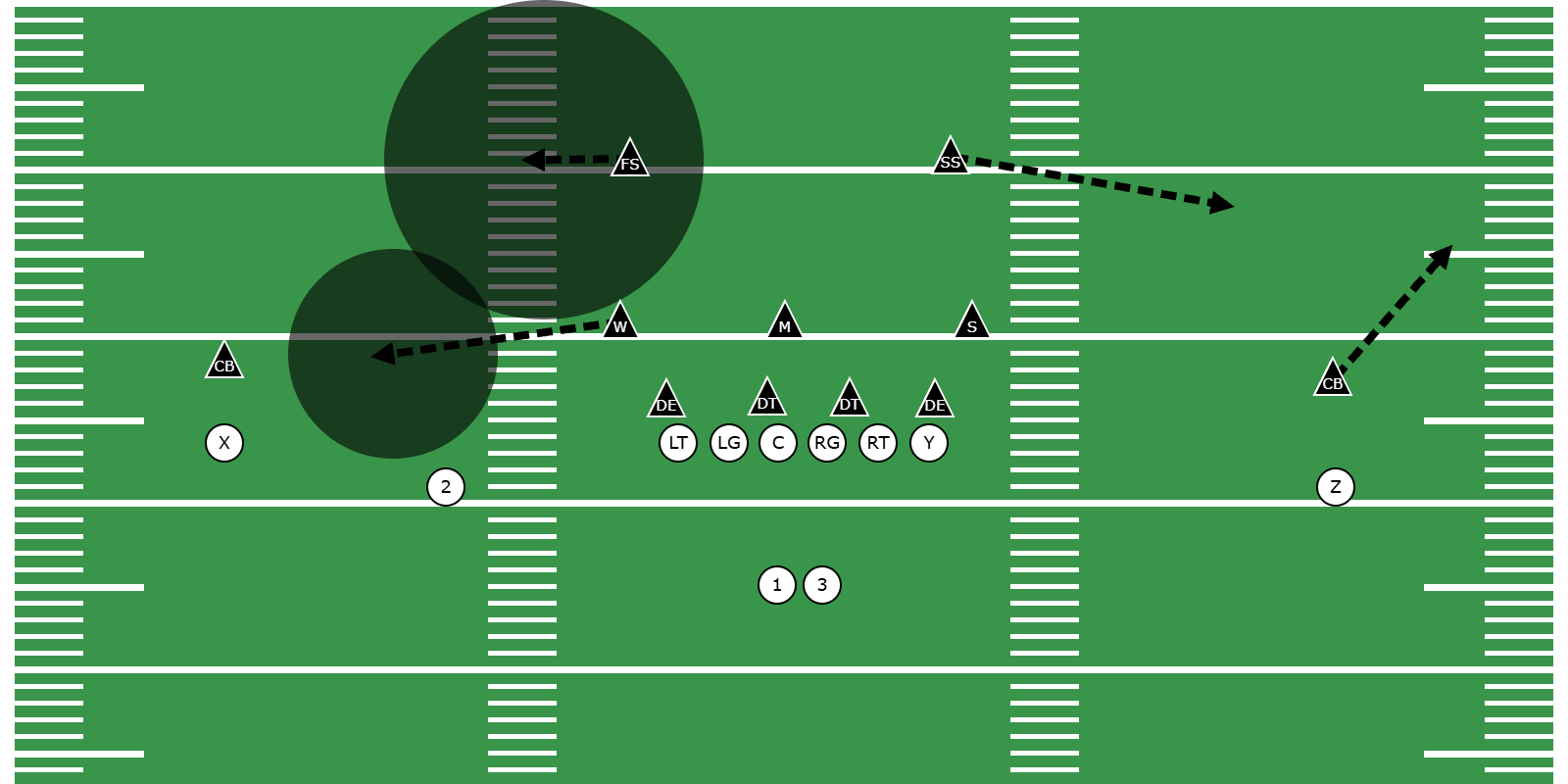
What Is Bracket Coverage?
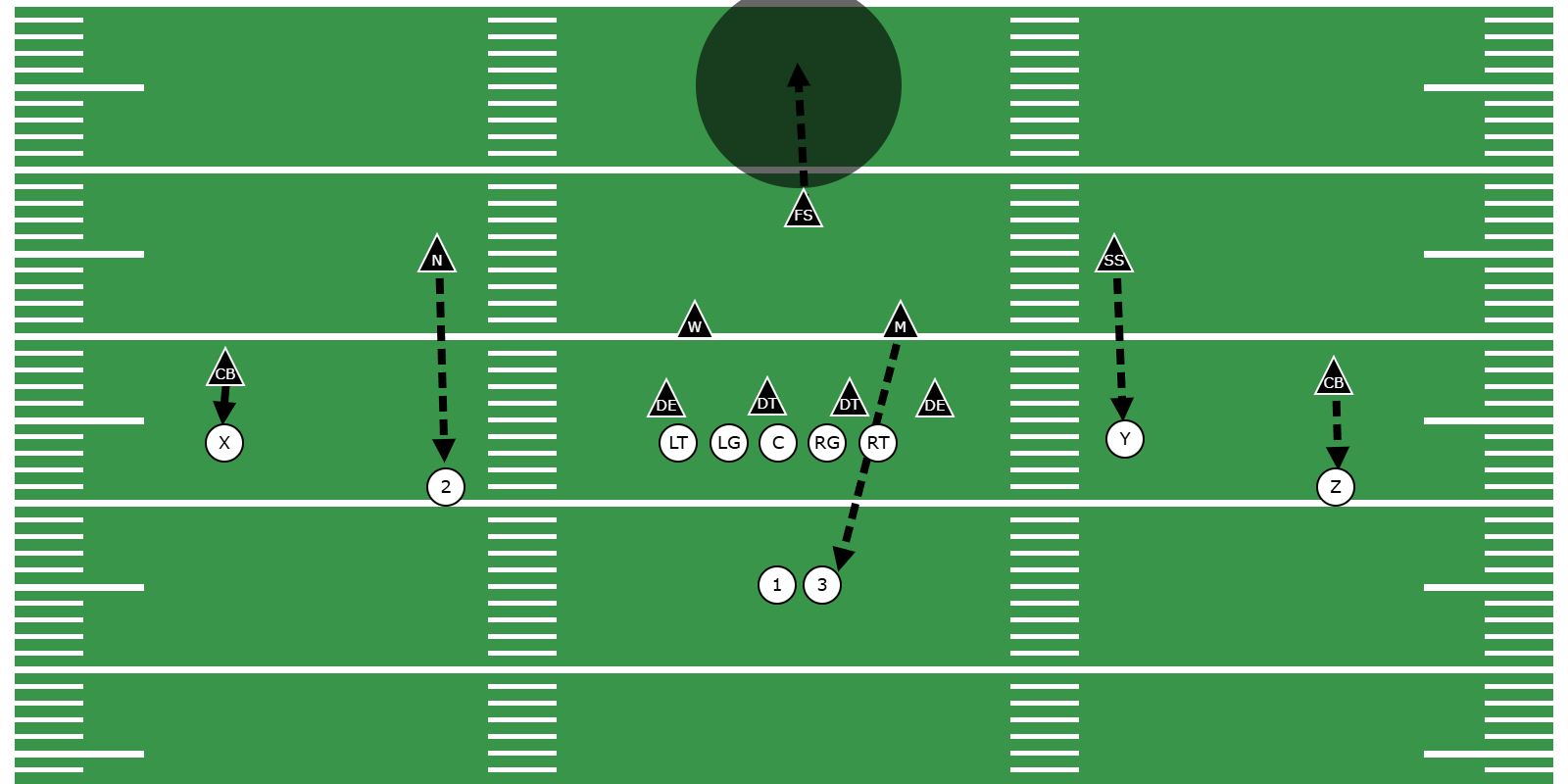
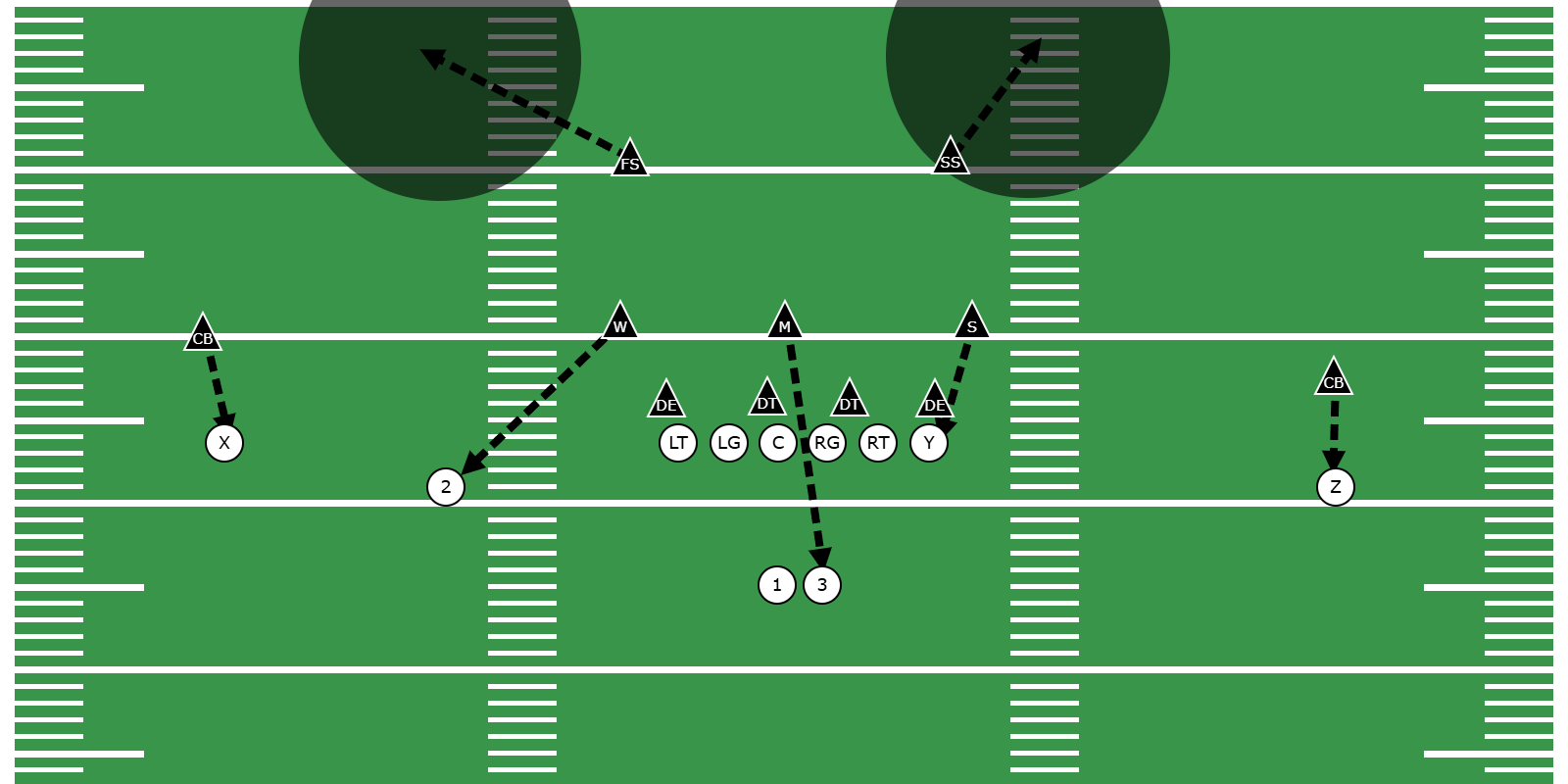
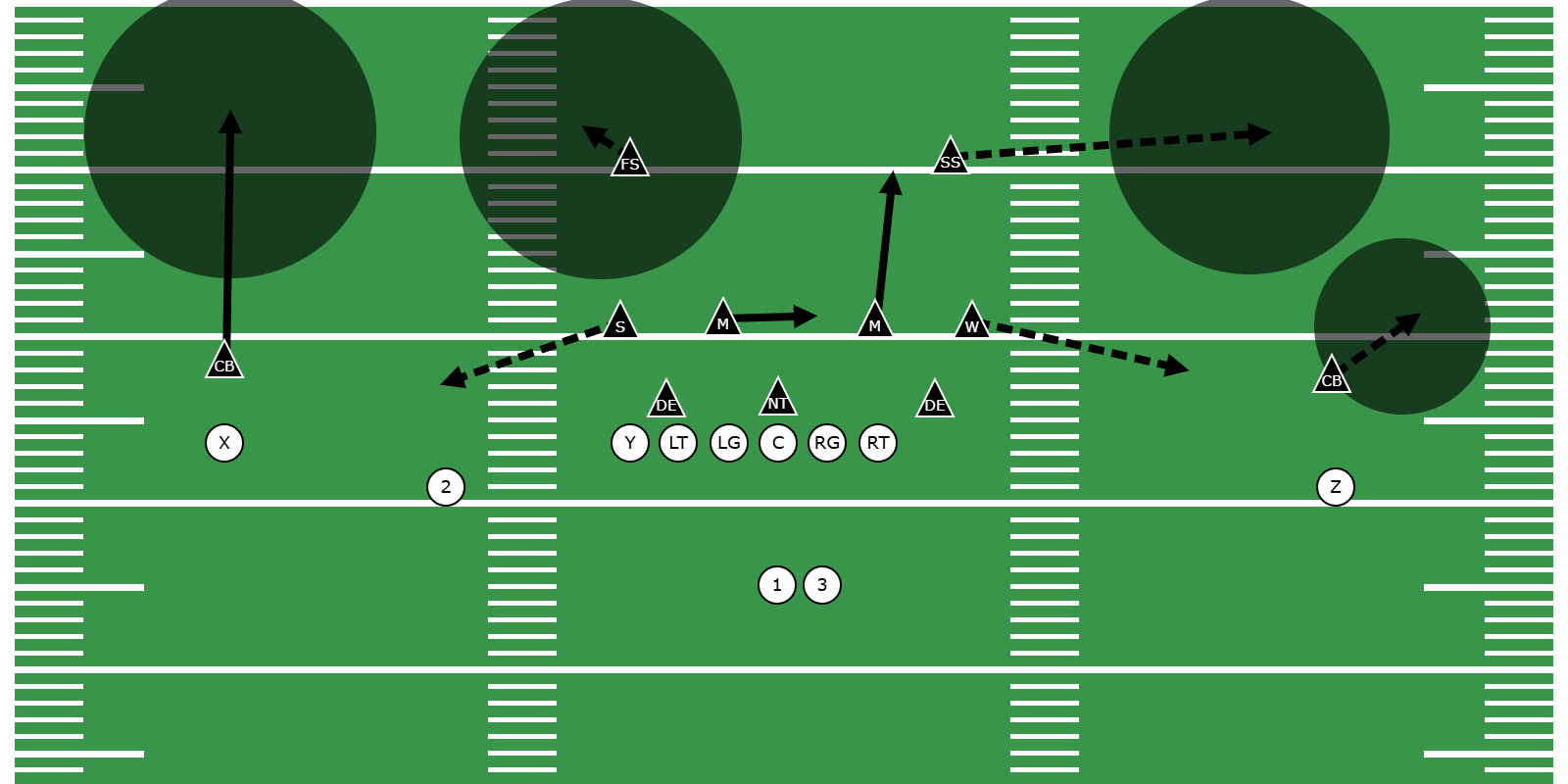
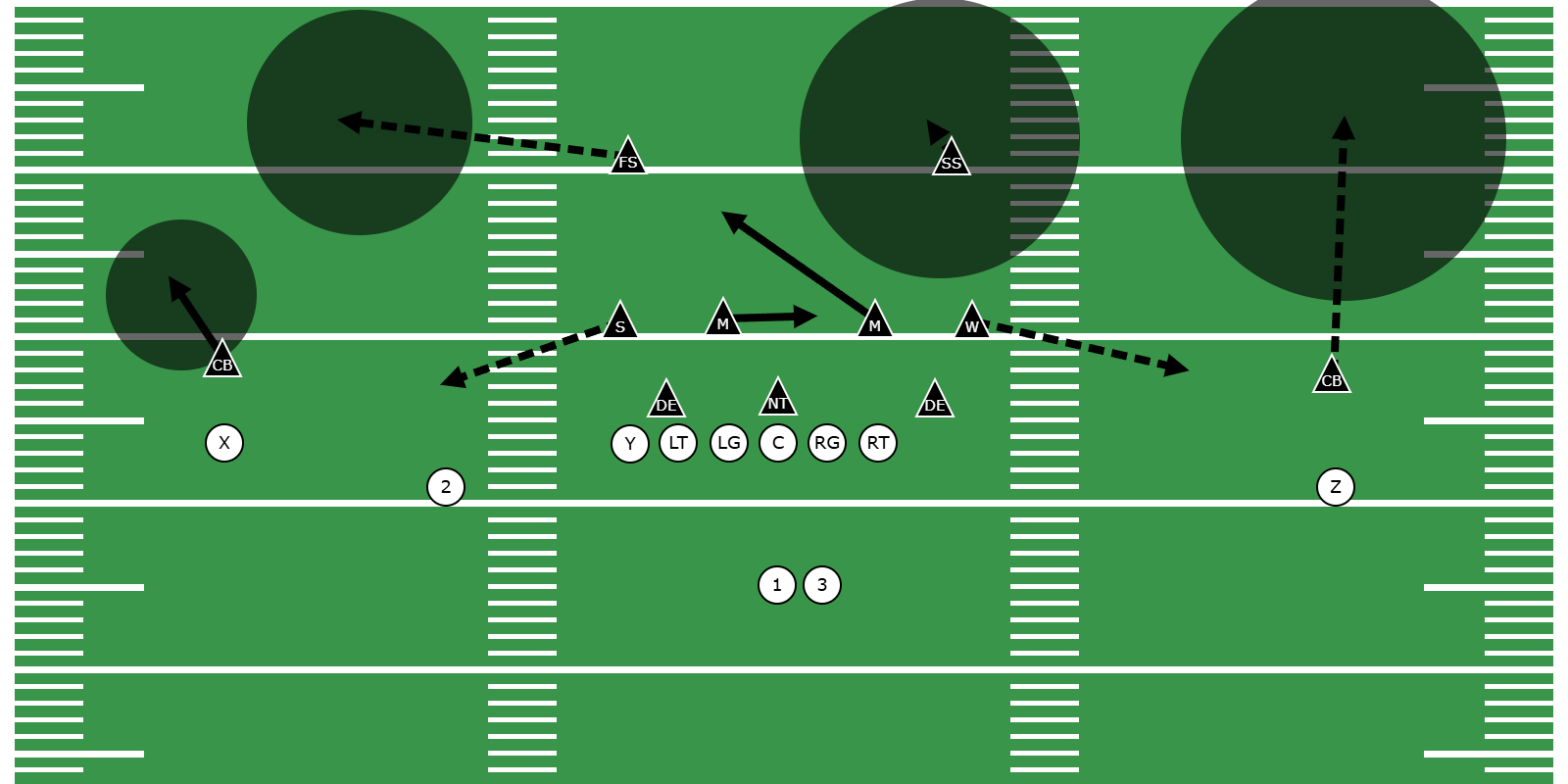
Bracket coverage assigns two defenders to control one receiver through complementary leverage.
Common bracket relationships include:
- Inside/outside.
- High/low.
- Trail/over-the-top.
- Under/over.
- Cone-style leverage around the receiver.
The exact technique depends on:
- Receiver alignment.
- Formation.
- Field position.
- Coverage call.
- Defensive personnel.
- Expected route concepts.
The two defenders should not play identical leverage.
If both defenders align inside, the receiver can attack outside.
If both stay underneath, the receiver can attack vertically.
The bracket works because the defenders divide the receiver’s route options between them.
Bracket Coverage Is More Than a Double Team
“Double team” is often used as a general description of bracket coverage, but the terms are not always identical.
Two defenders can end up covering the same receiver without using a coordinated bracket.
A bracket should define:
- Who owns inside leverage.
- Who owns outside leverage.
- Who protects underneath.
- Who protects over the top.
- How vertical routes are handled.
- How crossing routes are handled.
- What releases the defenders from the bracket, if anything.
Without those rules, two defenders may chase the same route from the same leverage and still leave an opening.
The goal is to surround the receiver with complementary responsibilities.
Why Defenses Use Bracket Coverage
Offenses frequently create formations specifically designed to isolate their best receiving matchup.
A defense may not want to allow:
- Its second-best corner against the offense’s best receiver.
- A linebacker isolated against an athletic tight end.
- A safety isolated against a dangerous slot.
- A smaller corner against a dominant red-zone receiver.
Bracket coverage changes the matchup.
Instead of asking one defender to cover every possible route, the defense can divide the receiver’s route tree between two players.
That can:
- Remove easy access throws.
- Discourage vertical shots.
- Force the quarterback elsewhere.
- Disrupt timing.
- Reduce yards after catch.
- Change the quarterback’s pre-snap decision.
The defense is essentially telling the offense:
Your preferred receiver is not going to receive a normal one-on-one opportunity.
Inside/Outside Bracket
An inside/outside bracket places defenders on opposite horizontal leverage.
One defender protects:
- Inside-breaking routes.
The other protects:
- Outside-breaking routes.
This can be effective against a receiver with a broad route tree.
The inside defender can discourage:
- Slants.
- Digs.
- Posts.
- Crossers.
The outside defender can discourage:
- Outs.
- Corners.
- Fades toward the sideline.
Both players must still understand vertical responsibility.
If they focus only on horizontal leverage, the receiver may split them vertically.
High/Low Bracket
A high/low bracket divides the receiver vertically.
The low defender plays underneath.
The high defender protects over the top.
The underneath defender can aggressively contest:
- Hitches.
- Curls.
- Slants.
- Short outs.
- Quick in-breaking routes.
The high defender protects:
- Go routes.
- Posts.
- Corners.
- Deep overs.
This structure can be especially useful when the defense wants an underneath defender to play aggressively without risking an easy vertical completion.
Trail and Over-the-Top Technique
A common man-oriented bracket uses one defender in trail position with another defender over the top.
The trail defender can play aggressively underneath and inside the receiver.
The high defender prevents the receiver from winning vertically.
The trail player should trust the help.
If he tries to stay directly on top of the receiver like ordinary man coverage, he can interfere with the leverage relationship and open underneath space.
The over-the-top defender should maintain enough depth to protect against the receiver’s deepest route.
Bracketing an Outside Receiver
An outside receiver is often bracketed with a corner and safety.
A common relationship may use:
- Corner underneath or outside.
- Safety inside and over the top.
Another system may reverse the leverage based on:
- Receiver split.
- Field position.
- Route tendency.
- Coverage structure.
The sideline can also become part of the bracket.
If the corner maintains inside leverage and forces the receiver toward the boundary, the sideline effectively removes additional route space.
The defense should decide whether it wants to funnel the receiver:
- Inside toward safety help.
- Outside toward the sideline.
- Underneath toward a closing defender.
Bracketing a Slot Receiver
Slot receivers create different challenges because they have more space in both directions.
They can release:
- Inside.
- Outside.
- Vertically.
A slot bracket may use:
- Linebacker underneath and safety over the top.
- Nickel outside and safety inside.
- Two safeties.
- Nickel underneath and another defensive back high.
The defenders must account for crossing routes.
A slot receiver can quickly move across the formation and force the bracket defenders to navigate traffic.
That makes communication especially important.
Bracketing a Tight End
A receiving tight end can create a major matchup problem.
He may be:
- Too athletic for a linebacker.
- Too large for a defensive back.
- Dangerous on seams.
- Effective on option routes.
- A primary red-zone target.
A bracket can use one defender to disrupt the tight end near the line while another protects vertically.
The defense should still account for the tight end’s role in the run game.
If both bracket defenders immediately widen or retreat at the snap, the offense may gain a blocking advantage.
Bracketing a Running Back
A dangerous receiving back can also become a bracket target, particularly on third down.
The defense may use:
- A linebacker underneath.
- A safety or defensive back helping from depth.
The challenge is that the running back can release from several locations:
- Backfield.
- Empty formation.
- Motion.
- Slot alignment.
The defense needs rules for whether the bracket follows the player when his alignment changes.
Pre-Snap Identification
The defense must identify the bracket target clearly.
Possible communication methods include:
- Jersey number.
- Receiver position.
- Formation location.
- A specific game-plan call.
The bracket should not depend on vague language such as “their best receiver.”
Players need to know exactly who receives special coverage.
If the receiver motions, shifts, or changes sides, the defense must know whether the bracket travels with him.
Alignment
Bracket alignment should reflect the leverage responsibilities.
The defenders need enough separation to surround the receiver without creating an easy split.
If they align too close together:
- One release can defeat both defenders.
- Picks and rubs become more effective.
- The receiver can stack both defenders vertically.
If they align too far apart:
- Quick routes may become available.
- The receiver can settle between them.
Alignment should account for:
- Receiver split.
- Down and distance.
- Field position.
- Route tendencies.
- Help location.
The Funnel
A major principle of bracket coverage is the funnel.
One defender uses leverage to force the receiver toward the other defender.
For example:
- An outside defender can force the receiver inside.
- An inside defender can force the receiver outside.
- An underneath defender can force the receiver deeper.
- A high defender can squeeze a vertical route toward underneath help.
The defender should not simply react to the receiver.
He should understand where the coverage wants the receiver to go.
That makes leverage purposeful.
Strengths of Bracket Coverage
Bracket coverage can provide:
- Two defenders against a priority receiver.
- Reduced one-on-one exposure.
- Strong leverage against a receiver’s preferred routes.
- Protection against explosive vertical completions.
- Ability to remove a primary third-down target.
- Useful red-zone matchup control.
- Flexibility to bracket different receiver positions.
- A way to force the quarterback toward secondary options.
The concept is especially useful when one offensive player is responsible for a disproportionate amount of the passing game.
Weaknesses of Bracket Coverage
The defense pays a price for using two defenders on one receiver.
Fewer Defenders Elsewhere
Other receivers may receive favorable matchups.
Run Defense
Two defenders focused on a receiver may reduce immediate run support.
Motion
The offense can move the bracket target and force communication.
Bunch and Stack Formations
Traffic can interfere with bracket leverage.
Crossing Routes
The receiver can move across the formation and stress the relationship.
Decoy Routes
The offense can use the bracketed receiver to occupy two defenders while throwing elsewhere.
Quarterback Runs
Removing an extra defender from underneath space can create scramble opportunities.
Communication
If the two defenders misunderstand their leverage, the bracket can fail despite using extra resources.
Try The Interactive Playbook Tool: Bracket Coverage
Draw your own Bracket Coverage concept based play diagram right here using our embedded interactive play designer demo:
GET STARTED: To get started simply click on any of the player icons in the diagram.
Start drawing your own plays like this and build your playbook with CoachYouths Playbook Designer.
Bracket Coverage Against Go Routes
A vertical route should be difficult to complete against a properly constructed high/low bracket.
The underneath defender can:
- Disrupt the release.
- Stay underneath the receiver.
- Prevent an easy back-shoulder throw.
The high defender:
- Stays deeper than the receiver.
- Protects against the ball over the top.
- Squeezes the route toward the sideline or help.
The receiver should not be able to simply run between both defenders.
The bracket needs enough horizontal spacing to close that lane.
Bracket Coverage Against Slants
An inside-leverage defender can make the slant difficult.
He should:
- Maintain inside position.
- Close the throwing lane.
- Force the receiver away from the preferred break.
The second defender remains available for:
- Vertical continuation.
- Outside-breaking routes.
- A route adjustment.
The quarterback may move away from the bracket if the slant window disappears immediately.
Bracket Coverage Against Posts
Post routes attack inside and deep.
A bracket should have a defender responsible for each dimension.
The inside or high defender must protect the post window.
The other defender should stay connected underneath or outside.
If both defenders chase the receiver from behind, the bracket has lost its structural advantage.
The defense wants the receiver running into leverage rather than away from it.
Bracket Coverage Against Corner Routes
Corner routes attack outside and deep.
The outside or high defender must maintain leverage toward the route.
The underneath defender can help squeeze the stem before the break.
Receiver alignment matters.
A tight split gives the receiver more room toward the sideline.
The defense may adjust the bracket to account for that extra space.
Bracket Coverage Against Option Routes
Option routes are a major reason to use bracket coverage against talented slot receivers.
The receiver wants to choose his break based on defender leverage.
A bracket attempts to remove that freedom.
If the receiver sees:
- Inside leverage, another defender waits outside.
- Outside leverage, another defender waits inside.
- Underneath leverage, help remains over the top.
The receiver’s option becomes less attractive because every direction should lead toward another defender.
The two defenders must maintain complementary leverage throughout the route.
Bracket Coverage Against Crossers
Crossing routes can stress the bracket because the receiver moves across the field.
The defense must decide whether:
- Both bracket defenders travel.
- One defender passes the receiver.
- The bracket converts into another coverage relationship.
- A defender on the opposite side takes over.
This is especially important against:
- Mesh.
- Shallow cross.
- Deep over routes.
Youth defenses should avoid complicated exchanges unless they have been practiced extensively.
A simple carry rule may be easier to execute.
Bracket Coverage Against Double Moves
Double moves test discipline.
A receiver may run:
- Slant-and-go.
- Out-and-up.
- Hitch-and-go.
- Post-corner.
The underneath defender may aggressively attack the first break because he expects help.
That is acceptable only if the high defender remains disciplined.
The high defender should not drive the first move and surrender the deep route.
The bracket should make double moves harder, not easier.
Bracket Coverage Against Bunch
Bunch formations can make it difficult to maintain clean leverage around one receiver.
The offense can use:
- Picks.
- Rubs.
- Switch releases.
- Traffic.
The defense may need a special bunch check.
Possible solutions include:
- Box coverage.
- Banjo principles.
- Zone distribution.
- Bracketing the receiver after the release rather than from the initial alignment.
The key is preventing two defenders from fighting through the same traffic while another receiver escapes uncovered.
Bracket Coverage Against Stacks
Stacked receivers create similar problems.
The bracket target may align directly behind another receiver.
That can prevent defenders from aligning cleanly inside and outside.
The defense needs rules for:
- Release switches.
- Receiver exchanges.
- Picks.
- Vertical stacks.
A simple man-style bracket may need to convert into a pattern-match rule against the stack.
Bracket Coverage Against Trips
Trips formations can make bracket allocation difficult because three receivers already stress one side of the defense.
If the priority receiver is part of Trips, using two defenders on him can leave only limited resources for the other two receivers.
The defense must account for:
- #1.
- #2.
- #3.
- Running back.
- Backside receiver.
The bracket may need to be integrated into a broader Trips coverage rather than called independently.
Bracket Coverage Against an Isolated Receiver
An isolated receiver is one of the easiest players to bracket structurally.
The offense has separated him from the rest of the formation.
The defense can place:
- Corner underneath or outside.
- Safety over the top or inside.
The remaining defenders can concentrate on the formation strength.
This can be especially useful when the offense isolates its best receiver specifically to create a one-on-one matchup.
The bracket removes the matchup the offense wanted.
Bracket Coverage Against Motion
Motion tests whether the bracket is:
- Player-based.
- Formation-based.
- Side-based.
If the bracket is attached to a specific receiver, the defense must determine how the help defender travels.
Possible rules include:
- Carry the bracket across the formation.
- Exchange the bracket to another defender.
- Check to a different coverage.
- Cancel the bracket against certain motions.
Youth teams should use the simplest rule possible.
Late communication can create a larger problem than the receiver the bracket was designed to stop.
Bracket Coverage and the Run Game
Bracket coverage can affect the run fit because two defenders are dedicating attention to one receiver.
If the bracket uses:
- A safety.
- A linebacker.
- A nickel defender.
that player may otherwise have been an important run fitter.
The defense must identify who replaces that responsibility.
The offense may respond to a bracket by running toward the space created by the extra coverage attention.
The defense should never install a bracket without also installing the corresponding run fit.
Bracket Coverage Against Play Action
Play-action can manipulate bracket defenders if one of them is also responsible for run support.
The defender should not abandon the bracket merely because the backfield shows run.
The defense should identify:
- Which bracket defender has run responsibility.
- What key releases him from coverage.
- Who maintains deep leverage.
The high defender should be especially disciplined.
A play-action shot to the bracketed receiver is often designed to pull the help defender downhill before attacking vertically.
Bracket Coverage Against RPOs
An offense can use an RPO to attack the run-support defender involved in the bracket.
If that defender:
- Fits the run, the quarterback may throw.
- Stays with the receiver, the offense may hand the ball off.
The defense needs a structural answer.
That may involve:
- Changing the run fit.
- Changing the bracket defender.
- Adjusting the front.
- Pressuring.
- Using a different coverage.
The goal is to avoid assigning one defender two responsibilities the offense can attack simultaneously.
Bracket Coverage and the Pass Rush
Bracket coverage often benefits from a disciplined pass rush.
The quarterback may need additional time to:
- Confirm the bracket.
- Move through the progression.
- Find a secondary receiver.
The rush should capitalize on that delay.
A four-man rush preserves more defenders for coverage.
Pressure can also be paired with bracket concepts, but every additional rusher reduces the number of defenders available elsewhere.
The defense must understand the tradeoff.
Bracket Coverage on Third Down
Third down is a common situation for bracket coverage.
The offense may have a clear preferred target.
The defense can identify:
- Who receives the ball on third-and-medium?
- Which receiver runs the conversion route?
- Where does the quarterback look under pressure?
The bracket can then be built specifically around that tendency.
For example, the defense may take away:
- The slot option route.
- The tight end stick route.
- The outside receiver’s dig.
The objective is to force the quarterback toward a lower-priority option before the pass rush arrives.
Bracket Coverage in the Red Zone
The red zone naturally compresses the field.
There is less vertical space behind the defense.
That can make bracket coverage especially useful.
The defense may bracket:
- A tall outside receiver.
- A tight end.
- A slot option-route player.
- The offense’s preferred fade target.
The defenders can use the end line and sideline as additional help.
Because the offense has less space, leverage becomes even more important.
A bracket should force the receiver toward an area where the quarterback has little room to place the football.
Bracket Coverage Near the Goal Line
Near the goal line, routes develop quickly.
The bracket defenders should expect:
- Slants.
- Fades.
- Picks.
- Quick outs.
- Pivot routes.
There may not be enough time for complicated post-snap exchanges.
The defense should simplify the call.
Clear inside/outside leverage can be more valuable than an elaborate match system.
Bracket Coverage and Field Position
The location of the ball can influence the bracket.
On the boundary side:
- The sideline compresses outside space.
- A defender can use the boundary as help.
To the field:
- The receiver has more horizontal room.
- The bracket may need wider spacing.
A slot receiver to the field can be particularly difficult because he has significant space inside and outside.
The defense should account for the actual geometry of the formation.
Disguising Bracket Coverage
A bracket can be shown before the snap or disguised.
A defense may initially align in a structure resembling:
- Cover 1.
- Cover 2.
- Quarters.
- Cover 6.
- Another two-high coverage.
After the snap, the help defender moves into the bracket relationship.
Disguise can make it harder for the quarterback to immediately move away from the double-team.
However, the help defender must still reach his leverage.
A disguised bracket that arrives late may provide no meaningful help.
Bracket Coverage From Cover 1
A defense can use Cover 1 principles while bracketing one receiver.
The structure may include:
- Man coverage on several eligible receivers.
- A dedicated bracket on the priority target.
- Reduced or altered post-safety help depending on the call.
The defense must account for the extra defender used in the bracket.
This can create difficult one-on-one matchups elsewhere.
The quarterback may intentionally search for those matchups once he recognizes the bracket.
Bracket Coverage From Two-High Structures
Two-high shells naturally create opportunities to bracket receivers.
A safety can provide help over:
- An outside corner.
- A nickel defender.
- A linebacker.
The defense can also use split-field principles to bracket one side while playing Quarters, Cover 2, Palms, or another structure elsewhere.
This is one reason bracket concepts fit naturally with modern split-field defenses.
Bracket Coverage vs. Cover 2 Man
Cover 2 Man uses:
- Man coverage underneath.
- Two deep safeties over the top.
That gives several man defenders potential deep help.
Bracket coverage is more targeted.
It intentionally assigns two defenders complementary leverage on a specific receiver.
A Cover 2 Man structure can create bracket-like situations, but a dedicated bracket has more explicit rules for controlling the priority target.
Bracket Coverage vs. Cover 1
Cover 1 commonly uses:
- Man coverage underneath.
- One post safety.
The post safety provides general deep help based on the route distribution.
A bracket specifically dedicates two defenders to one receiver.
The help is therefore more targeted.
The tradeoff is fewer resources for the rest of the offense.
Bracket Coverage vs. Cover 6
Cover 6 is commonly a split-field coverage combining Quarters on one side with Cover 2 on the other.
That structure can naturally create additional help toward certain receivers.
Bracket coverage is defined by the two-on-one leverage relationship itself.
A defense can incorporate a bracket into a split-field system, but Cover 6 does not automatically mean a receiver is bracketed.
Bracket Coverage vs. Cover 8
Cover 8 terminology varies by defensive system and can describe different split-field combinations.
Some systems may use a Cover 8 structure that includes bracket principles.
Bracket coverage is the more specific concept:
Two defenders are intentionally working together to control one priority receiver.
The defensive playbook should define exactly how that bracket fits into the larger coverage call.
Personnel Considerations
Bracket coverage can reduce the burden on a defender who would otherwise face a difficult matchup.
However, the bracket players still need specific skills.
Underneath Defender
Useful traits include:
- Physicality.
- Route recognition.
- Short-area quickness.
- Ability to maintain leverage.
- Reliable tackling.
High Defender
Useful traits include:
- Range.
- Discipline.
- Deep-ball awareness.
- Route recognition.
- Good angles.
Inside/Outside Bracket Players
Both need:
- Communication.
- Leverage discipline.
- Ability to react without chasing.
- Awareness of the other defender’s position.
The defense should choose the bracket structure based partly on the strengths of the available players.
Coaching Bracket Coverage in Youth Football
Bracket coverage should be installed around simple leverage rules.
A practical progression is:
- Identify the bracket target.
- Teach inside and outside leverage.
- Teach high and low leverage.
- Explain the funnel.
- Walk through receiver releases.
- Practice vertical routes.
- Practice slants and outs.
- Practice posts and corners.
- Add option routes.
- Add crossing routes.
- Add double moves.
- Add motion.
- Add bunch and stack formations.
- Connect the bracket to the run fit.
- Practice third-down situations.
- Practice red-zone situations.
Youth defenders do not need a large menu of bracket calls.
One or two well-defined structures can be enough.
A Simple Inside/Outside Bracket Drill
Use:
- One receiver.
- Two defenders.
- One quarterback.
Assign:
- Defender one: inside leverage.
- Defender two: outside leverage.
Run:
- Slant.
- Out.
- Post.
- Corner.
- Go.
The defenders should maintain complementary position.
Grade:
- Alignment.
- Leverage.
- Communication.
- Funnel.
- Route recognition.
- Finish at the catch point.
The goal is not for both defenders to chase the receiver.
The goal is to close his available space.
A Simple High/Low Bracket Drill
Use the same three-player structure.
Assign:
- One defender underneath.
- One defender over the top.
Run:
- Hitch.
- Curl.
- Go.
- Post.
- Corner.
- Dig.
The underneath defender should trust the high help.
The high defender should never allow the receiver to get deeper than him.
This drill teaches the two defenders to play different levels.
A Release Drill
Align the bracket against a receiver and give the receiver several releases:
- Inside.
- Outside.
- Vertical.
- Reduced split.
- Wide split.
The defenders should adjust their leverage without crossing or occupying the same space.
This helps players understand that the bracket begins with the release, not only at the route break.
Common Youth Football Mistakes
Both Defenders Use the Same Leverage
The receiver escapes in the opposite direction.
Both Defenders Chase the Receiver
The bracket becomes two defenders running behind one route.
Underneath Defender Does Not Trust the Help
He plays too cautiously and gives up easy short completions.
High Defender Drives Underneath
A double move creates an explosive play.
Defenders Stand Too Close Together
One release defeats both players.
Defenders Stand Too Far Apart
The receiver settles between them.
No Motion Rule
The priority receiver moves and the bracket disappears.
No Run-Fit Adjustment
Two defenders concentrate on the receiver while the offense runs into the vacated space.
Everyone Watches the Bracket Target
Other receivers become uncovered because defenders lose their own assignments.
Too Many Bracket Variations
Players cannot remember which leverage applies to each call.
When to Call Bracket Coverage
Bracket coverage can be useful when:
- One receiver is clearly the offense’s primary target.
- The offense creates repeated isolation matchups.
- A tight end creates a major matchup problem.
- A slot receiver dominates third down.
- The defense needs to control a red-zone target.
- The offense repeatedly throws a particular route to one player.
- The defense wants to force the quarterback through secondary reads.
- A defensive back needs help against a superior receiver.
It may be less attractive when:
- The offense distributes the ball evenly.
- The quarterback quickly attacks favorable matchups elsewhere.
- The defense cannot cover the remaining receivers with reduced help.
- The bracket damages the run fit.
- Motion consistently creates communication problems.
Building a Youth Game Plan Around a Bracket
A youth defense should avoid bracketing a receiver simply because he appears talented.
Use game evidence.
Identify:
- Target frequency.
- Favorite routes.
- Favorite down and distance.
- Preferred alignment.
- Red-zone usage.
- Motion tendencies.
Then build the bracket around the actual problem.
If the receiver primarily wins on slants, the defense may emphasize inside leverage.
If he wins vertically, the defense may emphasize high help.
If he dominates option routes from the slot, an inside/outside bracket may be more appropriate.
The bracket should solve a specific offensive threat.
What the Offense Will Do Next
Once the offense recognizes the bracket, it may respond by:
- Moving the receiver.
- Using him as a decoy.
- Running away from the bracket.
- Throwing to another receiver.
- Using bunch or stack formations.
- Creating picks.
- Sending the bracketed receiver across the field.
- Using play-action.
The defense should anticipate those responses.
Successfully removing the primary receiver is only useful if the defense remains sound against the offense’s second answer.
Key Coaching Points
- Define the priority receiver clearly.
- Give the two defenders complementary leverage.
- Teach the funnel rather than allowing both defenders to chase.
- Decide whether the bracket is inside/outside or high/low.
- Define vertical responsibility.
- Practice the receiver’s most dangerous routes.
- Teach the underneath defender to trust high help.
- Teach the high defender to remain disciplined against double moves.
- Establish motion rules.
- Establish bunch and stack adjustments.
- Practice crossing routes.
- Connect the bracket to the run fit.
- Know which matchups become one-on-one elsewhere.
- Use the bracket to solve a specific offensive problem.
- Keep youth rules simple enough to execute at game speed.
Final Thoughts
Bracket coverage is one of the most direct ways a defense can change the matchup against a dangerous receiver.
Instead of asking one defender to handle every route, the defense assigns two players complementary responsibilities. One can protect inside while the other protects outside. One can stay underneath while the other remains over the top.
The effectiveness of the coverage comes from that relationship.
Two defenders standing near the same receiver are not automatically a bracket. They must understand where the receiver is being forced, which routes each defender owns, and how their leverage fits together.
The cost is equally important. Every defender committed to the bracket is a defender who cannot be used somewhere else. The offense may respond by throwing to another receiver, running toward the bracket structure, using motion, or creating traffic with bunch and stack formations.
For youth football, bracket coverage is most useful when it is specific and simple. Identify the receiver who is creating the problem, identify the routes that make him dangerous, and build one clear leverage relationship designed to remove those routes.
When both defenders trust the structure and the rest of the defense understands how the bracket affects its assignments and run fits, bracket coverage can force an offense away from its preferred matchup and make the quarterback win somewhere else.
Related Articles
Published by CoachYouths Staff on 11/24/2026
You are NOT currently logged in, you may login or signup for FREE at any time: