Cut Coverage
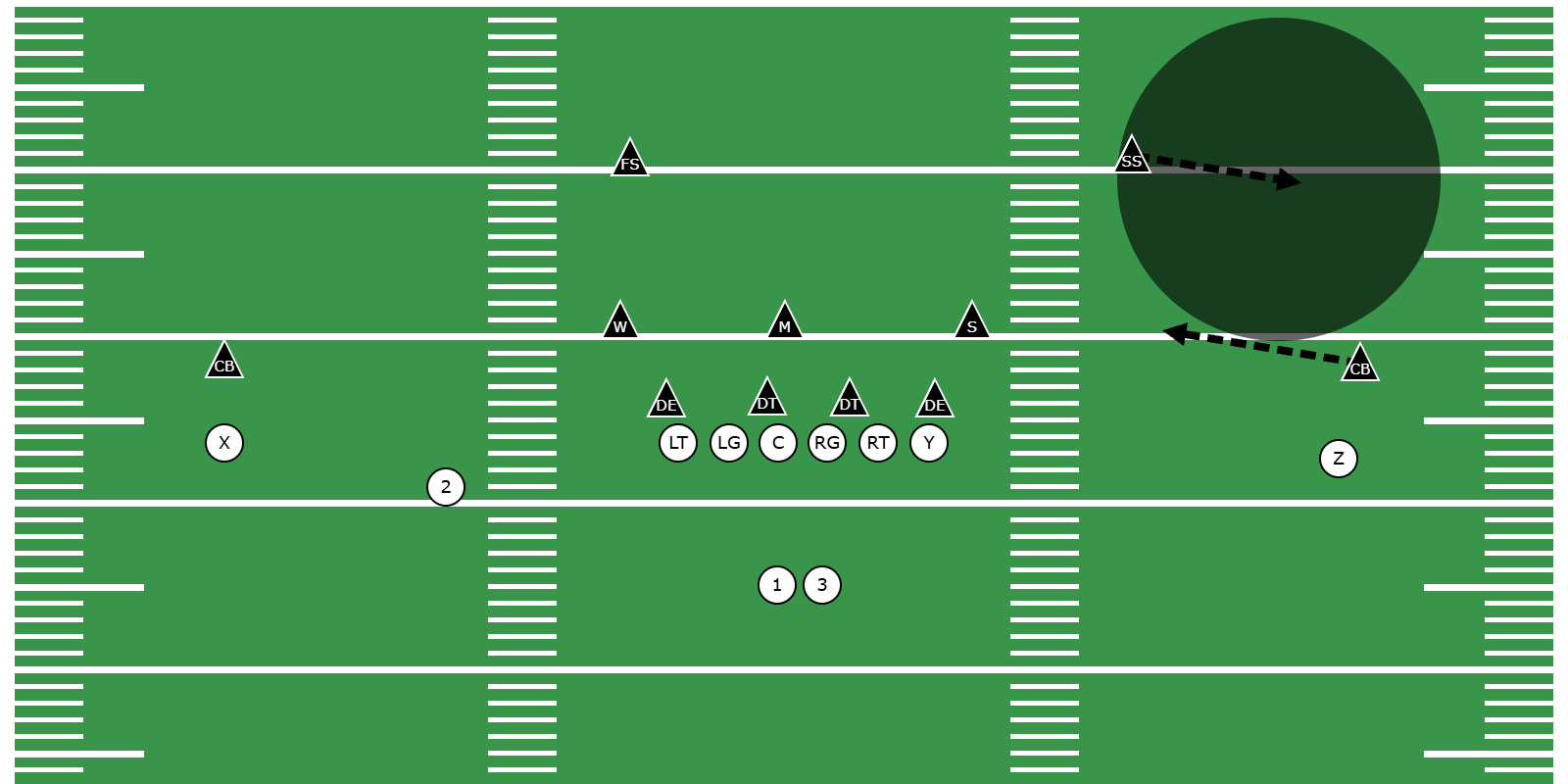
What Is Cut Coverage?
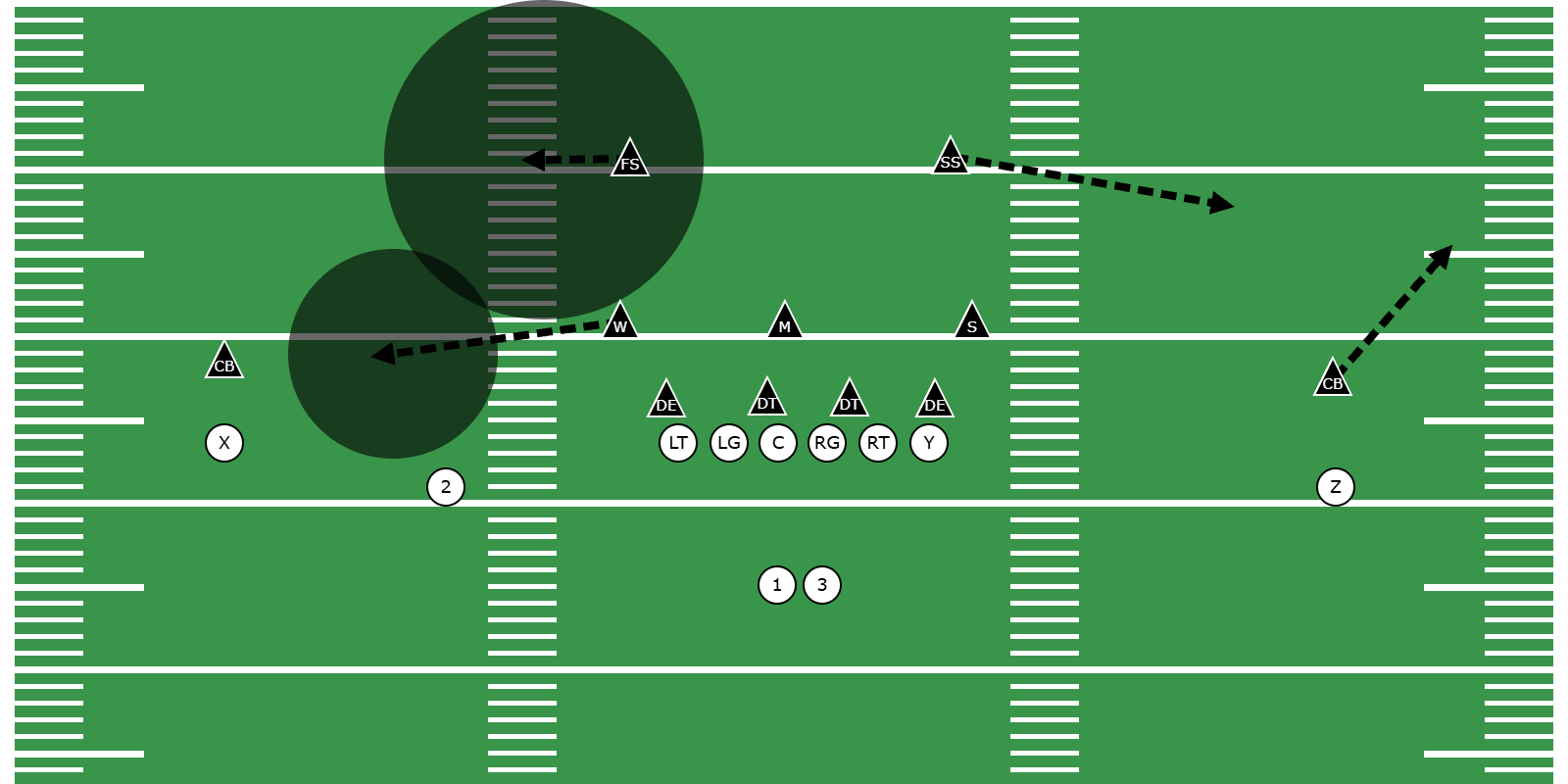
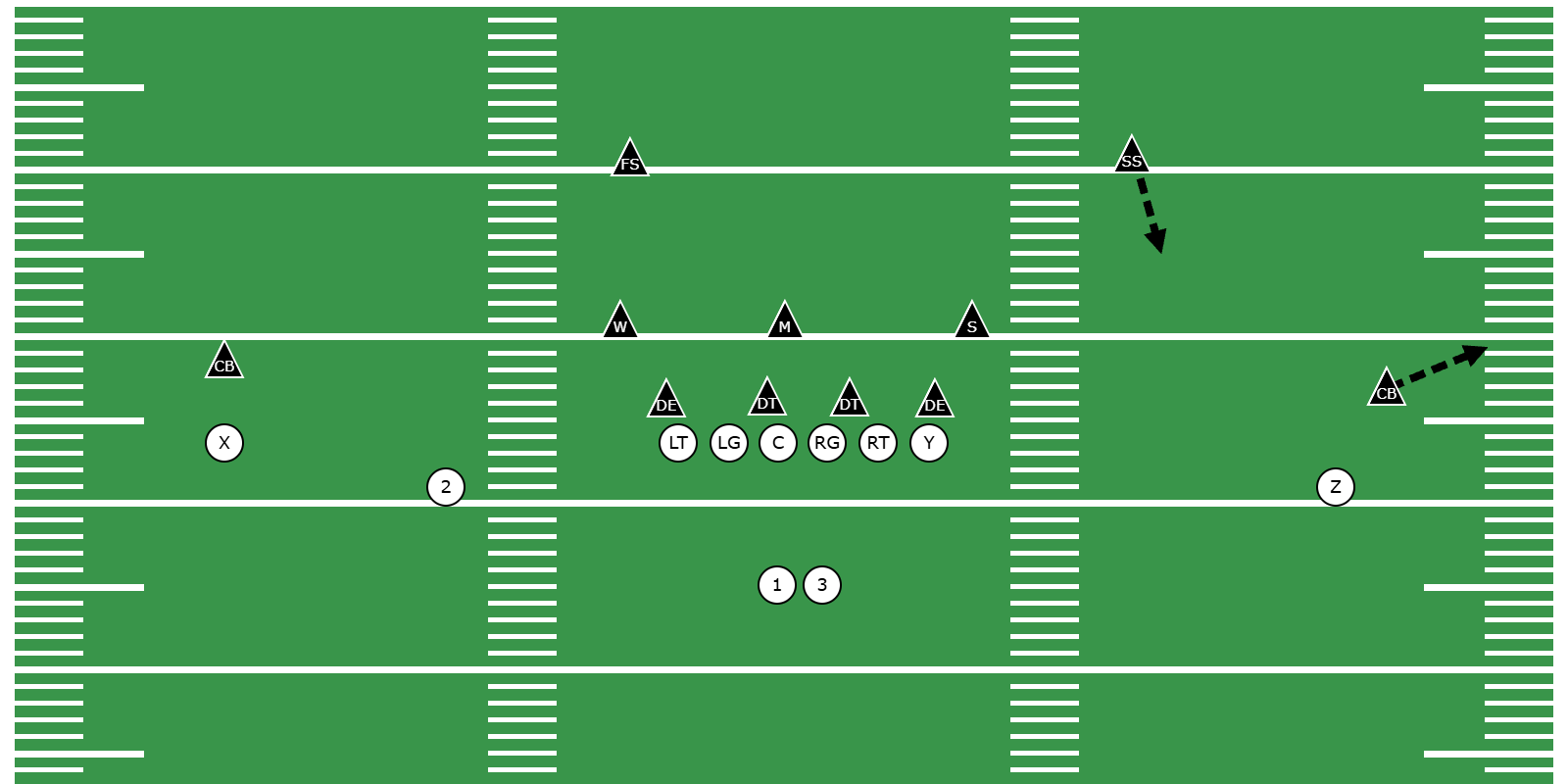
Cut Coverage creates an aggressive route exchange.
A defender recognizes a predetermined route and attacks it from advantageous leverage.
For example, a defender may see a receiver crossing the field and:
- Recognize the route.
- Leave his original leverage.
- Drive downhill or across the field.
- Undercut the receiver.
- Attempt to eliminate the throwing window.
Another defender remains responsible for the deeper threat.
The result can create a defender sitting directly in the quarterback’s intended throwing lane.
The coverage is most effective when the quarterback expects a receiver to run away from his original defender and into open space.
Instead, the receiver runs directly toward the cut defender.
Why Is It Called Cut Coverage?
The defender is effectively cutting the route off.
Rather than following the receiver from behind, the defender attacks the route from an angle.
This can allow him to:
- Arrive before the receiver.
- Close the throwing window.
- Create an interception opportunity.
- Force the quarterback to hold the ball.
- Redirect the quarterback to another read.
The defender is not simply chasing the route.
He is anticipating where the receiver is going and attacking that destination.
Cut Coverage Is System-Specific
Cut terminology is not universal.
One defensive playbook may use “Cut” to describe:
- A safety robbing a crossing route.
Another may use it for:
- A corner passing a route and attacking another receiver.
Another may use it as:
- A specific adjustment within man coverage.
Because of that variation, coaches should define the coverage by responsibilities rather than relying on the name alone.
Players should know:
- What route triggers the cut?
- Which defender makes the cut?
- Who replaces him?
- Who protects the vertical route?
- What happens if the expected route never appears?
Those rules define the coverage.
The Basic Cut Relationship
A basic Cut concept usually requires at least two complementary defenders.
Cut Defender
The Cut defender:
- Reads a designated receiver or route.
- Recognizes the trigger.
- Drives aggressively.
- Undercuts the route.
- Plays the quarterback and receiver from favorable leverage.
Protecting Defender
The protecting defender:
- Maintains deeper leverage.
- Protects against vertical continuation.
- Handles the route vacated by the Cut defender when required.
- Prevents the offense from exploiting the aggressive underneath reaction.
The Cut defender can only attack confidently when he trusts that protection.
The Cut Defender
The Cut defender must be decisive.
Hesitation defeats the purpose of the technique.
He should:
- Read the correct key.
- Recognize the route quickly.
- Take a direct angle.
- Stay underneath the receiver.
- Look through the route toward the quarterback when possible.
- Finish at the catch point.
The defender should not drift toward a route simply because it appears nearby.
The cut should be triggered by a specific rule.
A false trigger can leave another receiver uncovered.
The Protecting Defender
The protecting defender provides the security that allows the Cut defender to attack.
He may be responsible for:
- A vertical route.
- A receiver released by the Cut defender.
- Deep middle help.
- An over-the-top bracket relationship.
He should remain disciplined.
If both defenders drive the underneath route, the offense can create an explosive play behind them.
The protecting defender must understand that his job may look passive early in the play because he is preserving the structure.
Route Recognition
Cut Coverage depends heavily on route recognition.
The defender may read:
- Receiver release.
- Receiver stem.
- Split.
- Down and distance.
- Formation.
- Quarterback drop.
- Offensive tendency.
The more predictable the offensive concept, the more aggressively the defense can use a Cut call.
However, defenders should not guess.
The offense can use:
- Double moves.
- Route conversions.
- Play-action.
- Delayed releases.
to punish defenders who abandon assignments too early.
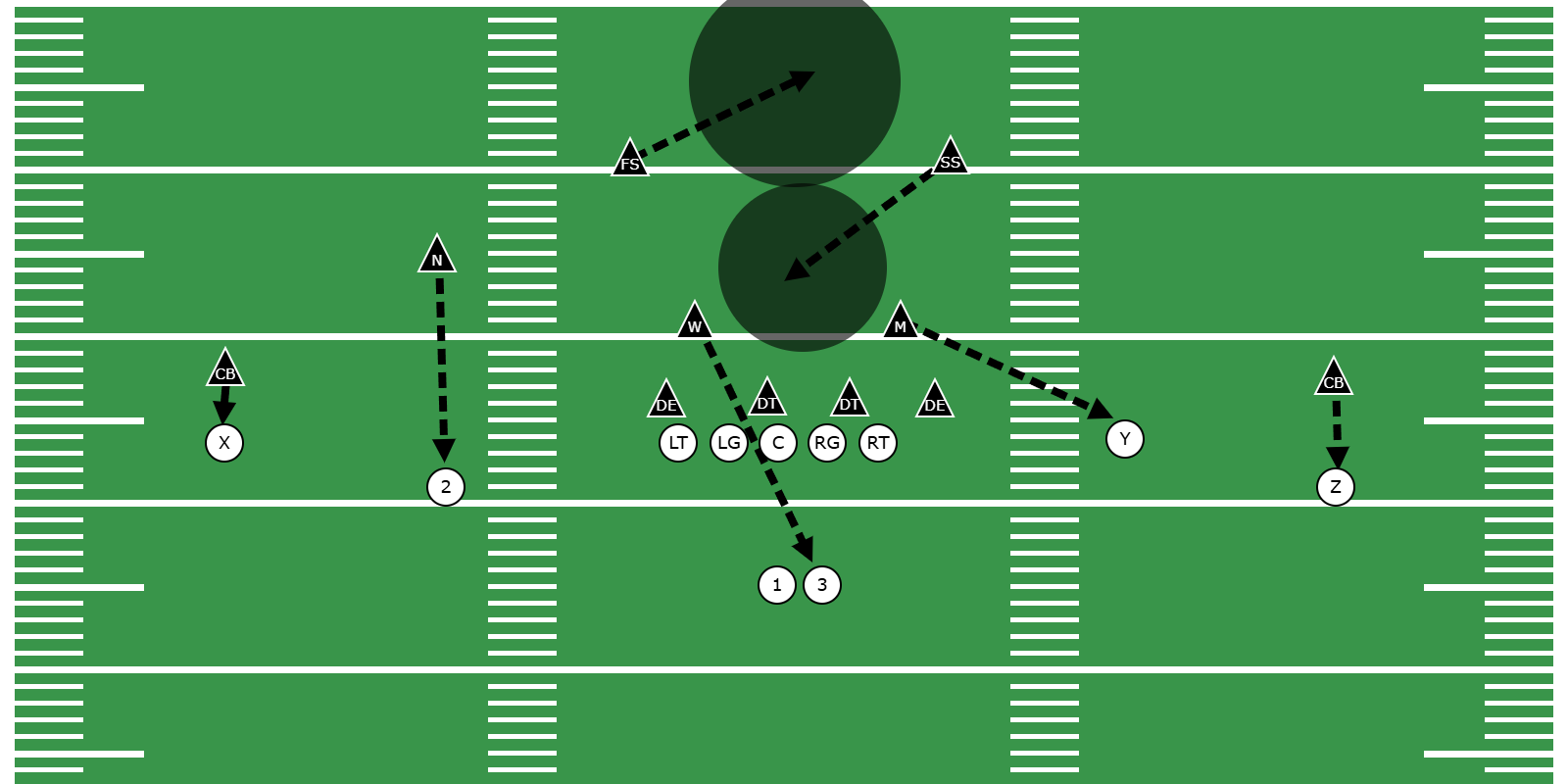
Cut Coverage Against Shallow Cross
The shallow cross is one of the most natural routes to attack with a Cut technique.
The receiver attempts to run away from his original defender across the formation.
A Cut defender positioned on the opposite side can:
- Recognize the crossing route.
- Drive downhill.
- Meet the receiver.
- Take away the easy completion.
The original defender may then:
- Replace another route.
- Maintain leverage on a deeper threat.
- Become help according to the coverage.
The offense expects the crosser to gain separation through horizontal movement.
The Cut defender attacks the space the receiver is entering instead.
Cut Coverage Against Mesh
Mesh creates two shallow crossing routes moving in opposite directions.
The offense wants defenders to:
- Chase through traffic.
- Collide.
- Lose leverage.
- Get picked.
A Cut structure can allow defenders to exchange the crossing routes.
Instead of chasing one receiver all the way across the field:
- Defender one passes the route.
- Defender two cuts the crosser entering his area.
The same exchange can happen on the opposite side.
This can reduce the effectiveness of the natural rub created by Mesh.
The communication rules must be extremely clear.
Cut Coverage Against Digs
Dig routes create an intermediate inside-breaking throw.
A defender positioned inside can cut underneath the route.
He should:
- Recognize the vertical stem.
- Anticipate the inside break.
- Drive underneath the receiver.
- Close the quarterback’s throwing lane.
A deeper defender protects against:
- Post.
- Vertical continuation.
- Double move.
The Cut defender should avoid attacking too early.
If he jumps inside before the receiver actually breaks, the offense may convert the route vertically.
Cut Coverage Against Slants
Slants develop quickly.
The Cut defender must react immediately.
He can:
- Maintain inside leverage.
- Drive into the throwing lane.
- Force the quarterback to pull the ball down.
- Create a deflection or interception opportunity.
Because the route occurs close to the line of scrimmage, there is little time for complicated exchanges.
Youth defenses should use a very simple trigger if they intend to cut slants.
Cut Coverage Against Deep Overs
Deep over routes can be difficult for man defenders because the receiver crosses the entire field.
A Cut defender on the opposite side can intercept the route’s path.
The defender should:
- Maintain enough depth.
- Recognize the crossing stem.
- Take a proper angle.
- Avoid getting underneath too early.
A deep defender must protect against routes moving behind the cut.
Deep overs are frequently paired with play-action, making eye discipline especially important.
Cut Coverage Against Posts
A post can sometimes be attacked from underneath by a robber or Cut defender.
The Cut defender should:
- Recognize the inside break.
- Drive underneath the route.
- Stay between the quarterback and receiver.
A deep safety or corner remains over the top.
This creates a high-low bracket around the post.
The quarterback may believe the receiver has inside separation before the Cut defender enters the throwing lane.
Cut Coverage Against Outs
Out routes are less natural for an inside Cut defender to attack, but a defense can build outside Cut rules.
A defender with outside leverage may:
- Recognize the break.
- Drive downhill.
- Undercut the out.
Another defender protects the vertical continuation.
The defense should only use this technique when the leverage and spacing make sense.
A defender attempting to cut an out route from too far inside may arrive late and open another area of the coverage.
Cut Coverage Against Corner Routes
A corner route can be attacked from underneath when the defense has high outside protection.
The Cut defender can squeeze the route from below.
The deep defender stays over the top.
The receiver is then bracketed between:
- Underneath leverage.
- Deep outside leverage.
The defense must maintain enough width.
If both defenders stay too far inside, the receiver can escape toward the sideline.
Cut Coverage Against Double Moves
Double moves are one of the biggest dangers.
The offense may intentionally show the route that triggers the Cut defender.
Examples include:
- Slant-and-go.
- Out-and-up.
- Post-corner.
- Hitch-and-go.
The Cut defender attacks the first break.
The offense then continues vertically.
The protecting defender must remain disciplined.
The Cut defender also needs a rule for when the route has not fully declared.
Aggressiveness should come from recognition, not guessing.
Cut Coverage Against Switch Releases
Switch releases can change which defender should cut which route.
Two receivers may exchange their initial paths.
The defense must determine whether the Cut rule is attached to:
- A specific receiver.
- A receiver number.
- A route entering a zone.
- A particular release.
The simpler the rule, the easier it is for youth defenders to execute.
If the players need several seconds to determine which receiver is now eligible to be cut, the coverage will fail at game speed.
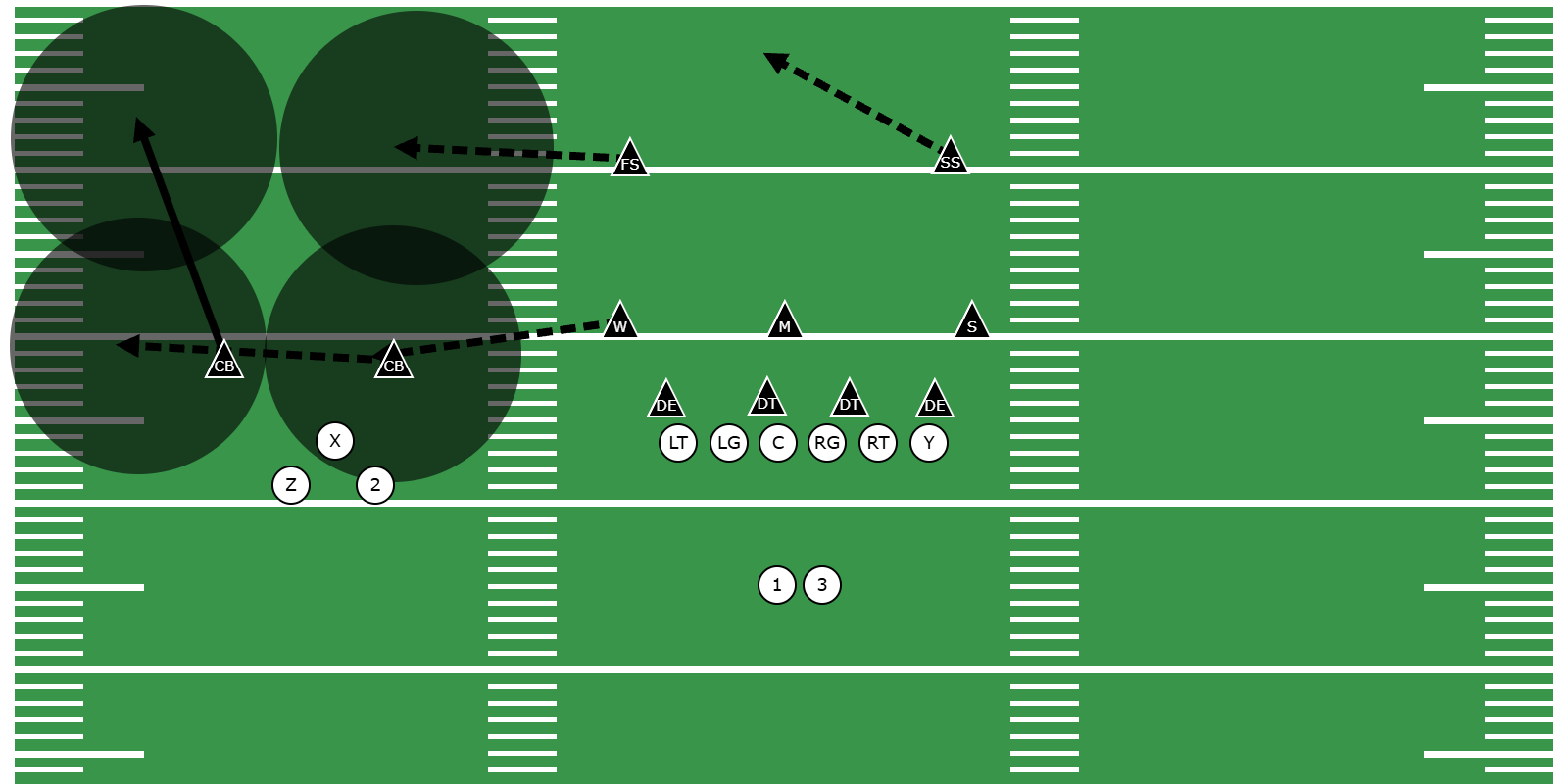
Cut Coverage Against Bunch
Bunch formations create route traffic that can make man coverage difficult.
Cut principles can help defenders exchange routes rather than chase through congestion.
However, the defense must account for:
- Picks.
- Rubs.
- Switch releases.
- Delayed routes.
- Multiple crossers.
A dedicated Box Coverage call may be a cleaner answer when the offense consistently uses three-receiver bunch.
Cut rules can still be incorporated into that larger structure.
Cut Coverage Against Stack Formations
Stacked receivers can create similar exchange problems.
The defender may not know immediately which receiver will break inside or outside.
A Cut rule based on the route rather than the receiver can help.
For example:
- First shallow crosser gets cut.
- First inside-breaking route gets cut.
The exact rule depends on the defensive system.
The key is preventing both defenders from chasing the same release.
Cut Coverage Against Trips
Trips formations create multiple potential inside-breaking routes.
The defense must identify:
- Which receiver can trigger the Cut.
- Which defender makes the Cut.
- Who replaces the vacated responsibility.
- How #3 is handled.
- How the backside receiver is handled.
The Cut call should be integrated into the complete Trips coverage.
It cannot function as an isolated technique.
Cut Coverage Against an Isolated Receiver
An isolated receiver may be attacked with a Cut defender working from inside.
For example:
- Corner plays outside or trail leverage.
- Safety or robber works inside.
- Inside-breaking routes are cut.
The receiver may appear to have separation from the corner on a slant or dig.
The Cut defender is waiting in the throwing lane.
This can be useful against a receiver who repeatedly wins on inside-breaking routes.
Cut Coverage Against Slot Receivers
Slot receivers commonly run routes that are ideal Cut targets:
- Slants.
- Digs.
- Crossers.
- Option routes.
- Seams.
A linebacker, nickel, or safety may become the Cut defender.
The defense must account for the slot receiver’s ability to break either direction.
A Cut call should target a specific route tendency rather than assuming every inside release is identical.
Cut Coverage Against Tight Ends
Tight ends often run:
- Seams.
- Digs.
- Crossers.
- Stick routes.
- Delayed routes.
A safety or linebacker can use Cut principles against those patterns.
The defense should be careful when the tight end initially blocks.
Play-action can create a delayed release behind an aggressive run reaction.
The Cut defender must read the actual route rather than only the backfield.
Cut Coverage Against Running Backs
Running backs can create Cut opportunities on:
- Angle routes.
- Texas routes.
- Crossers.
- Checkdowns.
An underneath defender can recognize the route and drive into the throwing lane.
The defense must still account for wheel routes.
A defender who aggressively cuts an underneath back route can be vulnerable if the back turns vertically.
High help should be defined.
Cut Coverage Against Motion
Motion changes receiver locations and can alter the Cut relationship.
The defense needs to determine whether the Cut rule follows:
- The receiver.
- The formation side.
- The receiver number.
- The route concept.
Possible responses include:
- Carry the Cut call with the receiver.
- Exchange the Cut responsibility.
- Reset the coverage.
- Cancel the Cut against certain motions.
Youth teams should choose one primary rule and practice it repeatedly.
Cut Coverage and the Run Game
Cut defenders are often safeties, linebackers, or nickel defenders who also have run responsibilities.
The coverage must define when the defender can trigger against the run.
If the Cut defender reacts too aggressively to run action:
- Crossing routes can open behind him.
- Play-action can create explosive throws.
If he stays too passive:
- The run fit may become weak.
The defender should use a specific key.
Coverage and run responsibilities must be installed together.
Cut Coverage Against Play Action
Play-action is a major test of Cut discipline.
Offenses frequently pair:
- Run action.
- Deep crossers.
- Digs.
- Posts.
The Cut defender may see the backfield action and step downhill.
That can either help or hurt.
If the route crosses behind him, the offense may create a large throwing window.
The defender should:
- Read the assigned key.
- Confirm pass.
- Locate the route.
- Trigger the Cut only when the route declares.
The offense wants the defender to guess.
The defense wants him to recognize.
Cut Coverage Against RPOs
RPOs can place an underneath Cut defender in conflict.
The quarterback may read that defender.
If he:
- Fits the run, the quarterback throws behind him.
- Stays underneath the route, the offense hands the ball off.
The defense should identify whether the Cut defender is being intentionally read.
Possible answers include:
- Changing the run fit.
- Changing the Cut defender.
- Adjusting the front.
- Using another coverage.
- Pressuring the mesh.
The structure should remove the conflict rather than asking the defender to solve two simultaneous responsibilities.
Cut Coverage and the Pass Rush
Cut Coverage can create opportunities for the pass rush.
The quarterback may expect an inside-breaking route to open.
When the Cut defender closes that window, the quarterback must:
- Reset.
- Move to another read.
- Hold the football.
That additional time can allow the rush to arrive.
The pass rush should maintain:
- Contain.
- Lane integrity.
- Pocket compression.
Coverage and rush should work together.
Cut Coverage and Pressure
Pressure can complement Cut Coverage by forcing the quarterback to throw quickly into a predetermined area.
The defense may intentionally:
- Pressure from one side.
- Force the quarterback toward a hot route.
- Place a Cut defender in that throwing lane.
This can create interception opportunities.
However, pressure reduces the number of defenders available in coverage.
Youth teams should only combine Cut concepts with pressure after both components are reliable independently.
Cut Coverage on Third Down
Third down is a natural situation for Cut Coverage because offenses often rely on predictable conversion routes.
Common third-down routes include:
- Dig.
- Shallow cross.
- Option route.
- Stick.
- Slant.
If film shows that the quarterback repeatedly targets one route, the defense can place a Cut defender in that window.
The objective is to force the quarterback to:
- Hold the ball.
- Throw elsewhere.
- Make a more difficult throw.
The pass rush can then finish the play.
Cut Coverage in the Red Zone
The red zone compresses throwing space.
That can make Cut defenders even more dangerous.
The offense has less room to stretch the defense vertically.
A Cut defender can aggressively attack:
- Slants.
- Digs.
- Crossers.
- Pivot routes.
- Quick ins.
The defender should understand the end line provides additional help.
However, quick throws develop rapidly.
The Cut trigger must be simple.
Cut Coverage Near the Goal Line
Near the goal line, quarterbacks often throw based on immediate leverage.
A Cut defender can disrupt that read.
Common targets include:
- Slant.
- Pick slant.
- Quick in.
- Shallow.
- Tight end pop.
The defender should attack the throwing lane rather than chasing the receiver after the catch.
A properly timed Cut can create a turnover because the quarterback may release the ball before seeing the defender enter the window.
Cut Coverage and Field Position
Field position affects the Cut angle.
To the boundary:
- Horizontal space is compressed.
- The sideline can help restrict routes.
To the field:
- Crossers have more space.
- Cut defenders may need better angles.
- Receivers can create greater separation.
The defender’s alignment should account for where the route is likely to finish.
The shortest path to the throwing window is usually more important than the shortest path to the receiver.
Disguising Cut Coverage
Cut Coverage can be especially effective when disguised.
The defense may initially show:
- Man coverage.
- Cover 1.
- Cover 2 Man.
- Quarters.
- Another split-field structure.
The quarterback expects the route to create separation.
After the snap, the Cut defender moves into the throwing lane.
The disguise can create interception opportunities because the quarterback may release the ball based on his pre-snap expectation.
The defender must still reach the route on time.
Disguise is useless if it creates poor leverage.
Cut Coverage From Cover 1
Cover 1 provides a natural structure for Cut concepts.
The defense can use:
- Man defenders underneath.
- A safety or robber reading inside routes.
A Cut defender can attack:
- Crossers.
- Digs.
- Slants.
The remaining defenders maintain man leverage.
This resembles Cover 1 Robber when the extra inside defender is specifically reading and jumping routes.
The terminology depends on the defensive system.
Cut Coverage From Two-High Structures
Two-high defenses can also create Cut opportunities.
One defender can:
- Maintain high leverage.
while another:
- Drives underneath.
Split-field systems can build Cut rules into:
- Quarters.
- Palms.
- Cover 6.
- Bracket structures.
The defense can target specific route combinations without changing the entire coverage.
Cut Coverage vs. Cover 1 Robber
Cover 1 Robber commonly uses:
- Man coverage underneath.
- One deep safety.
- One robber defender reading the quarterback and inside routes.
Cut Coverage describes the aggressive route-jumping technique or exchange itself.
A Cover 1 Robber defense may use Cut principles.
However, Cut rules can also exist in other coverage structures.
The terms overlap but are not necessarily identical.
Cut Coverage vs. Bracket Coverage
Bracket Coverage dedicates two defenders to surrounding a priority receiver.
Cut Coverage may instead allow one defender to attack a route as it enters his area while another defender protects the deeper responsibility.
A Cut can create a temporary bracket around a route.
The difference is emphasis:
Bracket: Control the receiver with two defenders.
Cut: Aggressively attack a route or route exchange from advantageous leverage.
Cut Coverage vs. Cone Coverage
Cone Coverage creates a deliberate two-on-one leverage relationship around one receiver.
Cut Coverage is generally more route-triggered.
A Cone may exist before the snap.
A Cut often occurs because the defender recognizes a particular route after the snap.
Both concepts rely on defenders trusting complementary help.
Cut Coverage vs. Box Coverage
Box Coverage surrounds a three-receiver bunch with four defenders and distributes releases.
Cut Coverage can be incorporated into those distribution rules.
For example, an underneath Box defender may cut a shallow route entering his leverage rather than allowing another defender to chase it across the formation.
Box describes the larger coverage structure.
Cut describes the route attack or exchange.
Personnel Considerations
The Cut defender needs specific traits.
Useful qualities include:
- Route recognition.
- Quick acceleration.
- Good angles.
- Ball awareness.
- Confidence.
- Discipline.
- Reliable tackling.
The best Cut defender is not necessarily the fastest player.
Recognition and timing can be more important.
The protecting defender needs:
- Deep-range discipline.
- Communication.
- Ability to handle vertical routes.
- Understanding of route exchanges.
The two defenders must trust each other.
Coaching Cut Coverage in Youth Football
Youth coaches should begin with one route trigger.
Do not install Cut Coverage as a large collection of exceptions.
A practical progression is:
- Define the Cut defender.
- Define the protecting defender.
- Choose one route to cut.
- Walk through the route.
- Teach the Cut angle.
- Teach the protecting defender’s responsibility.
- Practice the route repeatedly.
- Add a second route.
- Add crossing routes.
- Add Mesh.
- Add double moves.
- Add motion.
- Connect the Cut to the run fit.
- Practice third-down situations.
- Practice red-zone situations.
The defender should know exactly what he is looking for before the snap.
A Simple Cut Drill
Use:
- Two receivers.
- Two or three defenders.
- One quarterback.
Have one receiver run a crossing route.
The Cut defender aligns opposite the route.
On the snap:
- Receiver crosses.
- Original defender maintains his assignment or exchange rule.
- Cut defender recognizes the crosser.
- Cut defender attacks the throwing lane.
- Quarterback attempts the throw.
Grade:
- Recognition.
- Angle.
- Timing.
- Leverage.
- Finish.
The defender should arrive underneath the route rather than chase the receiver from behind.
A Dig Cut Drill
Have the receiver run:
- Vertical stem.
- Dig break.
The Cut defender reads the stem and waits for the break.
Once the route declares:
- Drive underneath.
- Get between quarterback and receiver.
- Play the ball.
Mix in:
- Go route.
- Post.
- Dig.
This prevents the defender from guessing the dig on every repetition.
A Mesh Cut Drill
Use two shallow crossers.
Teach defenders to exchange the routes.
The goal is to prevent:
- Chasing through traffic.
- Defensive collisions.
- Picks.
Each Cut defender should attack the crosser entering his leverage.
This drill can make the concept immediately useful against teams that rely heavily on Mesh.
A Double-Move Drill
Run:
- Slant-and-go.
- Out-and-up.
- Post-corner.
- Dig-and-go.
The Cut defender should recognize whether the first break truly triggers his responsibility.
The protecting defender must stay disciplined over the top.
This teaches the defense that aggressive coverage still requires protection against deception.
Common Youth Football Mistakes
Cut Defender Guesses
He leaves his assignment before the route declares.
Cut Defender Hesitates
He recognizes the route but arrives too late.
Protecting Defender Also Drives Underneath
The offense throws over both defenders.
Defender Chases the Receiver Instead of the Throwing Lane
He arrives behind the route rather than underneath it.
No Replacement Rule
The Cut defender leaves his original area and nobody replaces him.
Players Cut Every Crossing Route
The coverage loses structure because defenders abandon assignments indiscriminately.
Eyes Stay in the Backfield
Play-action pulls the Cut defender away from his route key.
No Motion Adjustment
The receiver moves and changes the route distribution.
Run Fit Is Forgotten
The Cut defender remains passive while the offense runs directly at him.
Too Many Triggers
Players hesitate because they are trying to remember several possible route exchanges.
When to Call Cut Coverage
Cut Coverage can be useful when:
- The offense repeatedly uses crossing routes.
- Mesh is a major part of the passing game.
- A receiver consistently wins on digs or slants.
- The quarterback throws based on timing.
- The offense has predictable third-down concepts.
- The defense wants to create interception opportunities.
- Man defenders struggle chasing receivers across the field.
- The defense has a smart, instinctive underneath defender.
It may be less attractive when:
- The offense frequently uses double moves.
- Route tendencies are unpredictable.
- Players struggle with route recognition.
- Communication is inconsistent.
- The Cut defender is also essential to the run fit.
- The offense uses frequent motion that changes the route distribution.
Building a Youth Game Plan With Cut Coverage
Cut Coverage should be tied to a specific offensive tendency.
Study:
- Which routes are repeatedly targeted?
- Who runs them?
- On what downs?
- From which formations?
- At what depth?
- Does the quarterback throw on rhythm?
- Does the offense use double moves?
Then choose the Cut trigger.
For example, if an opponent repeatedly throws a shallow cross on third-and-medium, the defense does not need ten Cut rules.
It may need one:
Cut the shallow crosser.
That simplicity can make the call much more effective.
What the Offense May Do Next
Once the offense recognizes that routes are being cut, it may respond with:
- Double moves.
- Vertical routes.
- Delayed crossers.
- Play-action.
- Motion.
- Pump fakes.
- Routes behind the Cut defender.
The defense should anticipate those answers.
The protecting defender becomes increasingly important once the offense attempts to exploit the Cut defender’s aggression.
Key Coaching Points
- Define exactly what route triggers the Cut.
- Define exactly which defender makes the Cut.
- Define who protects the vacated responsibility.
- Attack the throwing lane rather than chasing the receiver.
- Teach the Cut defender to be decisive after recognition.
- Teach the protecting defender to remain disciplined.
- Practice shallow cross and Mesh.
- Practice digs and other common inside-breaking routes.
- Include double moves in every Cut period.
- Establish motion rules.
- Connect the Cut defender to the run fit.
- Use film and tendencies to determine when the Cut is appropriate.
- Do not overload youth defenders with too many triggers.
- Make the coverage solve a specific offensive problem.
Final Thoughts
Cut Coverage gives a defense a way to turn an offense’s route timing against it.
Instead of allowing a receiver to run away from one defender and into open space, the defense places another defender in position to attack the route from the direction it is headed.
The Cut defender does not chase.
He anticipates, drives, and attempts to arrive in the throwing lane before the football.
That aggression only works when the rest of the coverage protects him. A deeper defender must remain disciplined, another player may need to replace the responsibility he leaves, and the entire defense must understand how the Cut affects the run fit.
For youth football, Cut Coverage is most effective when it is narrow and specific. Identify one route the opponent relies on, assign one defender to cut it, clearly define the protection behind him, and practice the exchange repeatedly.
When the trigger is clear and the defenders trust the structure, Cut Coverage can eliminate easy crossing throws, disrupt quarterback timing, reduce the effectiveness of rub concepts, and create some of the best interception opportunities in the defense.
Related Articles
Published by CoachYouths Staff on 11/24/2026
You are NOT currently logged in, you may login or signup for FREE at any time: