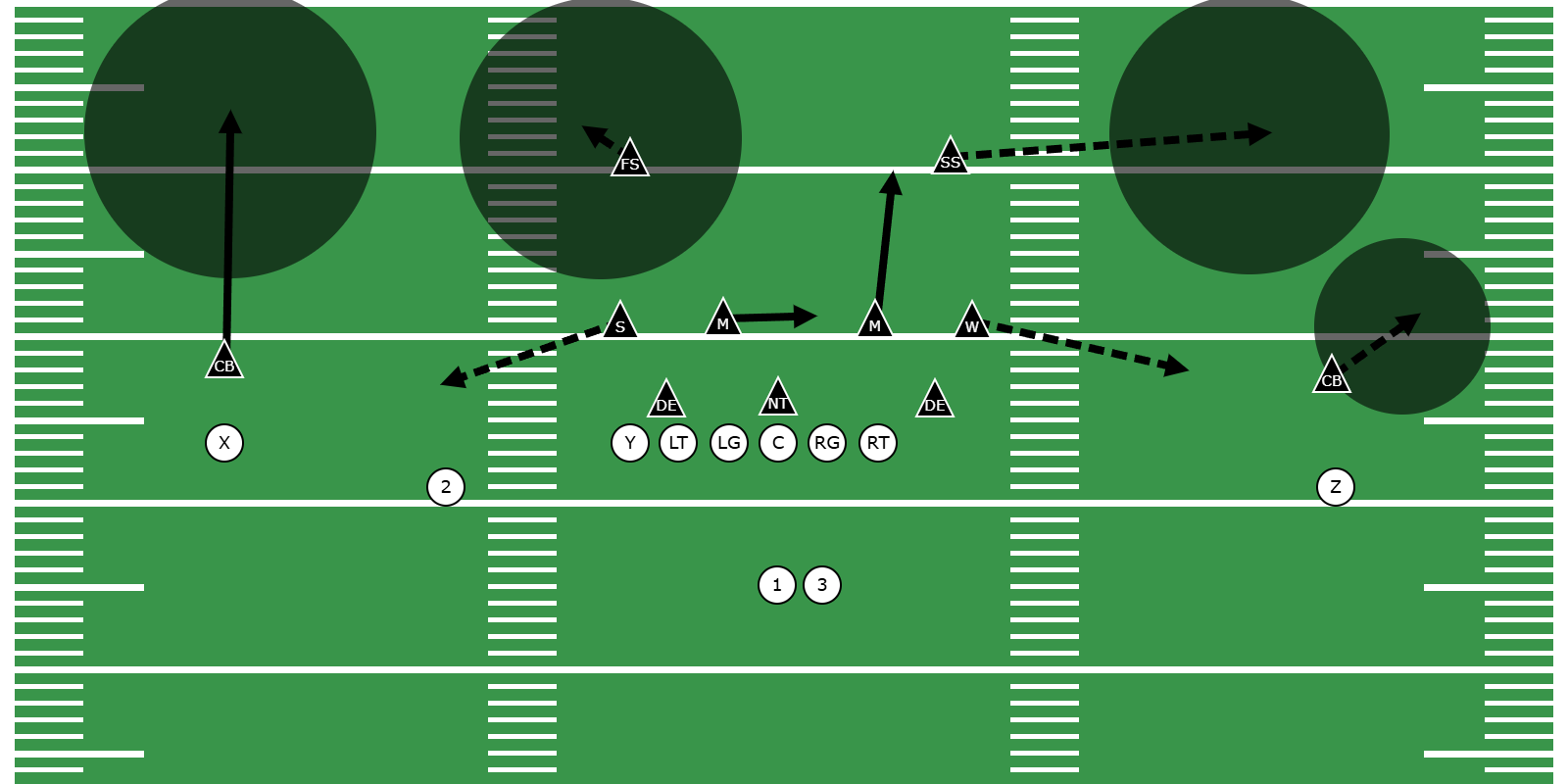
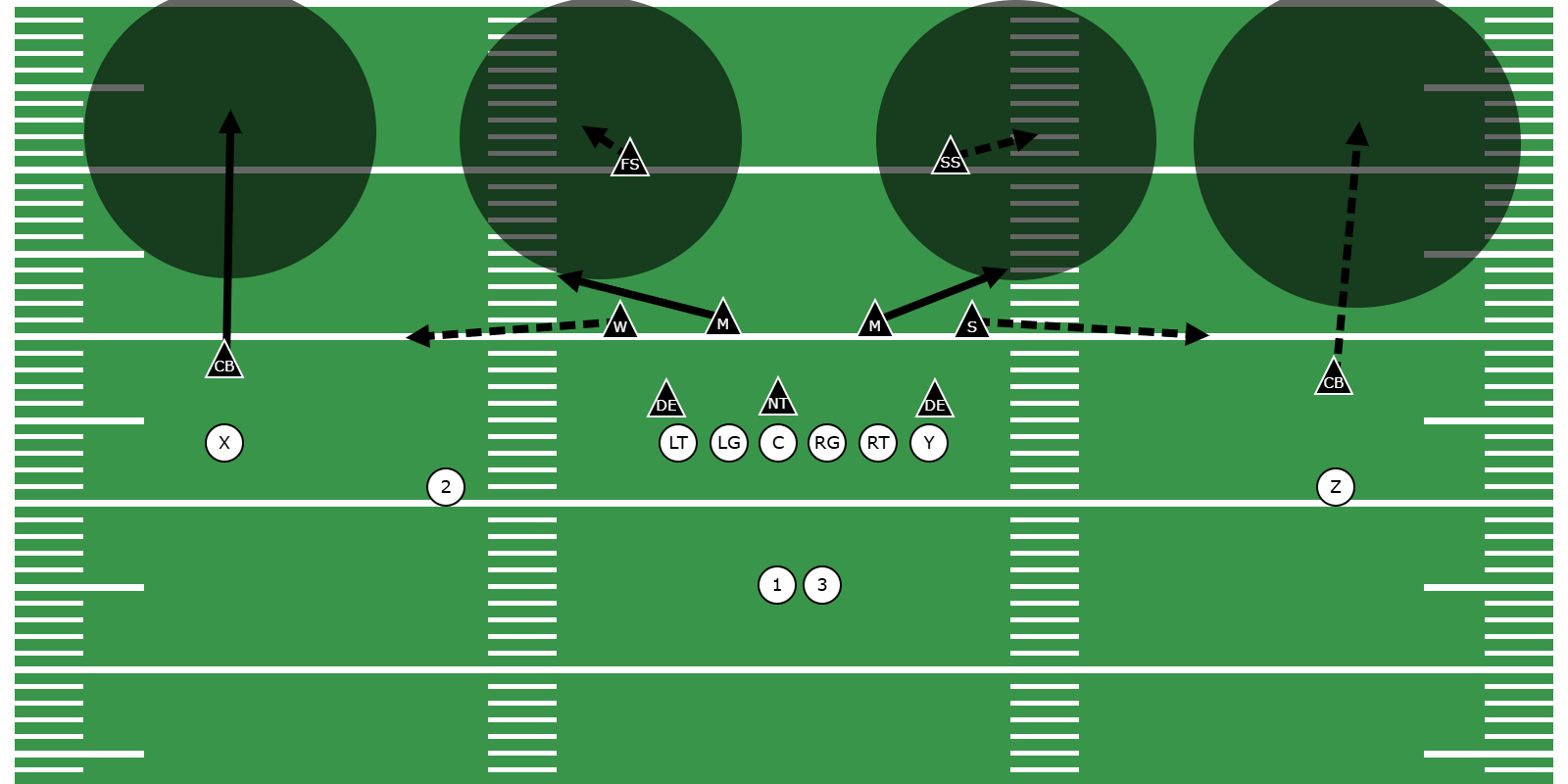
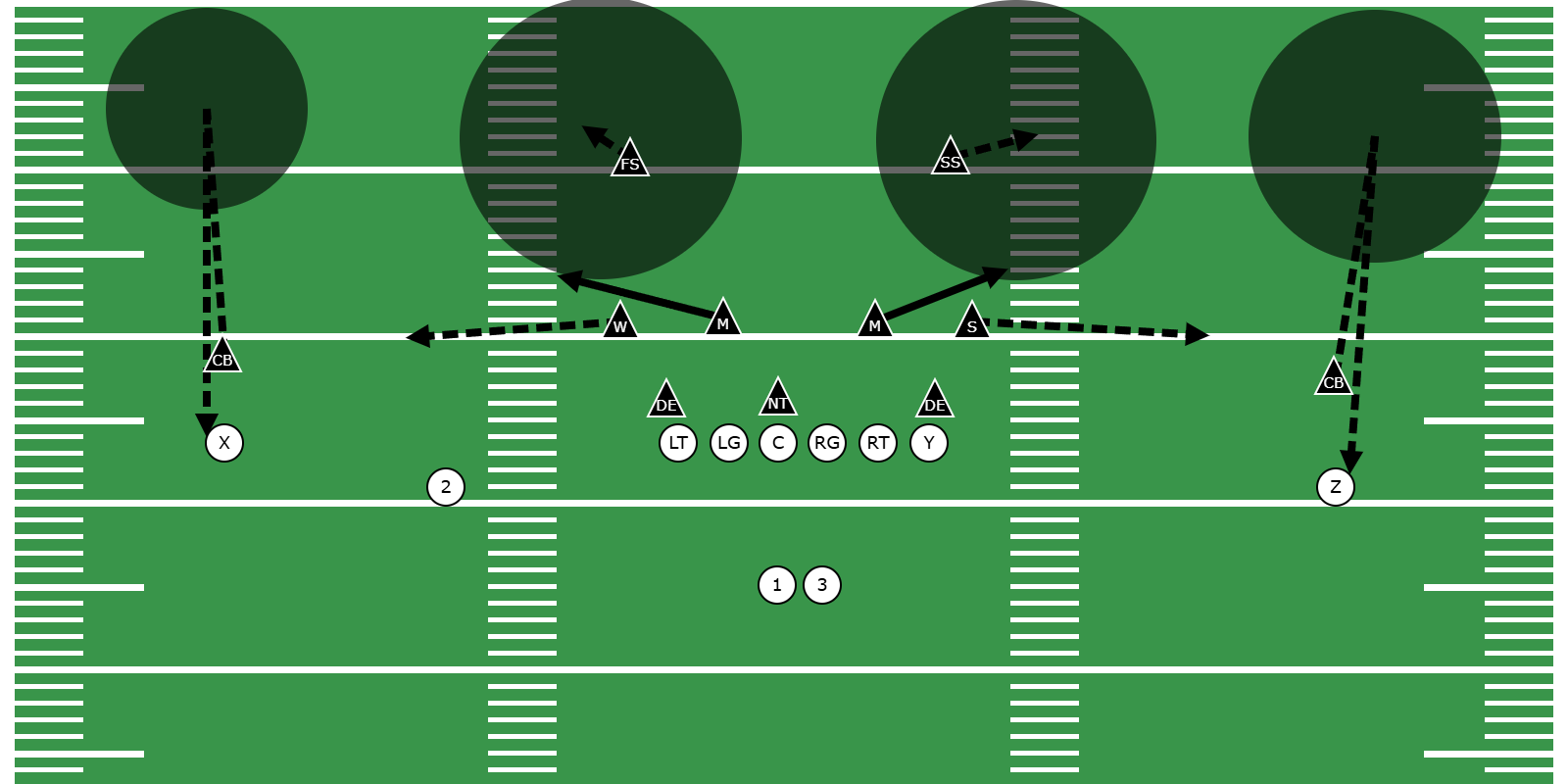
Cover 8
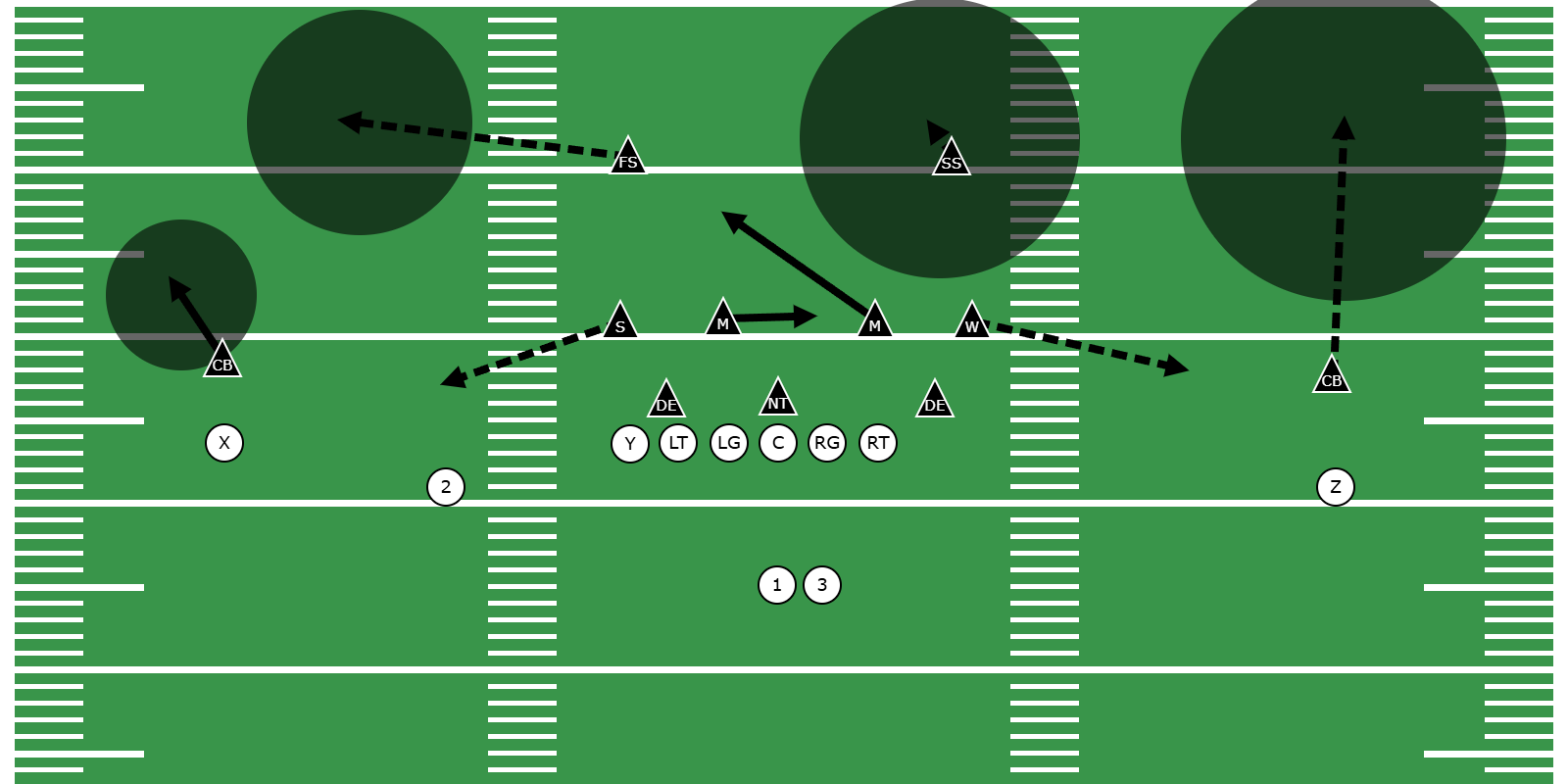
What Is Cover 8?
Cover 8 is best understood as a coverage call defined by the defensive system rather than a universally fixed field distribution.
A coach may use Cover 8 to combine two complementary coverage concepts across the formation.
For example, one side may use:
- Quarters principles.
while the other side uses:
- Palms.
- Cover 2 principles.
- A bracket concept.
- Another two-high match rule.
The exact combination depends on the playbook.
This differs from a coverage such as basic Cover 3, where the term usually communicates a recognizable three-deep structure.
With Cover 8, the assignment rules matter more than the number in the name.
Why Coverage Terminology Matters
Football coverage terminology is not universal.
Two coaching staffs can use the same word for different structures.
That is especially true with:
- Cover 7.
- Cover 8.
- Special split-field calls.
- Pattern-match terminology.
- Bracket terminology.
A youth coach researching Cover 8 may therefore find conflicting explanations.
That does not necessarily mean one explanation is wrong.
It often means the coaches are using different defensive languages.
The solution is to define the coverage by responsibilities.
Ask:
- What does the corner do?
- What does the safety do?
- What does the underneath defender do?
- Who handles #1 vertical?
- Who handles #2 vertical?
- Who owns the flat?
- Who fits the run?
Those answers define the coverage more accurately than the name alone.
Split-Field Coverage
The central idea behind Cover 8 is split-field defense.
Instead of treating the entire formation with one universal coverage rule, the defense can divide the formation into two sides.
Each side receives a coverage based on the threats it presents.
For example:
Side One
The offense has two detached receivers.
The defense may choose a Quarters or match structure.
Side Two
The offense has an isolated receiver and attached tight end.
The defense may choose a different coverage relationship.
The two calls must still fit together across the middle of the field.
Split-field does not mean the defense becomes two unrelated five-player units.
All eleven defenders remain part of one coverage.
Receiver Numbering
Receiver numbering is important in any split-field system.
On each side:
- #1 is the widest eligible receiver.
- #2 is the next eligible receiver inside.
- #3 is the next eligible receiver inside when present.
The defense can then create rules based on receiver distribution rather than offensive position names.
For example:
- Corner reads #1.
- Safety reads #2.
- Underneath defender relates to #2 or #3.
- Trips adjustment accounts for #3.
This allows the same coverage language to work against:
- Wide receivers.
- Tight ends.
- Running backs.
- Wing players.
- Different personnel packages.
Building a Cover 8 Structure
Because Cover 8 terminology varies, a defense should begin by defining the exact two coverage halves it intends to combine.
A practical structure might use:
One Side
Quarters principles:
- Corner handles #1 vertical.
- Safety handles #2 vertical.
- Underneath defender works beneath the routes.
Opposite Side
A different two-high relationship:
- Corner may play underneath.
- Safety may provide deep help.
- Defenders may use Palms or bracket rules.
The important coaching principle is not the specific combination.
It is that every defender knows which rule applies to his side.
Cornerback Responsibilities
The cornerbacks may have different responsibilities on the same play.
One corner may:
- Carry #1 vertically.
- Protect an outside quarter.
- Use Quarters technique.
The opposite corner may:
- Play underneath.
- Reroute #1.
- Defend the flat.
- Use a Cover 2-style technique.
Or the second corner may use another match rule entirely.
This asymmetry is normal in split-field coverage.
The corners should not assume they are using identical techniques simply because the defensive call has one name.
Safety Responsibilities
The safeties can also have different assignments.
One safety may:
- Read #2.
- Match #2 vertically.
- Fit the run if #2 blocks.
The other safety may:
- Protect a deep half.
- Help over #1.
- Participate in a bracket.
- Execute another coverage rule.
The safeties must communicate before the snap.
If both players believe they have the same responsibility, the defense can leave a major portion of the field uncovered.
Underneath Defender Responsibilities
Underneath defenders connect the coverage halves.
Their responsibilities may include:
- Hook zones.
- Curl zones.
- Flat responsibilities.
- Rerouting receivers.
- Matching running backs.
- Carrying crossers.
- Supporting the run.
These players are especially important against routes that cross the formation.
A receiver may begin on one side of the split-field structure and finish on the other.
The defense needs rules for passing or carrying those routes.
Why Defenses Use Cover 8
A split-field Cover 8 structure can provide several advantages.
Formation-Specific Answers
The defense can choose a coverage based on the receiver distribution to each side.
Matchup Control
A dangerous receiver can receive a different coverage treatment from the rest of the formation.
Two-High Presentation
The defense can maintain a split-safety shell before the snap.
Run-Support Flexibility
Different safety and corner relationships can create different run fits to each side.
Route-Specific Answers
The defense can choose coverage principles designed to attack common offensive concepts.
Disguise
Multiple coverage combinations can begin from similar pre-snap alignments.
Strengths of Cover 8
When properly defined and taught, Cover 8 can provide:
- Split-field flexibility.
- Strong answers to different receiver distributions.
- Two-high safety presentation.
- Ability to protect specific matchups.
- Formation-based coverage adjustments.
- Flexible run-support structures.
- Useful disguise.
- Compatibility with pattern-match principles.
Its primary advantage is adaptability.
The defense does not need to force the same coverage solution against two completely different offensive threats.
Weaknesses of Cover 8
The same flexibility creates challenges.
Terminology Confusion
The name itself does not guarantee a universal structure.
Communication
Every defender must know which coverage applies to his side.
Asymmetrical Technique
Corners and safeties may use different techniques on the same snap.
Motion
Receiver movement can change the coverage distribution.
Trips
Three receivers to one side can force additional checks.
Crossing Routes
Routes can move from one coverage half into another.
Complexity
Players must understand multiple coverage concepts.
Assignment Busts
One communication error can leave a receiver completely uncovered.
For youth football, complexity is the biggest concern.
Try The Interactive Playbook Tool: Cover 8
Draw your own Cover 8 concept based play diagram right here using our embedded interactive play designer demo:
GET STARTED: To get started simply click on any of the player icons in the diagram.
Start drawing your own plays like this and build your playbook with CoachYouths Playbook Designer.
Cover 8 Against 2x2 Formations
A balanced 2x2 formation is the best place to begin teaching a split-field coverage.
The defense can clearly identify:
- #1 and #2 to the left.
- #1 and #2 to the right.
One side receives one coverage.
The other side receives another.
The coach can then run simple route combinations and teach each side independently.
Once the players understand their own half, the defense can begin working on routes that cross between the two sides.
Cover 8 Against Four Verticals
Four Verticals tests whether the two coverage halves provide a complete answer to deep threats.
The defense must identify:
- Who handles each outside vertical.
- Who handles each seam.
- Whether underneath defenders must reroute.
- Where safety help exists.
If one side uses Quarters, that side can naturally match #1 and #2 vertically.
If the opposite side uses a Cover 2-style structure, the safety may need help from underneath defenders against multiple vertical threats.
The exact answer depends on the Cover 8 rules being used.
Four Verticals should be one of the first concepts tested during installation.
Cover 8 Against Slant/Flat
Slant/Flat attacks underneath leverage.
On a side using an aggressive flat defender:
- That defender can drive the flat.
- An inside defender closes the slant.
On a side using Quarters principles:
- The response may depend on the release of #2.
- The corner and safety must remain disciplined against deeper threats.
Because the two sides can react differently, the offense may attempt to locate the more favorable matchup.
The defense should know which short throw it is willing to concede.
Cover 8 Against Smash
Smash is a useful concept for teaching split-field coverage because it can produce different defensive reactions on opposite sides.
Against a Quarters structure:
- Safety may carry #2’s corner route.
- Corner can react to #1’s hitch after confirming the short route.
Against a Cover 2-style structure:
- Corner handles the short route.
- Safety protects against the corner route.
The end result may look similar, but the defenders arrive there through different rules.
If another match structure is used, the distribution can change again.
Cover 8 Against Curl/Flat
Curl/Flat can stress underneath spacing.
The defense must account for:
- The short outside route.
- The intermediate curl.
- Any vertical route holding the deep defender.
A side using Cover 2 principles may place the corner in conflict.
A side using match principles may distribute the routes based on receiver releases.
The underneath defenders must understand how much width and depth they need.
Poor spacing can create an easy intermediate completion.
Cover 8 Against Flood
Flood attacks one side with three route levels:
- Deep.
- Intermediate.
- Flat.
This is a major test of any split-field coverage.
The defense needs:
- A deep defender.
- An intermediate defender.
- A flat defender.
If the selected coverage half does not naturally distribute those three routes, the offense can create an open window.
Coaches should test Flood against every Cover 8 half they intend to use.
Cover 8 Against Mesh
Mesh attacks the connection between the two coverage halves.
Shallow crossing routes begin on one side and finish on the other.
The defense needs rules for:
- Passing crossers.
- Carrying crossers.
- Communicating route exchanges.
- Maintaining leverage.
- Avoiding collisions between defenders.
A split-field defense that only practices vertical routes can struggle badly against Mesh.
The underneath defenders should work crossing-route periods regularly.
Cover 8 Against Switch Releases
Switch releases can create problems for match coverages.
#1 and #2 exchange their paths shortly after the snap.
The defense needs to determine whether:
- Corner and safety exchange receivers.
- Each defender stays with the original receiver.
- The coverage matches the routes based on where they finish.
Because the two sides may use different rules, a switch release can require different responses depending on where it occurs.
This should be practiced separately to each coverage half.
Cover 8 Against Trips
Trips creates one of the biggest structural challenges.
Three receivers align to one side, leaving a different distribution on the backside.
The defense must account for:
- #1.
- #2.
- #3.
- Backside #1.
- Running back releases.
A split-field system may respond by:
- Using a dedicated Trips coverage.
- Playing a special match to the three-receiver side.
- Bracketing the backside receiver.
- Checking out of Cover 8.
- Reassigning the coverage halves.
There is no universal solution.
Youth defenses should have one simple Trips check.
Cover 8 Against an Isolated Receiver
Split-field coverage can be useful against an isolated receiver.
The defense can place a coverage structure toward that receiver that provides:
- Safety help.
- Inside leverage.
- Outside leverage.
- A bracket relationship.
The opposite side can then use Quarters or another coverage against the multi-receiver formation.
This allows the defense to protect a weaker corner or devote additional attention to the offense’s best receiver.
Cover 8 Against Bunch
Bunch formations compress receiver spacing and complicate receiver numbering.
The defense may need:
- A bunch check.
- Banjo principles.
- Box coverage.
- Modified match rules.
- Another automatic coverage.
Trying to preserve normal #1/#2 split-field rules against tightly packed receivers can create confusion.
Youth teams should strongly consider a simple automatic answer to bunch.
Cover 8 Against Motion
Motion can completely change the split-field picture.
A receiver can move:
- From one side to the other.
- Into Trips.
- Out of Trips.
- Into the backfield.
- From an attached to detached alignment.
The defense needs a clear rule for whether the coverage:
- Resets after motion.
- Remains attached to the original side.
- Travels with a receiver.
- Checks to another call.
All defenders must use the same rule.
A split-field coverage becomes dangerous when one side adjusts and the other does not.
Cover 8 and the Run Game
The run fit depends on the coverage selected to each side.
A Quarters side may use the safety as:
- Force.
- Alley.
- Extra box support.
A Cover 2-style side may use the corner as:
- Force.
- Perimeter contain.
Another coverage half may use different rules.
The defensive front needs to know which secondary defender is entering the run fit.
Coverage and run defense cannot be installed separately.
Every Cover 8 call should identify:
- Force.
- Alley.
- Cutback.
- Inside fits.
- Quarterback responsibility when applicable.
Safety Run Support
Safeties in split-field coverage may have very different run responsibilities.
A Quarters safety can often trigger aggressively when #2 blocks.
A deep-half safety may need to remain deeper before entering the run fit.
A bracket safety may have a completely different key.
Each safety should know:
- His pass key.
- His run key.
- His fit.
- His leverage.
Simply telling both safeties to “support the run” is not enough.
Cornerback Run Support
The corner’s run responsibility also depends on the coverage half.
An underneath corner may become the primary force defender.
A Quarters corner may remain deeper initially and support outside-in after controlling the vertical threat.
A match corner may react according to the receiver’s release.
The front must know which corner is available immediately against perimeter runs.
Cover 8 Against Play Action
Play-action attacks defenders who are involved in the run fit.
The offense may specifically target:
- A Quarters safety.
- An aggressive underneath corner.
- A linebacker responsible for both run and pass.
The secondary should read assigned keys rather than staring at the running back.
Common threats include:
- Posts.
- Seams.
- Deep overs.
- Corner routes.
- Delayed releases.
Because Cover 8 can use different coverage structures on opposite sides, the offense may design play-action to attack the more aggressive run-support side.
Cover 8 Against RPOs
RPOs can identify and attack the conflict defender within the split-field structure.
The quarterback may read:
- A safety.
- A linebacker.
- A corner.
- A nickel defender.
The defense should identify which player is being forced to choose between:
- Run responsibility.
- Pass responsibility.
Possible solutions include:
- Changing the coverage half.
- Adjusting the front.
- Exchanging run responsibilities.
- Pressuring.
- Changing leverage.
The answer should come from the defensive structure rather than expecting one defender to defeat an impossible conflict.
Cover 8 and the Pass Rush
A standard split-field coverage can be paired with a four-man rush.
That leaves seven defenders available for coverage.
The rush should:
- Maintain contain.
- Collapse the pocket.
- Prevent extended plays.
- Force the quarterback to process the split-field coverage quickly.
One advantage of split-field defense is that the quarterback may receive a different post-snap picture on each side.
A disciplined pass rush can capitalize on the extra processing time.
Cover 8 and Pressure
Cover 8 principles can also be incorporated into pressure packages, depending on the defensive system.
If additional defenders rush, the coverage structure must account for the missing underneath players.
The defense should clearly identify:
- Who is rushing.
- Who replaces the blitzer.
- Which coverage half changes.
- Which zones remain protected.
- How the run fit changes.
Youth teams should master the base coverage before adding pressure variations.
Disguising Cover 8
Cover 8 can be difficult for the offense to identify because many split-field coverages begin from similar two-high alignments.
The defense may show a shell resembling:
- Quarters.
- Cover 2.
- Cover 6.
- Palms.
- Another split-safety coverage.
The quarterback may need to identify the actual rules after the snap.
Corners can sometimes reveal the coverage through their alignment or technique.
The defense can work toward consistent pre-snap presentations, but disguise should never prevent players from reaching their assignments.
Field and Boundary
The field and boundary can help determine the coverage split.
The defense may use one coverage to the field because:
- There is more horizontal space.
- The offense places more receivers there.
- The safety needs a particular leverage relationship.
The defense may use another coverage to the boundary because:
- The sideline compresses space.
- Safety help can arrive more quickly.
- The corner can play more aggressively underneath.
Another defense may reverse those rules based on personnel.
The key is establishing a consistent system.
Formation Strength
Cover 8 can also be set by formation strength.
The defense may determine strength using:
- Receiver count.
- Tight end location.
- Passing strength.
- Running back alignment.
- Field position.
Once strength is identified, the coverage call tells each side which rules to use.
Youth defenses should avoid overly complicated strength systems.
Players need to identify the call quickly enough to align before the snap.
Matchup-Based Cover 8
One of the most useful applications of split-field coverage is matchup control.
Suppose the offense has:
- A dominant receiver on one side.
- Two average receivers on the other.
The defense can use:
- A bracket or help structure toward the dominant receiver.
- Quarters or another coverage toward the opposite side.
This allows the defense to allocate help without changing the entire coverage.
The concept can also protect a weaker defensive back.
Spot-Drop and Match Versions
Cover 8 can be built with different levels of complexity.
Spot-Drop Approach
Each side uses defined zone landmarks.
Advantages:
- Easier installation.
- Fewer route rules.
- Simpler communication.
Match Approach
Defenders react to receiver releases and distribute routes.
Advantages:
- Tighter coverage.
- Better answers against vertical concepts.
- Greater flexibility.
The match approach also requires:
- Better communication.
- More route recognition.
- More practice time.
Youth coaches should select the level that fits their players.
Coaching Cover 8 in Youth Football
The first coaching rule is simple:
Define exactly what Cover 8 means in your defense.
Do not begin installation until every coach uses the same definition.
A practical progression is:
- Install each component coverage separately.
- Teach receiver numbering.
- Define how the defense chooses each coverage half.
- Align against 2x2 formations.
- Walk through each side independently.
- Combine both halves.
- Practice Four Verticals.
- Practice Slant/Flat.
- Practice Smash.
- Practice Curl/Flat.
- Practice Flood.
- Add crossing routes.
- Add switch releases.
- Install a Trips adjustment.
- Install a bunch adjustment.
- Add motion.
- Connect the coverage to the run fits.
- Add play-action and RPO periods.
Players should not be expected to learn several new coverage families simultaneously.
Each component should already be familiar before it becomes part of Cover 8.
A Simple Split-Field Drill
Align against a 2x2 formation.
Assign one coverage to the left and another to the right.
Before every snap, require defenders to communicate:
- Receiver numbering.
- Coverage half.
- Deep responsibility.
- Underneath responsibility.
Run:
- Four Verticals.
- Slant/Flat.
- Smash.
- Curl/Flat.
- Fade/Out.
After the play, verify that each side executed its own rules correctly.
Then evaluate whether the two sides worked together against routes crossing the middle.
A Coverage Recognition Drill
Show the defense several formations without running a play.
Examples:
- 2x2.
- 3x1.
- Tight end with two receivers opposite.
- Bunch.
- Motion from 2x2 to 3x1.
For each formation, players must identify:
- Strength.
- #1.
- #2.
- #3 when applicable.
- Coverage to each side.
- Run-support responsibility.
This develops the communication required before adding route execution.
Common Youth Football Mistakes
Cover 8 Is Never Clearly Defined
Players and coaches use the same name for different assignments.
Both Sides Play the Same Coverage
The defense forgets the split-field call.
Corners Copy Each Other
One corner uses the technique required on the opposite side.
Safeties Copy Each Other
Both safeties react to the same type of receiver key even though their assignments differ.
No Rule for Crossers
Routes move from one coverage half into another and nobody takes them.
Motion Breaks the Call
One side resets while the other keeps the original coverage.
No Trips Adjustment
The defense attempts to force a two-receiver structure against three receivers.
Players Know Coverage but Not Run Fits
The pass defense is correct, but the offense gains easy rushing yards.
Too Many Checks
Players spend the entire pre-snap period communicating instead of getting aligned.
Personnel Considerations
Cover 8 can help a defense use different player strengths.
A corner who excels at:
- Pressing.
- Tackling.
- Playing underneath.
can be placed in a coverage half that emphasizes those skills.
Another corner who excels at:
- Deep coverage.
- Playing the football.
- Matching vertical routes.
can use Quarters-style responsibilities.
Safeties can similarly be divided based on:
- Range.
- Man coverage ability.
- Run support.
- Route recognition.
Split-field coverage does not require every defensive back to have identical skills.
It can help the defense build around differences.
When to Call Cover 8
Cover 8 can be useful when:
- The offense creates different threats to each side.
- The defense wants split-field coverage flexibility.
- A specific receiver needs extra attention.
- The defense wants a two-high shell.
- The defensive backs have different strengths.
- The offense frequently uses spread formations.
- The defense wants to disguise multiple coverages from similar alignments.
- Formation or field position strongly influences offensive tendencies.
It may be a poor choice when players cannot consistently communicate receiver numbering, coverage halves, motion adjustments, or run fits.
Cover 8 vs. Cover 6
Both belong to the split-field coverage family.
Cover 6 commonly has a more recognizable definition: Quarters to one side and Cover 2 to the other.
Cover 8 is less standardized and can refer to different split-field combinations depending on the defensive system.
Because of that, a coach should define Cover 8 explicitly rather than assuming players or other coaches share the same terminology.
Cover 8 vs. Cover 4 Quarters
Cover 4 Quarters: Commonly uses Quarters principles across both sides of the formation.
Cover 8: Can use different coverage principles to opposite sides.
Quarters is symmetrical when played the same way across the field.
Cover 8 is commonly used as an asymmetrical split-field concept.
Cover 8 vs. Cover 4 Palms
Palms is a specific two-read coverage relationship in which the release of #2 influences how the corner and safety distribute #1 and #2.
Cover 8 is a broader system-specific coverage call.
A defense could potentially use Palms as one component of a Cover 8 split, depending on its terminology.
The two terms therefore describe different levels of the coverage structure.
Cover 8 vs. Bracket Coverage
Bracket coverage specifically uses two defenders to create inside/outside, high/low, or other leverage around a selected receiver.
Cover 8 may include a bracket component on one side, depending on the defensive system.
However, Cover 8 does not universally mean bracket coverage.
The assignments must be defined by the playbook.
Key Coaching Points
- Define Cover 8 explicitly within the defensive system.
- Never assume the term has a universal meaning.
- Install the component coverages before combining them.
- Use consistent receiver numbering.
- Establish a simple rule for determining the coverage to each side.
- Make corner techniques clear.
- Make safety responsibilities clear.
- Practice Four Verticals against the complete structure.
- Practice Smash, Flood, and crossing routes.
- Establish a specific Trips adjustment.
- Establish a specific bunch adjustment.
- Keep motion rules simple.
- Connect every coverage half to the run fit.
- Practice routes that cross from one coverage half into the other.
- Avoid adding more checks than players can execute consistently.
Final Thoughts
Cover 8 is best understood as a system-specific split-field coverage rather than a universally standardized defensive structure.
Its value comes from allowing the defense to treat opposite sides of the formation differently. One side can use Quarters principles, another can use Cover 2, Palms, bracket, or another coverage relationship depending on the defensive system.
That flexibility allows coaches to respond to receiver distribution, field position, offensive tendencies, individual matchups, and run-support needs without forcing the same coverage rules across the entire formation.
The flexibility also creates the primary challenge: communication.
For youth football, coaches should resist the temptation to make Cover 8 a large menu of coverage checks. Define one specific version, teach each component separately, establish simple formation and motion rules, and make sure every defender understands how the coverage connects to the run fit.
When the terminology is clearly defined and the component coverages are already familiar, Cover 8 can provide a defense with a flexible way to adapt its coverage to the actual threats presented by the offense.
Related Articles
Published by CoachYouths Staff on 08/25/2026
You are NOT currently logged in, you may login or signup for FREE at any time: