Prevent Coverage
What Is Prevent Coverage?
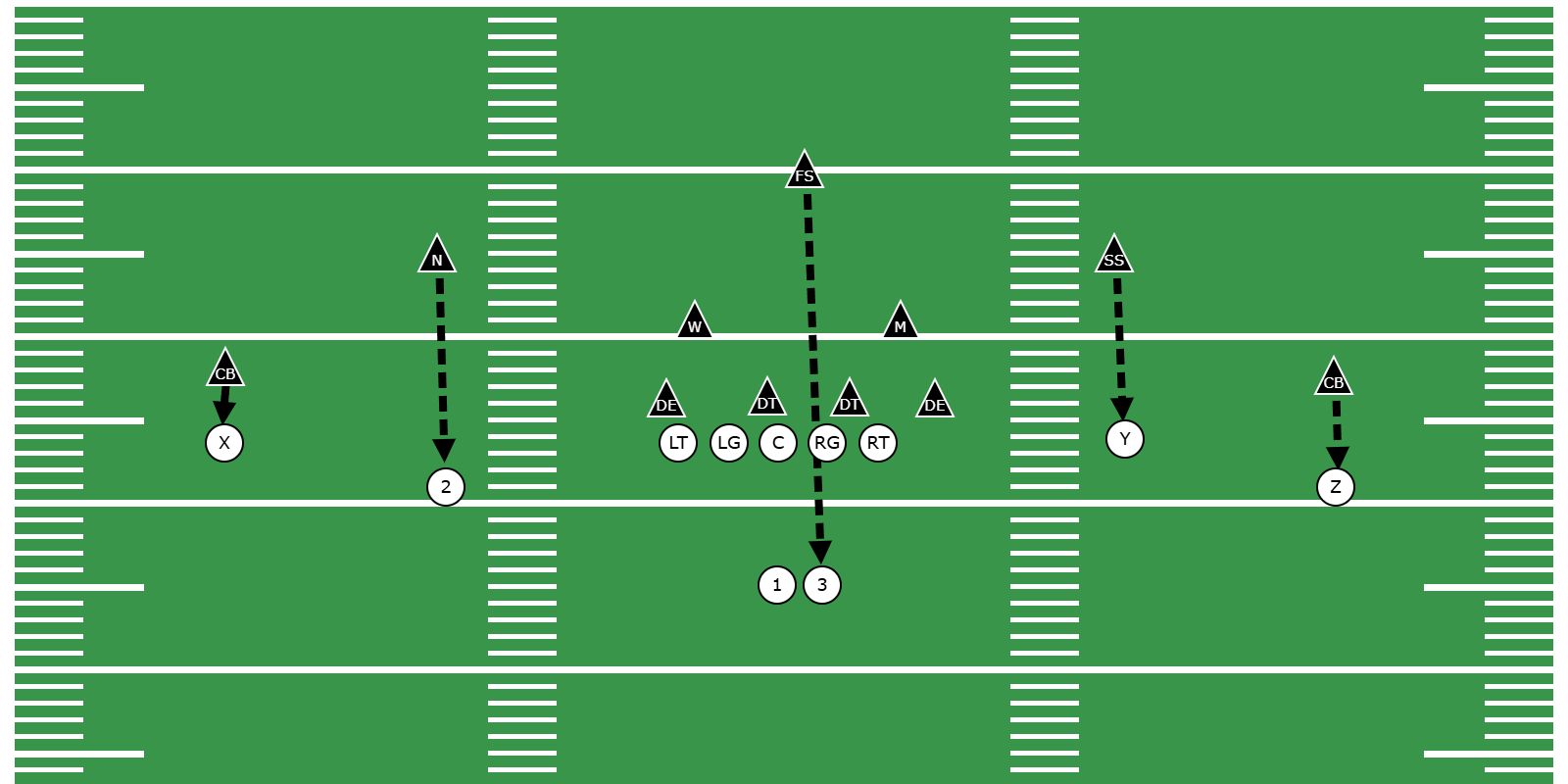
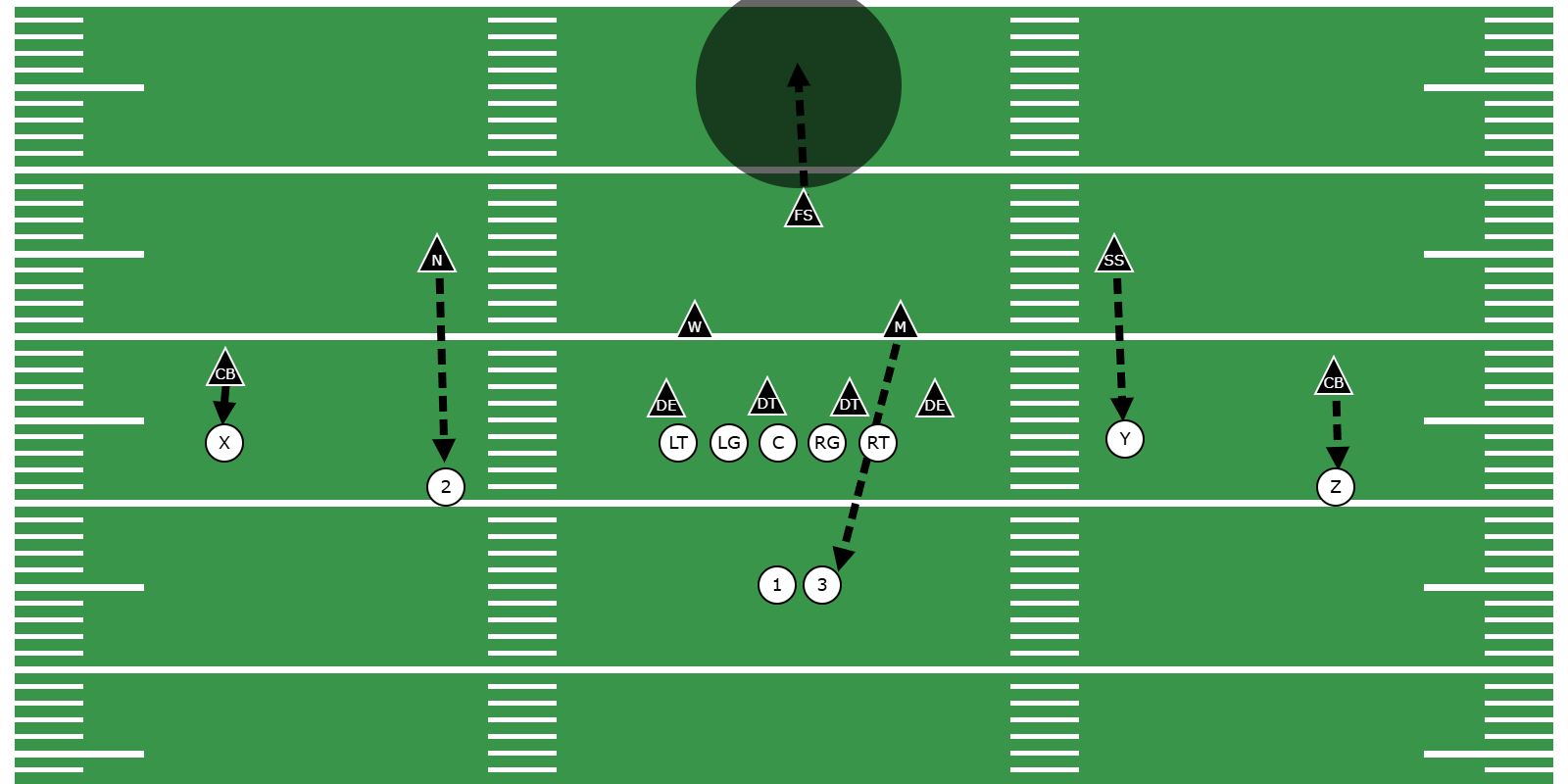
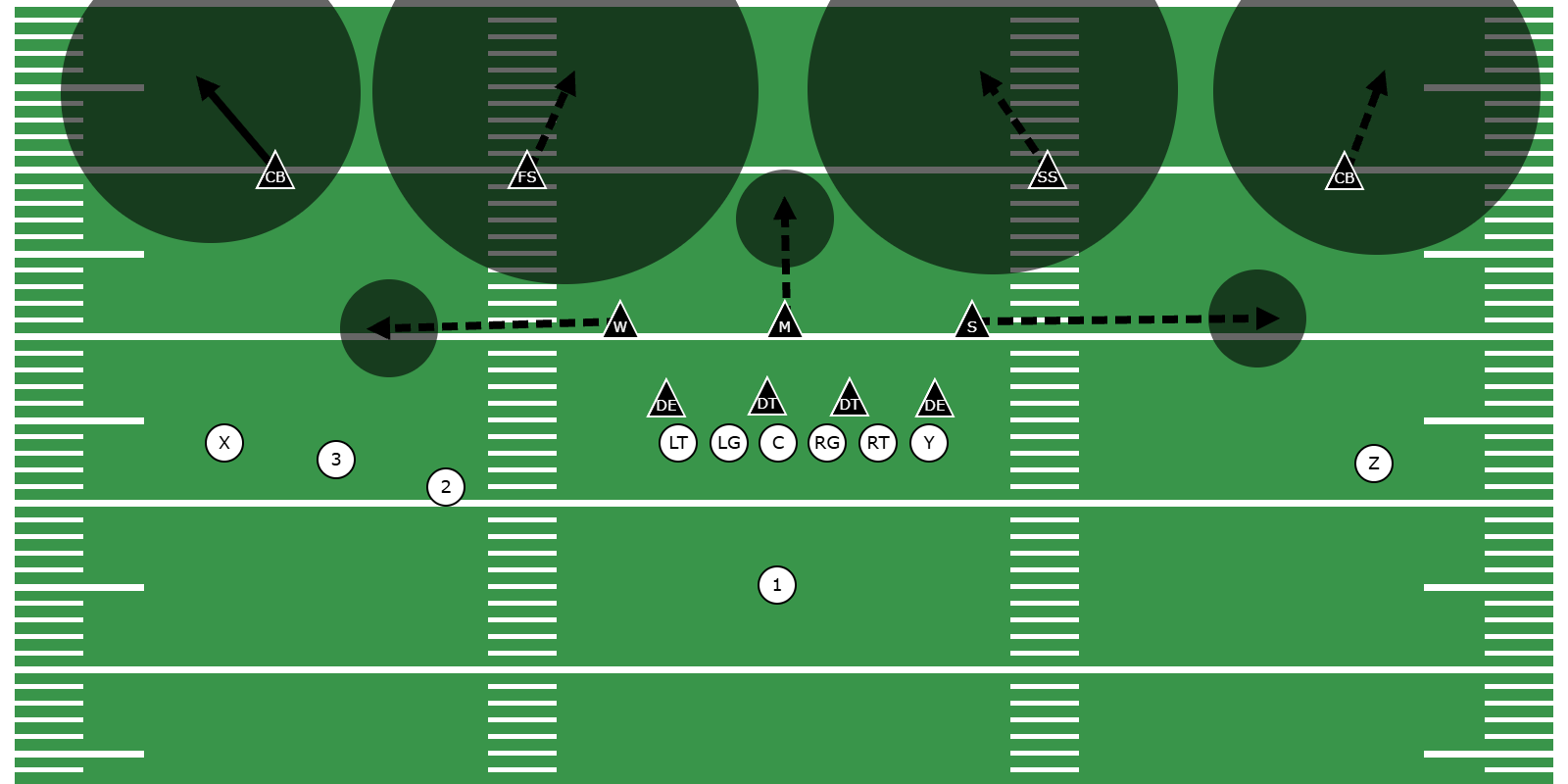
Prevent Coverage is a conservative pass-defense structure that prioritizes protection against explosive plays.
The defense generally places more defenders:
- Deep.
- Outside.
- Between receivers and the goal line.
The offense is encouraged to throw:
- Short.
- Underneath.
- Into areas where the defense can rally and tackle.
The defense exchanges yards for:
- Time.
- Field position.
- Reduced explosive-play risk.
That trade only makes sense when the game situation supports it.
The Philosophy of Prevent Coverage
Most normal defensive calls attempt to stop the offense from gaining meaningful yardage on every snap.
Prevent Coverage changes the priority.
The defense may willingly concede a short completion because that completion:
- Keeps the clock moving.
- Forces another snap.
- Requires the offense to execute again.
- Reduces the chance of an immediate touchdown.
The defense is defending the game situation rather than simply defending the next first down.
That distinction is essential.
When Prevent Coverage Makes Sense
Prevent Coverage is most useful when:
- The defense has a lead.
- Little time remains.
- The offense needs a touchdown or significant yardage.
- The offense has limited or no timeouts.
- A deep completion is the primary threat.
- The offense must reach the sideline to stop the clock.
It can also be used before halftime when the offense is attempting a final scoring drive.
The exact coverage should reflect:
- Score.
- Time.
- Field position.
- Down.
- Distance.
- Timeout situation.
When Prevent Coverage Does Not Make Sense
Prevent Coverage can be a poor choice when:
- The offense only needs a short field-goal drive.
- Significant time remains.
- The defense cannot tackle underneath.
- The quarterback can repeatedly scramble for large gains.
- The offense can stop the clock easily.
- The defense gives receivers too much uncontested space.
A defense should not automatically call Prevent simply because it has a lead.
The situation must justify the tradeoff.
Know What the Offense Needs
Before calling Prevent Coverage, coaches should answer:
- How many points does the offense need?
- How much time remains?
- How many timeouts remain?
- How far must the offense travel?
- Does a field goal matter?
- Where must the offense reach to attempt that field goal?
- How many plays can realistically occur?
Those answers determine how conservative the defense should be.
Preventing a touchdown from 80 yards away with 20 seconds remaining is different from protecting a three-point lead when the offense needs only 25 yards for a field-goal attempt.
Basic Prevent Structure
There is no single universal Prevent alignment.
A defense may use:
- Three deep defenders.
- Four deep defenders.
- Five deep defenders.
- Additional defensive backs replacing linebackers.
- Three-man rush.
- Four-man rush.
The structure depends on:
- Personnel.
- Field position.
- Offensive formation.
- Time remaining.
- Quarterback ability.
The common feature is that the defense keeps enough defenders behind the receivers to prevent a catastrophic deep completion.
Deep Defenders
Deep defenders are the foundation of Prevent Coverage.
Their first responsibility is:
Do not allow a receiver behind you.
They should:
- Maintain depth.
- Read vertical releases.
- Stay deeper than the deepest threat.
- Communicate crossing routes.
- Break downhill only when the throw is clearly underneath.
- Take proper pursuit angles.
A deep defender who becomes impatient can defeat the entire purpose of the call.
Underneath Defenders
Underneath defenders protect the space in front of the deep coverage.
They should:
- Disrupt easy intermediate throws.
- Force receivers toward help.
- Rally to short completions.
- Tackle immediately.
- Keep receivers in bounds when the situation demands it.
They do not need to jump every short route.
Their job is to prevent a short completion from becoming a long run after the catch.
Sideline Control
The sideline can become one of the offense’s most important targets late in the game.
A completion near the sideline may allow the receiver to:
- Step out of bounds.
- Stop the clock.
- Preserve time for another play.
The defense should understand whether forcing the receiver inside is strategically valuable.
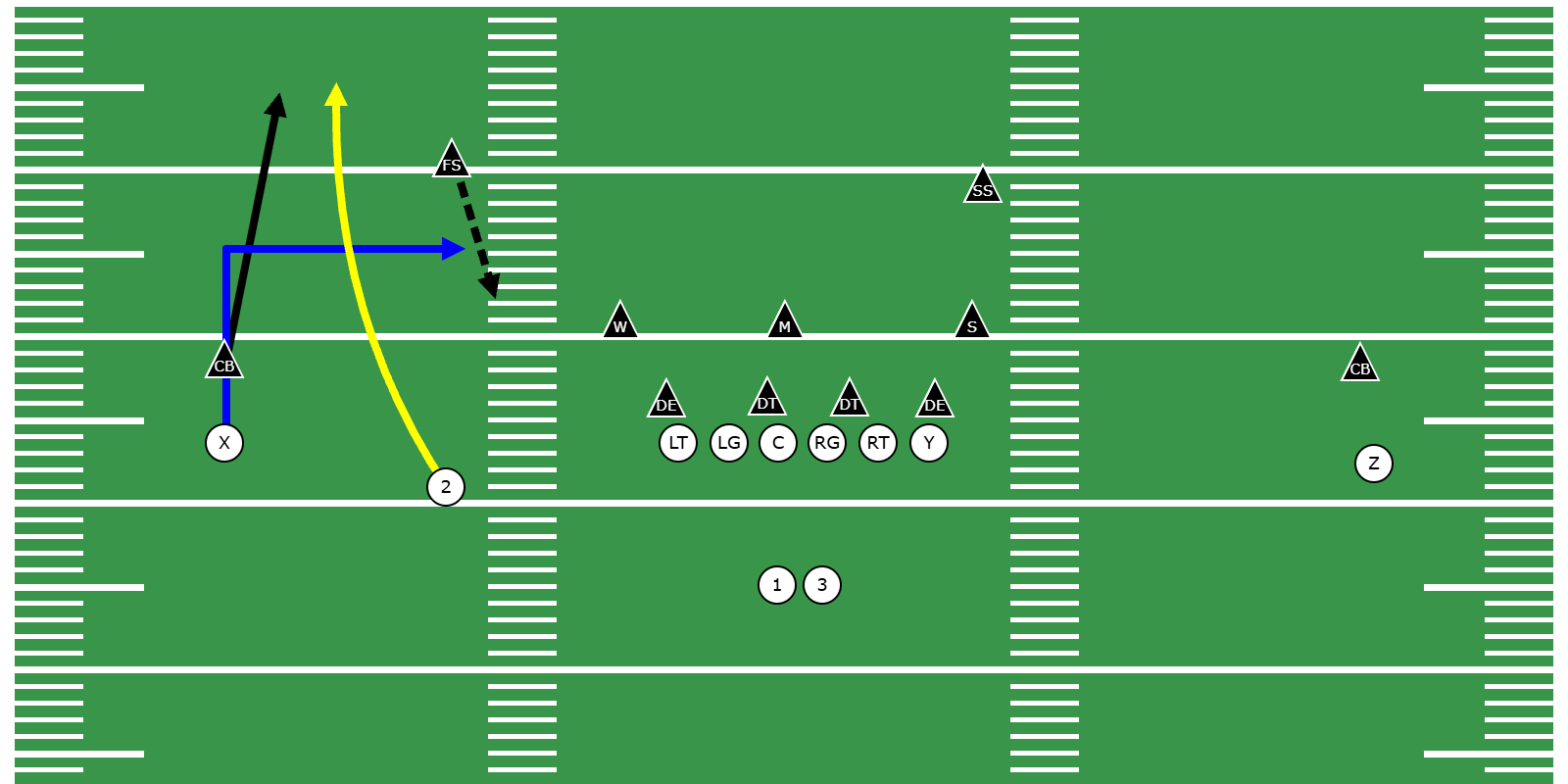
An outside defender may use leverage to:
- Funnel the receiver toward the middle.
- Contest out routes.
- Force catches in bounds.
The goal is not merely to allow a short completion.
The goal is to make the offense spend time.
Tackling In Bounds
One of the most important Prevent Coverage skills is immediate tackling.
A short completion is acceptable only if the defense finishes the play.
Defenders should:
- Close under control.
- Secure the tackle.
- Avoid missed tackles.
- Prevent yards after catch.
- Keep the receiver in bounds when possible.
A 6-yard completion followed by a missed tackle can become the explosive play the coverage was designed to prevent.
Protecting the Deep Middle
The deep middle is a major priority.
Routes such as:
- Post.
- Seam.
- Deep dig.
- Hail Mary.
can attack this area.
The defense should maintain enough depth and overlap to prevent the quarterback from throwing between deep defenders.
Safeties should not become attracted to underneath routes while vertical threats remain active.
Protecting the Deep Sidelines
The offense may attack the deep sidelines with:
- Go routes.
- Fades.
- Deep outs.
- Corners.
These routes can gain significant yardage while also stopping the clock.
Outside deep defenders should:
- Maintain width.
- Stay over the top.
- Use the sideline.
- Prevent clean vertical access.
A deep sideline completion can be almost as damaging as a middle-field explosive play because the offense gains both yardage and clock control.
Prevent Coverage Against Four Verticals
Four Verticals directly attacks deep-zone spacing.
The defense must:
- Stay deeper than all vertical threats.
- Communicate seams.
- Avoid squeezing one route so aggressively that another opens.
- Maintain proper width.
Underneath defenders can help by:
- Rerouting receivers.
- Disrupting stems.
- Carrying routes temporarily.
The defense should force the quarterback to throw underneath rather than allowing a clean vertical window.
Prevent Coverage Against Seam Routes
Seams attack the space between deep defenders.
Safeties and other deep players should maintain spacing that prevents a receiver from splitting them.
Underneath defenders can help by rerouting the seam.
The defense should not allow a receiver to run untouched through the middle of the coverage.
Prevent Coverage Against Posts
Post routes attack the deep middle.
The deep-middle defender should:
- Maintain depth.
- Stay inside or over the route according to the coverage.
- Avoid driving underneath threats prematurely.
Outside deep defenders can squeeze the route when another vertical threat does not occupy them.
The quarterback should see multiple defenders between the post receiver and the end zone.
Prevent Coverage Against Corner Routes
Corner routes attack the space between the deep middle and sideline.
The defense must maintain width.
A deep outside defender should not drift so far toward the middle that the quarterback can throw the corner route near the sideline.
The defense should use:
- Sideline.
- Depth.
- Overlap.
to shrink the window.
Prevent Coverage Against Deep Outs
Deep outs are particularly dangerous because they combine:
- Significant yardage.
- Clock stoppage.
The outside defender should recognize the route and drive once the receiver declares the break.
However, he cannot jump the out so early that the offense converts the route vertically.
The defense should make the quarterback throw over or around underneath leverage.
Prevent Coverage Against Comebacks
Comeback routes can exploit defenders who maintain significant depth.
The defense may allow the catch if the receiver must come back toward the football.
The underneath defender should close quickly.
The outside defender should attempt to:
- Tackle in bounds.
- Prevent the receiver from immediately reaching the sideline.
The offense should have to spend time after the completion.
Prevent Coverage Against Digs
Dig routes attack intermediate middle space.
The defense may concede some intermediate yardage depending on the situation.
Underneath defenders should:
- Close the throwing window.
- Force the receiver to settle short.
- Rally to the catch.
Deep defenders should remain disciplined.
They should not drive the dig if vertical routes remain behind them.
Prevent Coverage Against Crossing Routes
Crossers can create yards after catch if defenders take poor angles.
The defense should:
- Keep vision on the receiver.
- Maintain leverage.
- Rally from multiple directions.
- Prevent the route from escaping toward the sideline.
A shallow crosser completed in the middle of the field can be a favorable outcome if the defense tackles immediately and the clock continues running.
Prevent Coverage Against Checkdowns
The quarterback may repeatedly take the checkdown.
That can be acceptable.
The defense should:
- Close quickly.
- Tackle immediately.
- Keep the receiver in bounds.
- Reset for the next snap.
The offense must decide whether a short gain is worth the time it consumes.
The defense should not panic simply because the offense completes a pass underneath.
Prevent Coverage Against Running Back Screens
Screens can punish a passive pass rush.
The defense must recognize:
- Offensive linemen releasing.
- Defensive linemen being invited upfield.
- Running back delay.
Underneath defenders should rally immediately.
Deep defenders should take safe pursuit angles.
The coverage should prevent the screen from becoming an explosive gain.
Prevent Coverage Against Receiver Screens
Receiver screens may be used to gain easy yards underneath.
The defense should:
- Recognize blockers.
- Maintain outside leverage.
- Defeat blocks.
- Rally to the football.
Again, the short completion itself may not be the problem.
The danger is allowing the receiver to break the first tackle and gain significant yardage.
Prevent Coverage Against Draw Plays
Offenses may run a draw against a light box.
The defense should not remove so many run defenders that the quarterback or running back can gain 20 or 30 yards uncontested.
Defensive linemen and underneath defenders must remain aware of:
- Draw.
- Delayed handoff.
- Quarterback draw.
The game situation determines how much rushing yardage can be conceded safely.
Prevent Coverage Against Quarterback Scramble
Quarterback scramble can be one of the biggest weaknesses of Prevent Coverage.
Deep defenders may be occupied by receivers.
Underneath defenders may spread across the field.
The quarterback can find open rushing lanes.
The defense should establish:
- Rush-lane discipline.
- Quarterback contain.
- A possible spy when appropriate.
The quarterback should not be allowed to gain easy yardage and step out of bounds.
Prevent Coverage Against Mobile Quarterbacks
A mobile quarterback may change the ideal structure.
The defense may need:
- Four-man rush.
- Dedicated spy.
- Tighter underneath spacing.
Dropping too many defenders can give the quarterback time and space to run.
The defense must balance:
- Deep protection.
- Pass rush.
- Quarterback control.
Prevent Coverage should account for the opponent’s actual personnel.
Prevent Coverage Against Hail Mary
A Hail Mary is a specialized situation.
The offense may send multiple receivers toward:
- End zone.
- Goal line.
- Deep middle.
The defense should prioritize:
- Depth.
- Ball tracking.
- Positioning.
- Avoiding offensive receivers behind the defense.
Defenders should understand how the team wants the ball played.
In many situations, the safest objective is to knock the football down rather than attempt an interception.
Playing the Hail Mary Ball
Defenders should avoid turning a Hail Mary into an offensive opportunity through poor ball technique.
The defense should teach:
- Locate the football.
- Maintain position.
- Attack the highest point.
- Knock the ball downward or away from receivers.
- Avoid tipping the ball deeper into the end zone.
Other defenders should be prepared for:
- Deflections.
- Tipped balls.
- Receivers waiting behind the primary contest.
The play is not over until the football is secured or hits the ground.
Prevent Coverage Against Laterals
Late-game offenses may use laterals after a completion.
Defenders should:
- Maintain pursuit lanes.
- Avoid having every defender converge from the same angle.
- Keep leverage on possible pitch players.
- Continue playing until the whistle.
A missed tackle or uncontrolled pursuit angle can turn a harmless underneath completion into a chaotic scoring opportunity.
Prevent Coverage Against Hook-and-Lateral Concepts
The offense may intentionally complete a short pass and then lateral.
The defense should recognize that the first receiver may not be trying to escape immediately.
Secondary defenders should maintain awareness of trailing offensive players.
The first priority remains:
- Secure the tackle.
But pursuit defenders should not overrun potential lateral lanes.
Prevent Coverage Against Bunch
Bunch formations can create:
- Vertical releases.
- Crossers.
- Sideline routes.
- Picks.
The defense should maintain enough depth to prevent one receiver from escaping vertically.
A Box or match-style distribution can be incorporated underneath if the defensive system supports it.
The Prevent call should not create confusion by introducing completely unfamiliar rules late in the game.
Prevent Coverage Against Stack
Stacks can create switch verticals.
The defense should:
- Communicate releases.
- Maintain deep leverage.
- Avoid both defenders matching the same vertical threat.
Banjo principles can help underneath defenders exchange routes.
Deep defenders remain responsible for preventing explosive completions.
Prevent Coverage Against Trips
Trips can stress one side of the coverage with multiple vertical routes.
The defense should identify:
- #1.
- #2.
- #3.
and maintain proper deep spacing.
A deep defender should not become overly focused on one receiver.
The offense may intentionally clear one defender to create a window for another.
Prevent Coverage Against Empty
Empty formations spread the defense across five immediate receiving threats.
The quarterback may:
- Throw underneath.
- Attack seams.
- Scramble.
The defense should maintain:
- Deep spacing.
- Underneath rally.
- Quarterback awareness.
The offense may use quick completions to move the ball rapidly.
The defense should know whether those gains are acceptable based on the clock.
Prevent Coverage Against Motion
Motion can change:
- Strength.
- Trips location.
- Receiver spacing.
- Sideline threats.
The defense should use simple adjustments.
Late-game Prevent situations are not the time for complicated coverage checks.
Players should communicate:
- New receiver distribution.
- Deep responsibilities.
- Any change in leverage.
The defense must be aligned before the snap.
Prevent Coverage and the Pass Rush
One of the most important strategic decisions is how many defenders to rush.
Common choices include:
- Three-man rush.
- Four-man rush.
A three-man rush allows another defender into coverage.
However, it can give the quarterback significant time.
A four-man rush creates more pressure but removes one coverage defender.
The correct answer depends on:
- Offensive line.
- Quarterback.
- Time remaining.
- Distance needed.
Three-Man Rush
A three-man rush can allow the defense to drop eight players.
Advantages:
- More coverage bodies.
- Better deep spacing.
- More underneath rally defenders.
Weaknesses:
- Quarterback may have excessive time.
- Mobile quarterback may find running lanes.
- Deep routes may eventually uncover.
The rushers must maintain disciplined lanes.
Simply having more coverage defenders does not help if the quarterback can wait indefinitely.
Four-Man Rush
A four-man rush can pressure the quarterback without requiring a blitz.
Advantages:
- Faster pressure.
- Better pocket compression.
- Less time for deep routes.
Weaknesses:
- One fewer coverage defender.
- More space underneath.
A defense with a strong four-man rush may prefer this structure.
The objective is to force the quarterback to throw before deep routes fully develop.
Blitzing From Prevent Coverage
Blitzing can be risky because it reduces deep coverage numbers.
However, an offense that expects a passive defense may be vulnerable to pressure.
A blitz should have a clear purpose.
The defense should understand:
- Which deep area loses help.
- Where the quarterback’s hot throw is likely to go.
- How the remaining coverage adjusts.
For youth football, a base three- or four-man rush is usually easier to execute reliably.
Prevent Coverage and Clock Management
Clock awareness is part of the coverage.
Defenders should know:
- Whether the clock is running.
- Whether the offense has timeouts.
- Whether the offense needs the sideline.
- Whether the offense can spike the ball.
- How many plays likely remain.
A defender’s leverage can change based on those facts.
For example, forcing a receiver to catch the football in the middle of the field can be strategically valuable when the offense has no timeouts.
The Importance of In-Bounds Leverage
When the offense needs to stop the clock, the defense can make the sideline difficult to reach.
An outside defender may position himself to force:
- Inside release.
- Inside catch.
- Inside tackle.
The receiver may gain several yards.
But if the clock continues running, the defense may still win the exchange.
Players must understand why conceding those yards can be correct.
First Downs vs. Clock
Prevent Coverage may allow first downs.
That can feel uncomfortable to defenders.
But a first down in the middle of the field may still benefit the defense if:
- The offense must reset.
- The clock continues.
- Time is limited.
The defense should not measure success only by whether the offense moves the chains.
Success is determined by whether the offense scores before time expires.
Prevent Coverage Near Midfield
Near midfield, the defense must consider:
- Hail Mary range.
- Field-goal range.
- Sideline access.
If the offense needs only a field goal, giving away 15 or 20 yards may be unacceptable.
The defense may need to play more aggressively than a traditional deep Prevent.
Game situation must determine depth.
Prevent Coverage Near the Defense’s Goal Line
As the offense approaches the red zone, Prevent philosophy must change.
There is less field left to protect.
The defense cannot continue giving away uncontested underneath yardage.
The coverage may transition into:
- Red Zone Match Coverage.
- Quarters.
- Cover 2.
- Man coverage.
- Another goal-line call.
The defense should establish where that transition occurs.
Transitioning Out of Prevent
A team should define when Prevent Coverage ends.
Possible triggers include:
- Offense reaches the 30-yard line.
- Offense enters field-goal range.
- Offense enters the red zone.
- Time remaining changes the situation.
- Offense uses a timeout.
Players should not assume the same call remains appropriate for the entire drive.
The sideline should communicate the transition clearly.
Prevent Coverage vs. Cover 4 Quarters
Quarters naturally places four defenders in deep coverage.
That makes it a useful foundation for Prevent situations.
However, standard Quarters may include aggressive match rules that pull safeties toward underneath routes.
A Prevent version may instruct defenders to:
- Maintain more depth.
- Protect vertical routes first.
- Be slower to trigger downhill.
The exact adjustment depends on the defensive system.
Prevent Coverage vs. Cover 3
Cover 3 protects the field with three deep defenders.
It can provide a useful late-game structure.
However, seams and deep sidelines must be protected carefully.
A Prevent adjustment may add:
- Greater depth.
- Additional underneath defenders.
- Modified sideline leverage.
The defense should ensure that no receiver can split the deep thirds.
Prevent Coverage vs. Cover 2
Cover 2 uses two deep safeties and five underneath defenders in a standard seven-man coverage structure.
It can protect the sidelines underneath, but deep middle and seam areas can become vulnerable.
A traditional Cover 2 call may therefore need adjustment for extreme late-game situations.
The defense should not rely on the label alone.
It must protect the routes the offense is most likely to use.
Prevent Coverage vs. Man Coverage
Man coverage can contest every receiver tightly.
However, one lost matchup can create an explosive touchdown.
Prevent Coverage reduces that risk by keeping defenders deeper.
The tradeoff is that short routes become easier to complete.
The game situation determines which risk is more acceptable.
Prevent Coverage vs. Cover 0
Cover 0 is nearly the opposite strategic philosophy.
Cover 0:
- No deep safety.
- Aggressive man coverage.
- Often paired with pressure.
Prevent Coverage:
- Multiple deep defenders.
- Conservative leverage.
- Protect against explosive passes.
Cover 0 attempts to end the play quickly.
Prevent attempts to make the offense use multiple plays and valuable time.
Prevent Coverage vs. Red Zone Match Coverage
Prevent Coverage is designed for situations where the offense has significant field to travel and explosive plays are the primary threat.
Red Zone Match Coverage is designed for compressed space near the goal line.
As the offense advances, a defense may transition from:
Prevent → Red Zone Match
because the geometry and strategic priorities change.
Personnel Considerations
Prevent Coverage often uses additional defensive backs.
Useful traits include:
Deep Defenders
- Range.
- Ball awareness.
- Discipline.
- Communication.
- Reliable tackling.
Underneath Defenders
- Open-field tackling.
- Route recognition.
- Pursuit.
- Ability to keep receivers in bounds.
Pass Rushers
- Lane discipline.
- Contain ability.
- Ability to pressure without blitz help.
The defense should avoid placing players in unfamiliar roles simply because the situation is unusual.
Coaching Prevent Coverage in Youth Football
Youth players need to understand the purpose before learning the alignment.
Explain:
We are willing to give them a short completion. We are not willing to give them a touchdown.
A practical installation progression is:
- Explain the game situation.
- Establish the deep alignment.
- Teach “deeper than deepest.”
- Establish underneath responsibilities.
- Teach sideline leverage.
- Practice short completion and immediate tackle.
- Practice deep vertical routes.
- Practice Four Verticals.
- Practice deep outs.
- Practice crossing routes.
- Practice quarterback scramble.
- Practice screens.
- Practice Hail Mary.
- Practice laterals.
- Practice transitioning out of Prevent.
- Add clock and timeout situations.
The players should know why each rule exists.
A Deeper-Than-Deepest Drill
Align several receivers and deep defenders.
Receivers run:
- Go.
- Post.
- Corner.
- Seam.
The defenders must remain:
Deeper than the deepest receiver.
The quarterback can scramble and extend the play.
The defenders should not abandon their depth simply because the quarterback moves.
Short Completion Rally Drill
Allow the quarterback to complete an underneath route.
The defense then practices:
- Rally.
- Leverage.
- Secure tackle.
- Keep receiver in bounds.
The drill reinforces that the short completion is not a failure.
The missed tackle is the failure.
Sideline Drill
Have receivers run:
- Out.
- Comeback.
- Speed out.
The defender practices leverage designed to:
- Contest the throw.
- Force the catch inside when possible.
- Prevent easy escape out of bounds.
Add a visible clock situation so players understand the strategic purpose.
Hail Mary Drill
Use multiple receivers and defenders.
Teach:
- Deep alignment.
- Ball tracking.
- Maintaining position.
- High-point technique.
- Knockdown technique.
- Deflection awareness.
The drill should continue after the first defender touches the football.
Players must understand that a tipped ball remains live.
Quarterback Scramble Drill
Drop the defense into Prevent spacing.
Allow the quarterback to scramble.
Teach:
- Rush-lane integrity.
- Underneath leverage.
- Controlled pursuit.
- Sideline awareness.
The defense should prevent the quarterback from gaining easy yardage and stopping the clock.
Common Youth Football Mistakes
Everyone Drops Too Deep
The offense gains large chunks underneath without using meaningful time.
Deep Defender Drives a Short Route
A receiver runs behind him.
Defender Misses the Tackle
A harmless completion becomes an explosive gain.
Defender Knocks Receiver Out of Bounds
The offense gains yardage and stops the clock.
Defenders Forget the Quarterback
The quarterback scrambles for a large gain.
Three-Man Rush Loses Contain
The quarterback extends the play indefinitely.
Defenders Chase the Football
They abandon deep threats when the quarterback scrambles.
Players Attempt an Interception on a Hail Mary
The ball is tipped to an offensive receiver.
Defense Stays in Prevent Too Long
The offense reaches scoring range while continuing to receive easy completions.
Players Do Not Understand the Situation
They play the coverage like a normal down instead of defending score and clock.
When to Call Prevent Coverage
Prevent Coverage can be useful when:
- The defense leads late.
- The offense must travel significant distance.
- Very little time remains.
- The offense has limited timeouts.
- An explosive pass is the primary way the offense can win.
- The defense can tackle reliably in space.
- The pass rush can maintain disciplined lanes.
It may be a poor choice when:
- The offense needs only a short field-goal drive.
- Too much time remains.
- The defense tackles poorly.
- The quarterback is dangerous as a runner.
- The pass rush cannot affect the quarterback.
- The offense can repeatedly stop the clock.
- The defense gives away enough yardage to change the scoring situation.
Building a Youth Late-Game Plan
A youth defense should have a small, clearly defined late-game package.
Players should know:
- Base Prevent call.
- Deep alignment.
- Rush count.
- Sideline leverage.
- Hail Mary call.
- When Prevent ends.
- What coverage replaces it.
The coaching staff should also decide before the game:
- How much time triggers Prevent?
- How much field position matters?
- Does opponent field-goal ability change the call?
- Who communicates the situation?
These decisions are easier to make before the pressure of the final drive.
Situational Example: Long Field, Little Time
Suppose the offense:
- Trails by a touchdown.
- Has 20 seconds remaining.
- Has no timeouts.
- Must travel 70 yards.
The defense should prioritize:
- Deep protection.
- In-bounds tackles.
- Sideline control.
- No explosive plays.
A 7-yard completion in the middle of the field may be an excellent defensive result.
The offense must spend valuable time resetting for another snap.
Situational Example: Offense Needs a Field Goal
Suppose the offense:
- Trails by two points.
- Has 40 seconds remaining.
- Needs only 25 yards to reach field-goal range.
A soft Prevent may be dangerous.
Three uncontested 8-yard completions can put the offense in scoring position.
The defense may need:
- Tighter underneath coverage.
- More pressure.
- Less cushion.
The situation changes the correct strategy.
Situational Example: Final Hail Mary
Suppose only one play remains and the offense must throw into the end zone.
The defense no longer needs to defend:
- Checkdown.
- Short out.
- Intermediate completion.
The entire call can focus on:
- Goal line.
- End zone.
- Deep ball.
- Tipped ball.
This is a specialized version of Prevent Coverage.
What the Offense May Do Next
Once the offense recognizes Prevent Coverage, it may:
- Take repeated underneath throws.
- Run quarterback draw.
- Use screens.
- Attack the sideline.
- Run deep outs.
- Use laterals.
- Extend plays with quarterback movement.
The defense should anticipate those answers.
Prevent Coverage should never become passive football.
The defense is still attacking the offense’s actual path to victory.
Key Coaching Points
- Understand the score, clock, field position, and timeout situation.
- Know exactly what the defense is trying to prevent.
- Keep deep defenders deeper than the deepest receiver.
- Do not surrender the deep middle.
- Protect the deep sidelines.
- Force short throws when the situation allows.
- Rally and tackle immediately.
- Keep receivers in bounds when strategically valuable.
- Maintain quarterback contain.
- Do not allow screens to become explosive plays.
- Practice Hail Mary technique.
- Knock Hail Mary passes down rather than creating unnecessary tips.
- Maintain pursuit discipline against laterals.
- Do not remain in Prevent after the game situation changes.
- Connect the coverage to a clear three- or four-man rush plan.
- Teach youth players the reason behind the coverage, not just their alignment.
Final Thoughts
Prevent Coverage is not designed to stop every completion.
It is designed to stop the completion that can lose the game.
That distinction changes everything.
The defense protects deep space, forces the offense to use valuable time, rallies to short throws, controls the sidelines, and makes the offense execute multiple plays instead of winning with one explosive pass.
The coverage only works when defenders understand the situation.
A short completion can be a defensive victory.
A missed tackle can be a disaster.
A receiver tackled in bounds can be more valuable than an incompletion that stops the clock.
A deep defender must resist the temptation to attack an underneath throw while a vertical threat remains behind him.
For youth football, Prevent Coverage should be a small, rehearsed situational package rather than an improvised call made at the end of a game.
Teach the players what the offense needs. Teach them what the defense can afford to concede. Practice deep routes, sideline throws, quarterback scrambles, Hail Mary attempts, and immediate tackling.
When the defense understands both the coverage and the clock, Prevent Coverage can do exactly what its name implies: prevent the one explosive play the offense needs to change the outcome of the game.
Related Articles
Published by CoachYouths Staff on 11/24/2026
You are NOT currently logged in, you may login or signup for FREE at any time: