Cover 1 Hole
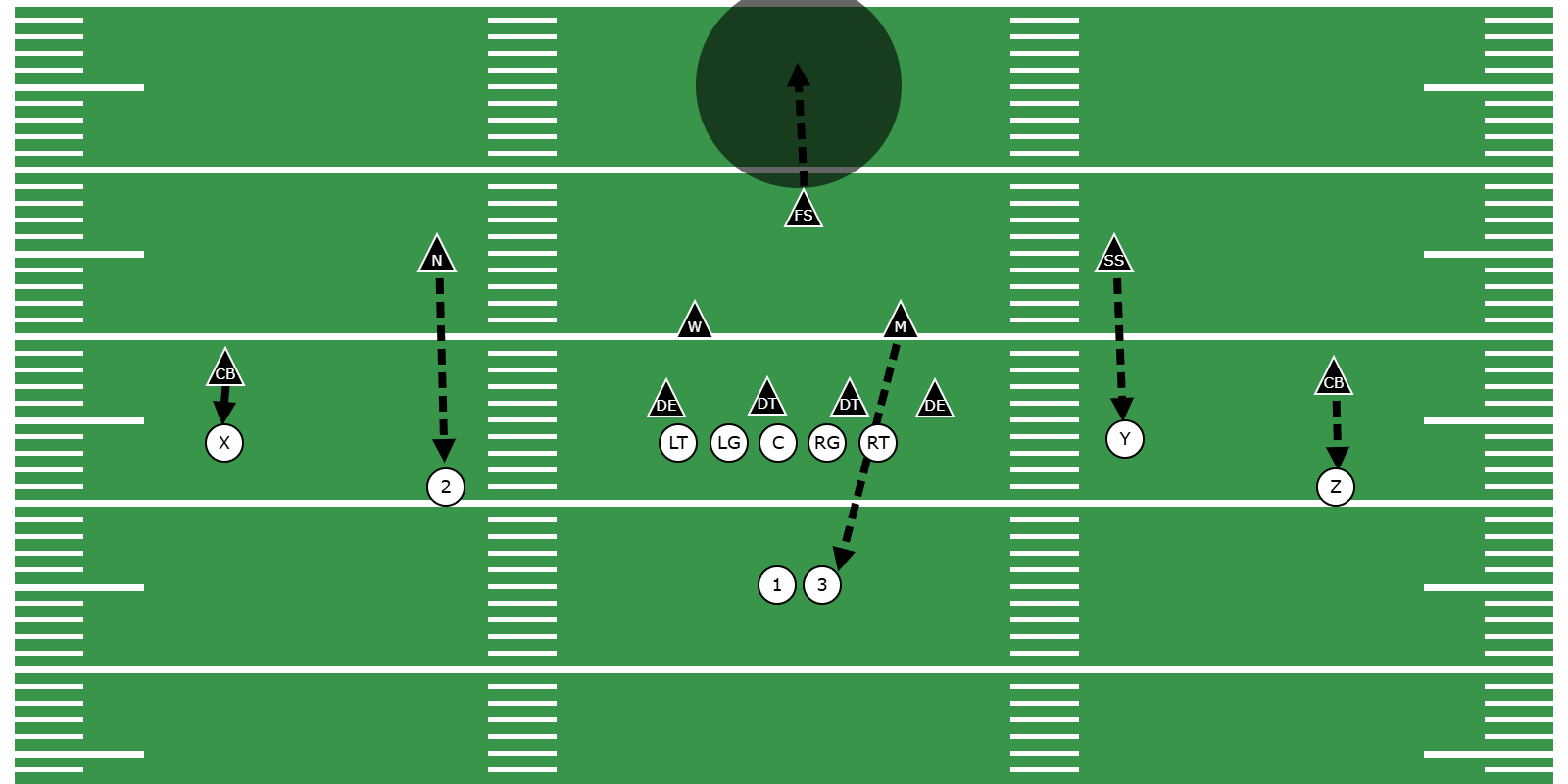
What Is Cover 1 Hole?
Standard Cover 1 normally includes:
- One deep middle safety.
- Man-to-man coverage on eligible receivers.
- Remaining defenders assigned to the pass rush or another defensive responsibility.
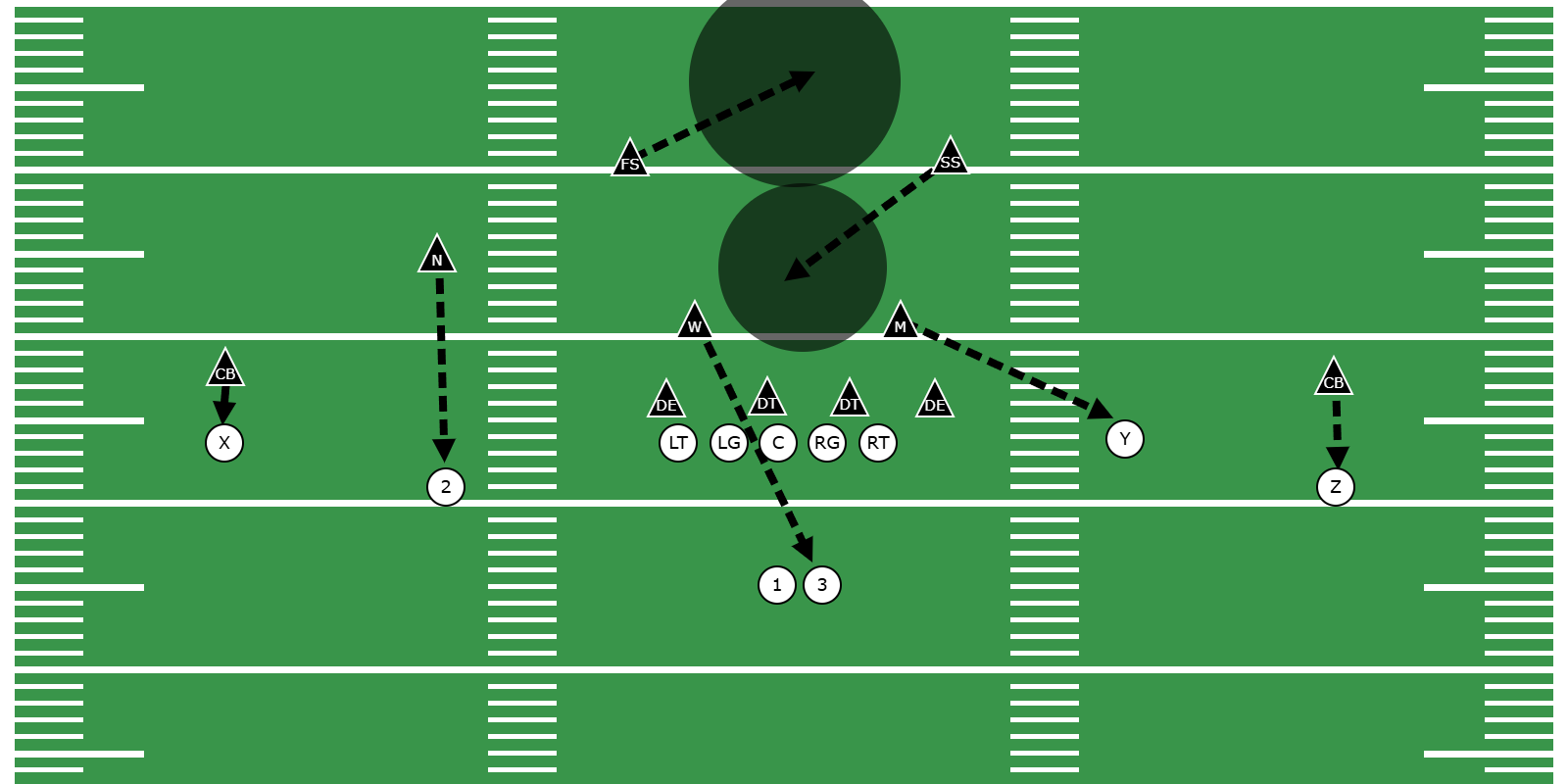
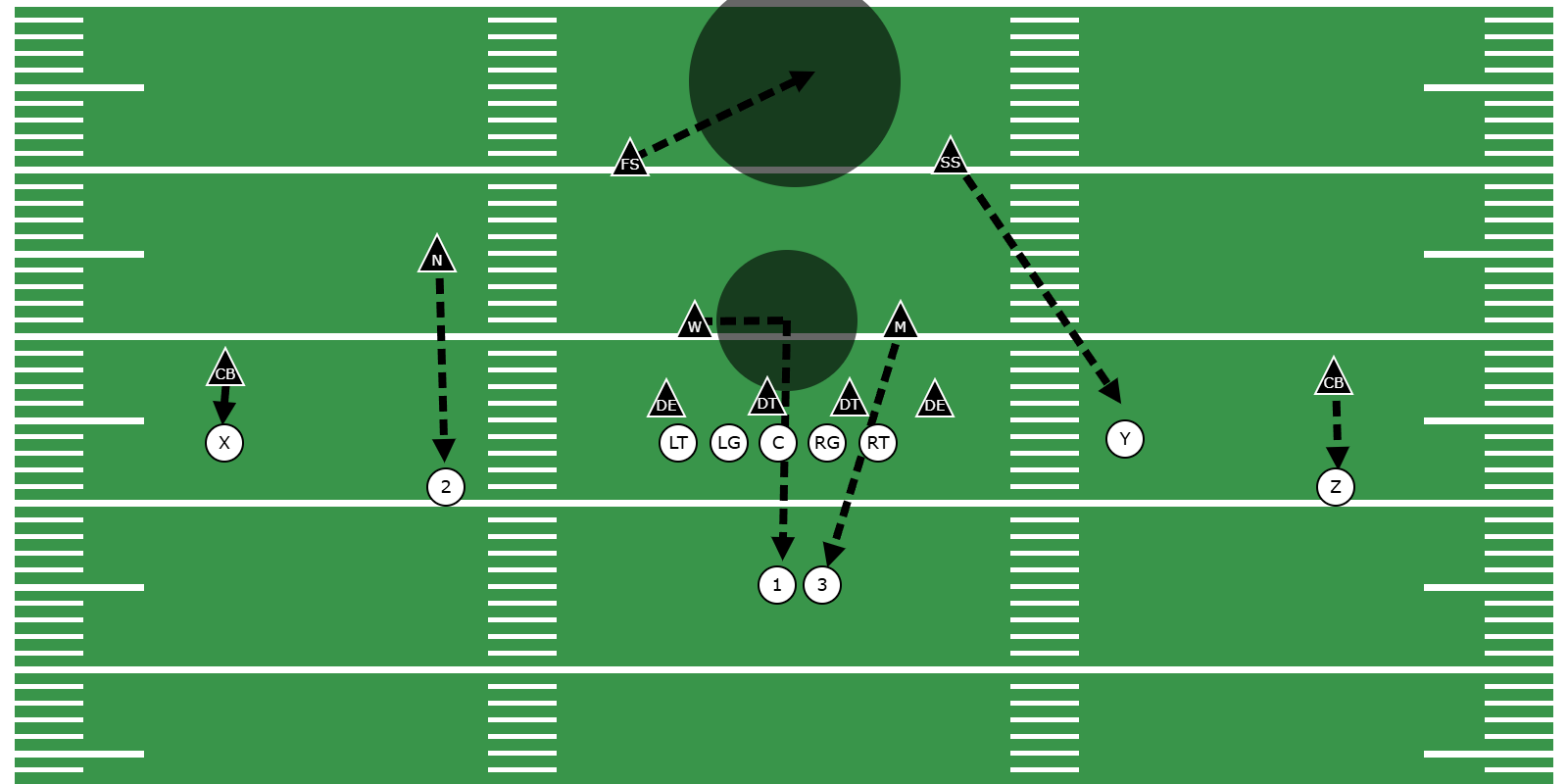
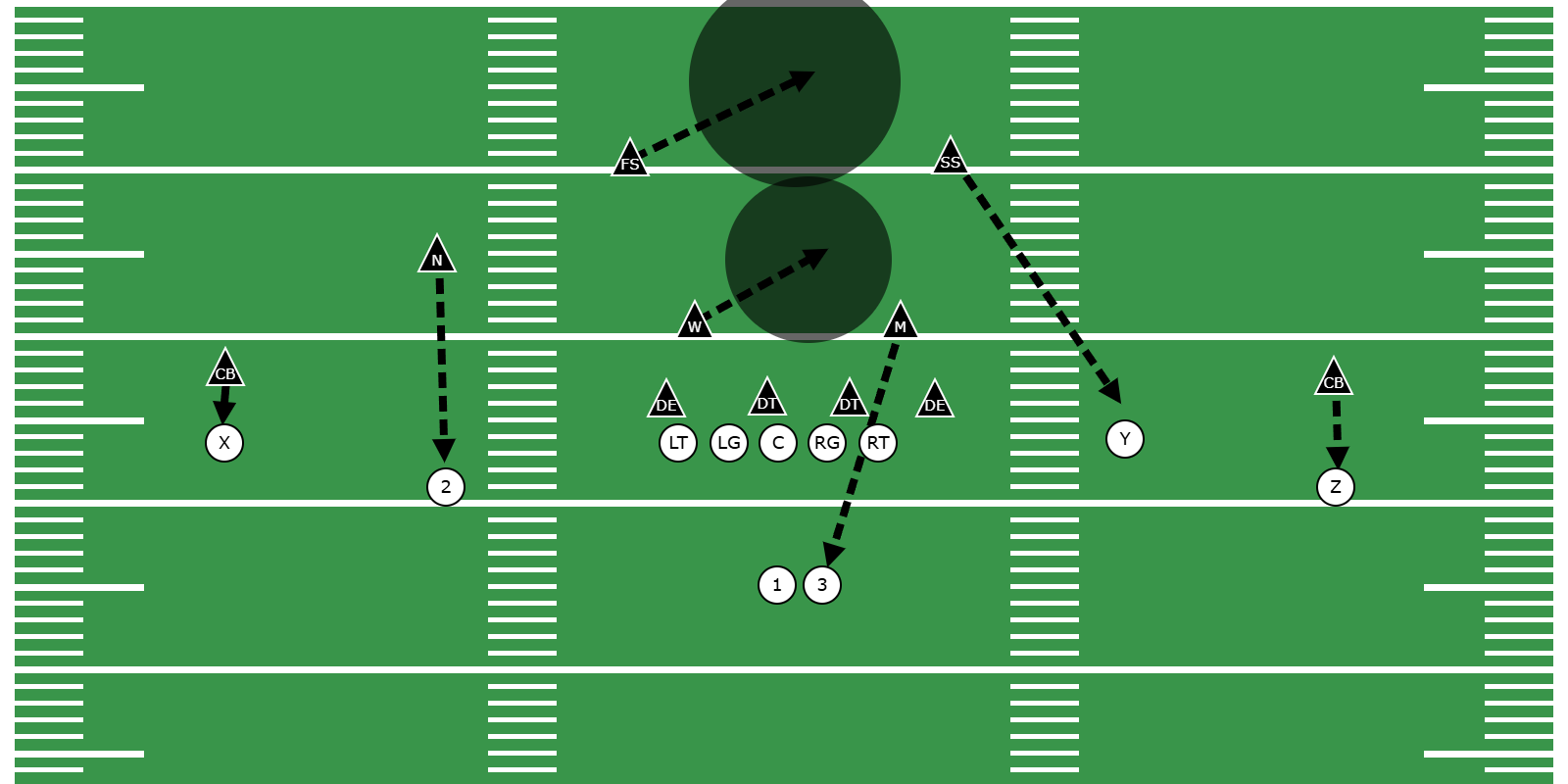
Cover 1 Hole keeps the deep safety and man coverage but assigns one of the remaining defenders to an underneath middle zone—the hole.
That defender is not simply another man defender.
He occupies the interior space where offenses frequently attack man coverage with:
- Slants.
- Shallow crosses.
- Dig routes.
- In-breaking option routes.
- Tight end routes.
- Quarterback scrambles.
The exact depth and technique of the hole defender depend on the defensive system, down and distance, and offensive formation.
Basic Cover 1 Hole Structure
A typical Cover 1 Hole structure includes:
- One post safety responsible for the deep middle.
- Man coverage on all eligible receivers.
- One underneath hole defender.
- A pass rush from the remaining defenders.
- Defined leverage rules that work with the available inside help.
The defense therefore creates help at two depths.
The hole defender affects short and intermediate throws.
The post safety protects the deep middle.
Man defenders between those two levels remain responsible for staying attached to their assigned receivers.
The Deep Safety’s Responsibility
The post safety has the same essential responsibility he has in standard Cover 1: stay deeper than the deepest offensive threat and protect the middle of the field.
He should not become distracted by routes that the hole defender can handle underneath.
Useful coaching rules include:
- Stay on top of the deepest threat.
- Maintain enough depth to help either side.
- Do not chase shallow crossers.
- Read the quarterback without losing vertical routes.
- Break downhill only when the throw declares and deep threats are controlled.
The hole defender’s presence should make it easier for the safety to remain patient because another player is specifically responsible for helping underneath.
The Hole Defender’s Responsibility
The hole defender is the defining player in the coverage.
He normally aligns in or works toward the short-to-intermediate middle of the field and reads the play from there.
Depending on the defensive system, his responsibilities can include:
- Closing inside passing windows.
- Disrupting crossing routes.
- Helping on slants and digs.
- Watching the quarterback.
- Tackling receivers on underneath completions.
- Reacting to quarterback scrambles.
- Adding to the run fit after confirming run.
The hole defender must remain disciplined.
If he chases the first shallow route toward the sideline, he may open a large passing window directly behind him. If he attacks run action too quickly, play-action can remove him from the middle.
His value comes from controlling space, not simply chasing the football.
Who Can Play the Hole?
The hole responsibility can be assigned to different defenders depending on personnel and scheme.
Linebacker
A linebacker is a natural choice because he is already accustomed to playing inside, fitting the run, and tackling in traffic.
Safety
A safety can rotate down into the hole, particularly when the defense wants more speed against athletic tight ends, slot receivers, or crossing routes.
Nickel Defender
A nickel defender may also fill the role in sub packages or against spread offenses if the matchup structure allows another defender to take his normal coverage assignment.
The best hole defender is usually a player who can recognize routes, remain patient, tackle well, and understand when to attack versus when to hold his position.
Man-Coverage Responsibilities
The remaining coverage defenders are responsible for their assigned receivers.
They cannot assume the hole defender will cover inside routes for them.
Man defenders still need to:
- Identify their assignment.
- Maintain the called leverage.
- Stay in phase on vertical routes.
- Navigate crossing traffic.
- React correctly to motion.
- Account for late releases.
- Finish with sound tackling.
The hole defender provides assistance, but he cannot help every matchup simultaneously.
Leverage in Cover 1 Hole
The location of the help should influence how man defenders play.
The defense has:
- Deep-middle help from the post safety.
- Underneath-middle help from the hole defender.
That can make inside routes more difficult for the offense when defenders maintain proper leverage.
However, leverage rules should remain simple enough for players to execute.
Before the snap, every man defender should understand:
- Who is my assignment?
- Where is my underneath help?
- Where is my deep help?
- Which leverage am I responsible for maintaining?
- What happens if my receiver motions?
A defense that cannot answer those questions consistently will struggle regardless of how good the coverage looks on a diagram.
Why Defenses Use Cover 1 Hole
Cover 1 Hole is useful because it strengthens the area of the field that many offenses use to attack man coverage.
Protect the Interior
The hole defender occupies space that might otherwise be open against pure man coverage.
Disrupt Crossers
Crossing routes are designed to create separation against man defenders. An underneath middle defender can interfere with clean passing lanes and tackle crossers quickly.
Help Against Mobile Quarterbacks
Because the hole defender often has eyes inside, he can react to a quarterback who escapes the pocket.
Improve Run Support
Once the defender confirms run, he can become an additional interior fitter.
Preserve Deep Protection
The defense still keeps a post safety behind the coverage.
Strengths of Cover 1 Hole
The primary strengths include:
- Man-to-man coverage underneath.
- Deep-middle protection from the post safety.
- An underneath defender controlling interior space.
- Help against slants, digs, and crossers.
- A defender available to react to quarterback scrambles.
- Additional run support after the play declares.
- A relatively natural progression from standard Cover 1.
For teams that already play Cover 1, the variation can change how the offense attacks the middle without requiring an entirely new coverage system.
Weaknesses of Cover 1 Hole
Cover 1 Hole also creates tradeoffs.
Fewer Rushers
Assigning a defender to the hole can remove a player who otherwise might rush the quarterback.
Outside Routes
The hole defender has limited influence on fades, outs, corners, and other routes breaking toward the sideline.
One-on-One Matchups Remain
Man defenders are still responsible for winning individual matchups.
Vertical Stress
The post safety cannot help every vertical route. Multiple deep threats can stretch him horizontally.
Play-Action
An aggressive hole defender can be manipulated by run action and leave the intermediate middle open.
Bunch and Stack Formations
The hole defender helps inside but does not automatically solve the traffic problems created by condensed receiver formations.
Try The Interactive Playbook Tool: Cover 1 Hole
Draw your own Cover 1 Hole concept based play diagram right here using our embedded interactive play designer demo:
GET STARTED: To get started simply click on any of the player icons in the diagram.
Start drawing your own plays like this and build your playbook with CoachYouths Playbook Designer.
Cover 1 Hole Against Common Offensive Concepts
Slants
The hole defender can close the inside window and force the quarterback to hesitate or move elsewhere.
The man defender should still maintain proper leverage because the hole player may be occupied by another route.
Mesh
Mesh attacks man coverage with intersecting shallow routes.
The hole defender can help control the middle, disrupt clean throwing lanes, and tackle receivers after the catch. The man defenders still need practiced rules for navigating traffic.
Shallow Cross
The hole player can collision, overlap, or rally to the crosser depending on the defensive rules.
He should avoid chasing the route completely out of the middle unless that is specifically part of the call.
Dig Routes
Digs enter the area the hole defender is designed to protect. Proper depth can force the quarterback to throw over or around him.
Four Verticals
The hole defender has limited ability to help once receivers push vertically beyond his area. The man defenders and post safety become the critical players.
Running Back Option Routes
If a back breaks inside against a linebacker or safety, the hole defender can reduce the available space and discourage an easy throw.
Cover 1 Hole Against a Mobile Quarterback
One of the useful applications of the hole defender is providing an underneath player with vision toward the quarterback.
In standard man coverage, defenders may turn their backs while following receivers. If the rush loses containment, the quarterback can escape into open space.
The hole defender can help reduce that problem.
Once the quarterback clearly leaves the passing posture and becomes a runner, the hole defender can close space and force the quarterback to make a decision.
This does not replace sound rush-lane discipline. Defensive linemen still need to maintain containment and avoid creating unnecessary escape lanes.
Cover 1 Hole Against Play Action
Play-action directly challenges the discipline of the hole defender.
Because he may also have run-fit responsibility, he can be tempted to attack downhill immediately.
If he steps too aggressively toward the line of scrimmage, the offense can throw directly into the space he vacated.
A useful teaching progression is:
- Read the assigned key.
- Confirm run before attacking.
- Maintain depth against uncertain action.
- Locate routes entering the middle.
- Rally downhill once the ball declares.
The exact key depends on the defensive system, but the principle is consistent: do not allow backfield action to remove the hole defender from the hole unnecessarily.
Cover 1 Hole Against Motion
Motion can change matchups and reveal man coverage.
The defense needs predetermined rules for:
- Whether a defender travels with motion.
- Whether defenders bump assignments.
- How the hole defender adjusts his alignment.
- How the defense handles a back motioning out of the backfield.
- What happens when motion creates a bunch or stack.
The hole defender should not become so occupied with motion that he loses his basic responsibility for the interior.
Cover 1 Hole Against Bunch and Stack Formations
Bunches and stacks can create traffic for man defenders.
The hole defender can help discourage inside releases, but the defense still needs specific rules for the man assignments.
Possible solutions include:
- Locking defenders onto receivers.
- Banjo calls.
- Switch rules.
- Staggered alignments.
- Checking to another coverage.
For youth teams, simple and repeatable rules are generally preferable to complicated pattern-matching adjustments.
Cover 1 Hole and the Run Game
The hole defender can become an important part of the run defense.
Once he confirms run, he may:
- Fill an interior gap.
- Replace another defender.
- Pursue cutback.
- Track the quarterback.
- Fit off the defensive line.
- Clean up runs that reach the second level.
His exact fit should be defined by the front and run-fit system.
The key is sequencing: the defender must know when he is a pass-first underneath player and when the play has declared enough for him to become a run defender.
Cover 1 Hole and Pressure
Cover 1 Hole can still be paired with pressure, but using a dedicated hole defender changes the available numbers.
The defense might use:
- Four-man rush with the hole player underneath.
- Five-man pressure if personnel and offensive eligibility allow it.
- Simulated pressure looks.
- Pre-snap pressure presentation followed by a drop into the hole.
The coverage should be coordinated with the rush.
If the defense wants the hole defender underneath, coaches must know which defenders are actually responsible for generating pressure.
Coaching Cover 1 Hole in Youth Football
Cover 1 Hole should usually be installed after players understand basic Cover 1.
The progression can be straightforward:
- Review Cover 1 man assignments.
- Review the post safety’s responsibility.
- Identify the hole defender.
- Establish his alignment and depth.
- Teach which routes threaten the hole.
- Practice slants and shallow crossers.
- Add dig routes.
- Add quarterback scramble drills.
- Add play-action.
- Add motion and formation adjustments.
- Practice the complete coverage against the offense.
Most defenders should experience very little change from standard Cover 1.
That makes the installation manageable: one player receives a new underneath responsibility while everyone else reinforces existing rules.
A Simple Hole Defender Drill
Set up:
- One quarterback.
- Two or three receivers.
- Their man defenders.
- One hole defender.
Use combinations involving:
- Slant.
- Shallow cross.
- Dig.
- Vertical.
- Quarterback scramble.
The hole defender should begin at his normal landmark and react to the route distribution and quarterback.
Grade him on:
- Alignment.
- Patience.
- Depth.
- Route recognition.
- Break angle.
- Tackling position.
Do not grade the drill solely on interceptions.
A good repetition may simply force the quarterback away from the intended throw.
Common Youth Football Mistakes
The Hole Defender Chases Too Far
He follows a shallow receiver toward the sideline and leaves the middle completely vacant.
Biting on Play Action
The defender attacks the run before confirming it and opens an easy passing window behind him.
Standing Too Shallow
If the hole player crowds the line of scrimmage, intermediate routes can develop behind him without resistance.
Standing Too Deep
If he gains unnecessary depth, short crossers and quarterback scrambles become easier.
Man Defenders Expect Too Much Help
The hole defender is not responsible for taking over every inside route.
The Post Safety Attacks Underneath
The safety becomes attracted to routes the hole defender is already controlling and gives up the deep middle.
No Scramble Rule
The hole defender hesitates when the quarterback runs because nobody has defined when he should leave his pass responsibility.
When to Call Cover 1 Hole
Cover 1 Hole can be useful when:
- The offense attacks the middle with slants and digs.
- Crossing routes are a major part of the passing game.
- The quarterback is a dangerous runner.
- The defense wants man coverage with underneath help.
- The defense wants an interior run-support player.
- The offense features an active tight end or inside receiver.
- The defense already plays Cover 1 successfully.
It may be less effective when the offense consistently wins outside one-on-one matchups or attacks the sidelines where the hole defender cannot provide meaningful help.
Cover 1 Hole vs. Cover 1
Cover 1 uses man coverage underneath with one deep middle safety.
Cover 1 Hole adds a defender responsible for the underneath middle.
The additional defender strengthens interior coverage and can help against quarterback scrambles, but he usually comes at the cost of a potential pass rusher or another defensive responsibility.
Cover 1 Hole vs. Cover 1 Robber
The terms used for Cover 1 variations are not universal across football.
Some systems use hole, robber, and rat for responsibilities that overlap considerably. Other systems make clear distinctions among them.
A useful conceptual distinction is:
Hole: The defender primarily controls a defined underneath-middle area and reacts to routes entering that space.
Robber: The defender may be given more freedom to read the quarterback and aggressively cut specific inside-breaking routes.
The exact definitions should be established within the defensive playbook.
Coaches should avoid assuming terminology is universal. What matters is that every player understands the assignment attached to the word.
Key Coaching Points
- Install standard Cover 1 first.
- Keep the post safety deeper than the deepest threat.
- Give the hole defender a specific alignment and landmark.
- Teach the hole player to control space rather than chase receivers.
- Maintain disciplined man coverage around the hole.
- Practice slants, digs, and crossing routes.
- Teach a clear quarterback scramble rule.
- Emphasize play-action discipline.
- Establish simple motion adjustments.
- Prepare for bunch and stack formations.
- Coordinate the hole responsibility with the run fit.
- Define terminology clearly within the defensive system.
Final Thoughts
Cover 1 Hole strengthens a traditional Cover 1 defense by placing an additional defender in the short-to-intermediate middle of the field.
The post safety protects against deep throws, the man defenders stay attached to eligible receivers, and the hole defender occupies the interior space offenses frequently use to attack man coverage. When played correctly, that structure can discourage slants, digs, crossers, and quarterback scrambles while still providing useful run support.
For youth coaches, the coverage is best treated as an extension of Cover 1 rather than an entirely separate system. Establish dependable man assignments first, teach the safety to protect the deep middle, then give the hole defender a simple landmark and clear rules for routes, run action, and quarterback movement.
The value of Cover 1 Hole comes from disciplined positioning. The hole defender does not need to chase every route or make every tackle. If he consistently controls the middle and forces the offense away from its preferred throws, he is doing his job.
Related Articles
Published by CoachYouths Staff on 08/25/2026
You are NOT currently logged in, you may login or signup for FREE at any time: