Cover 1 Rat
What Is Cover 1 Rat?
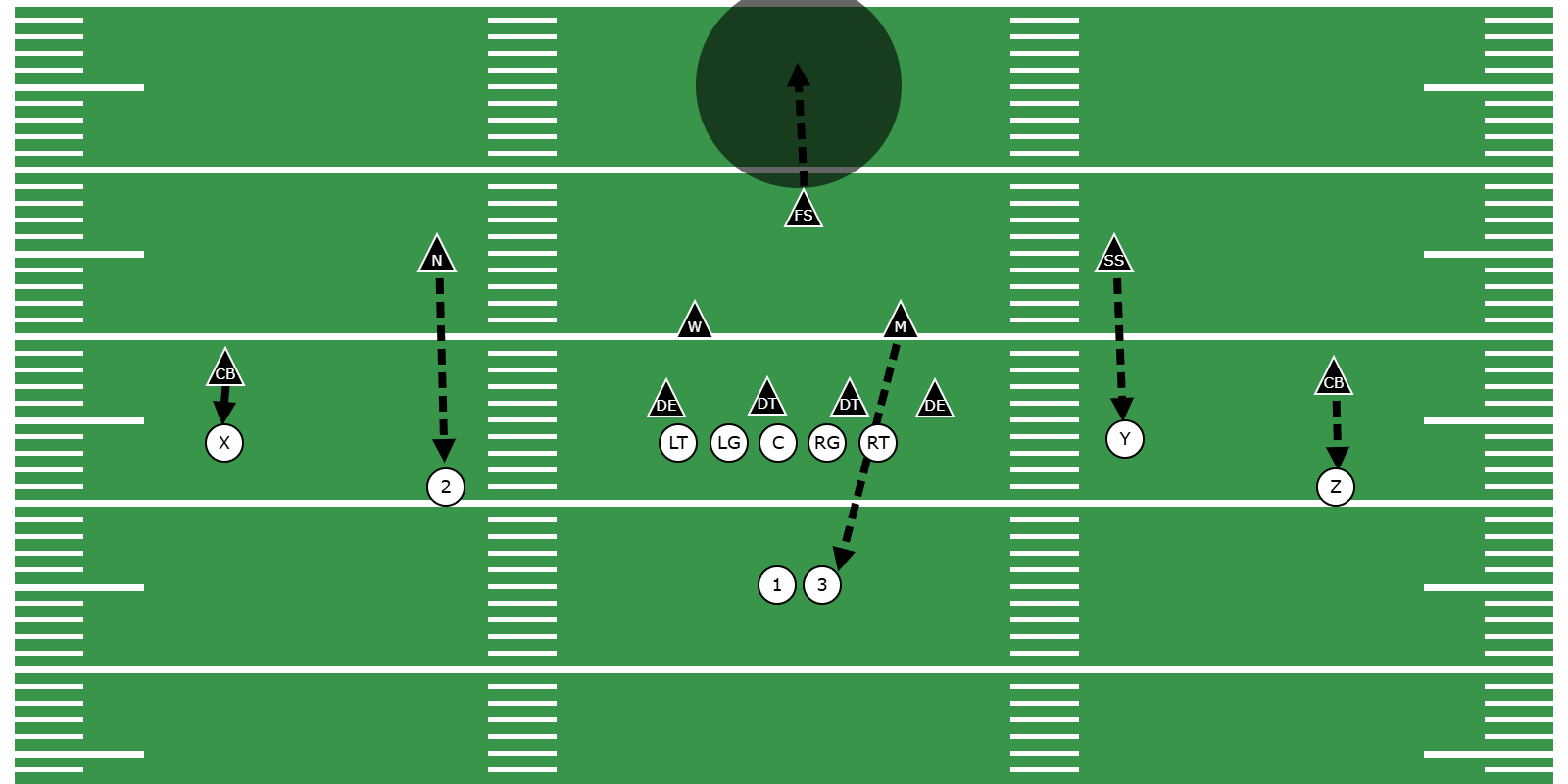
Start with the basic Cover 1 structure:
- One safety protects the deep middle.
- Defenders match eligible receivers man-to-man.
- Remaining defenders rush or perform another assigned responsibility.
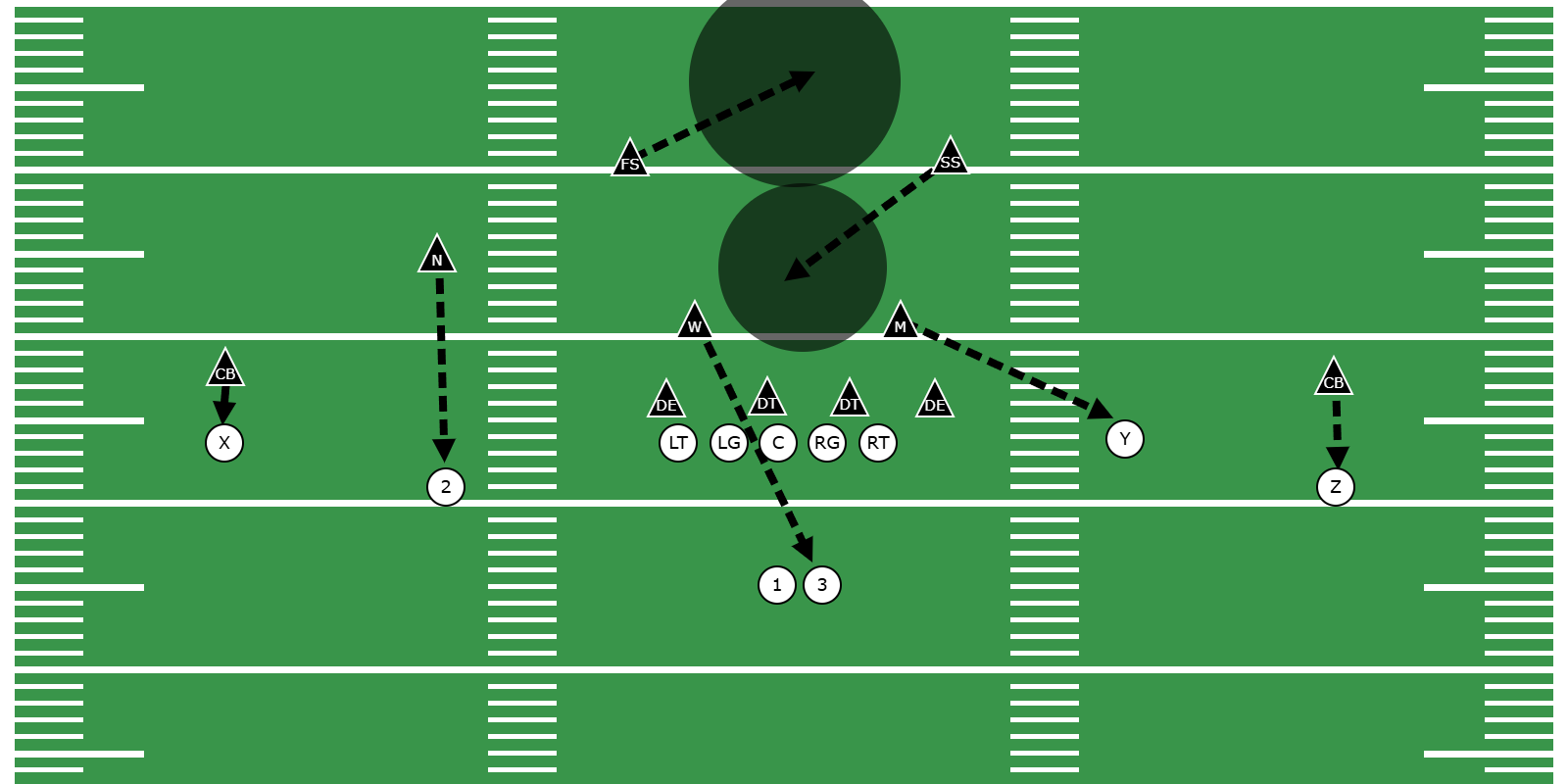
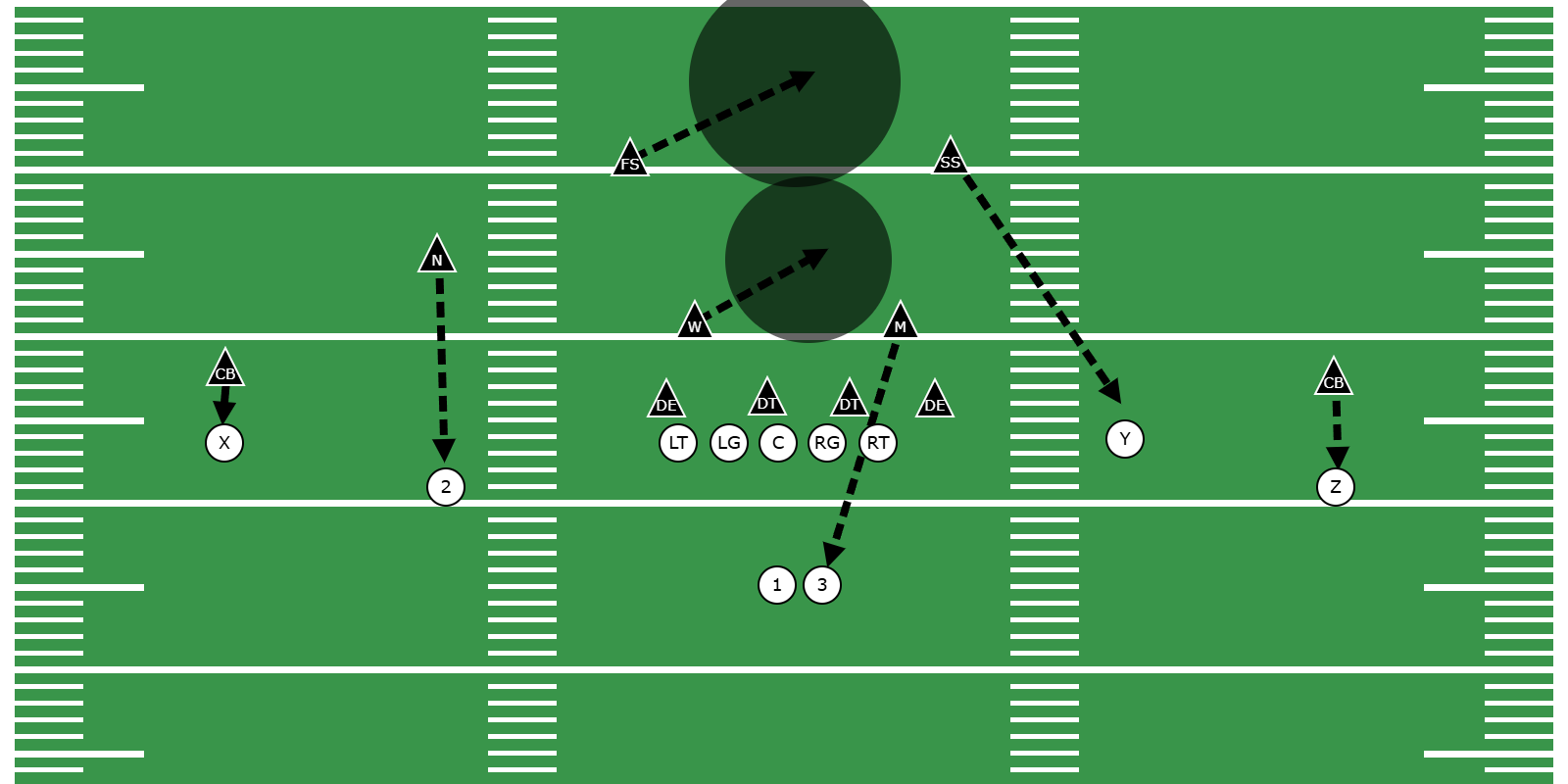
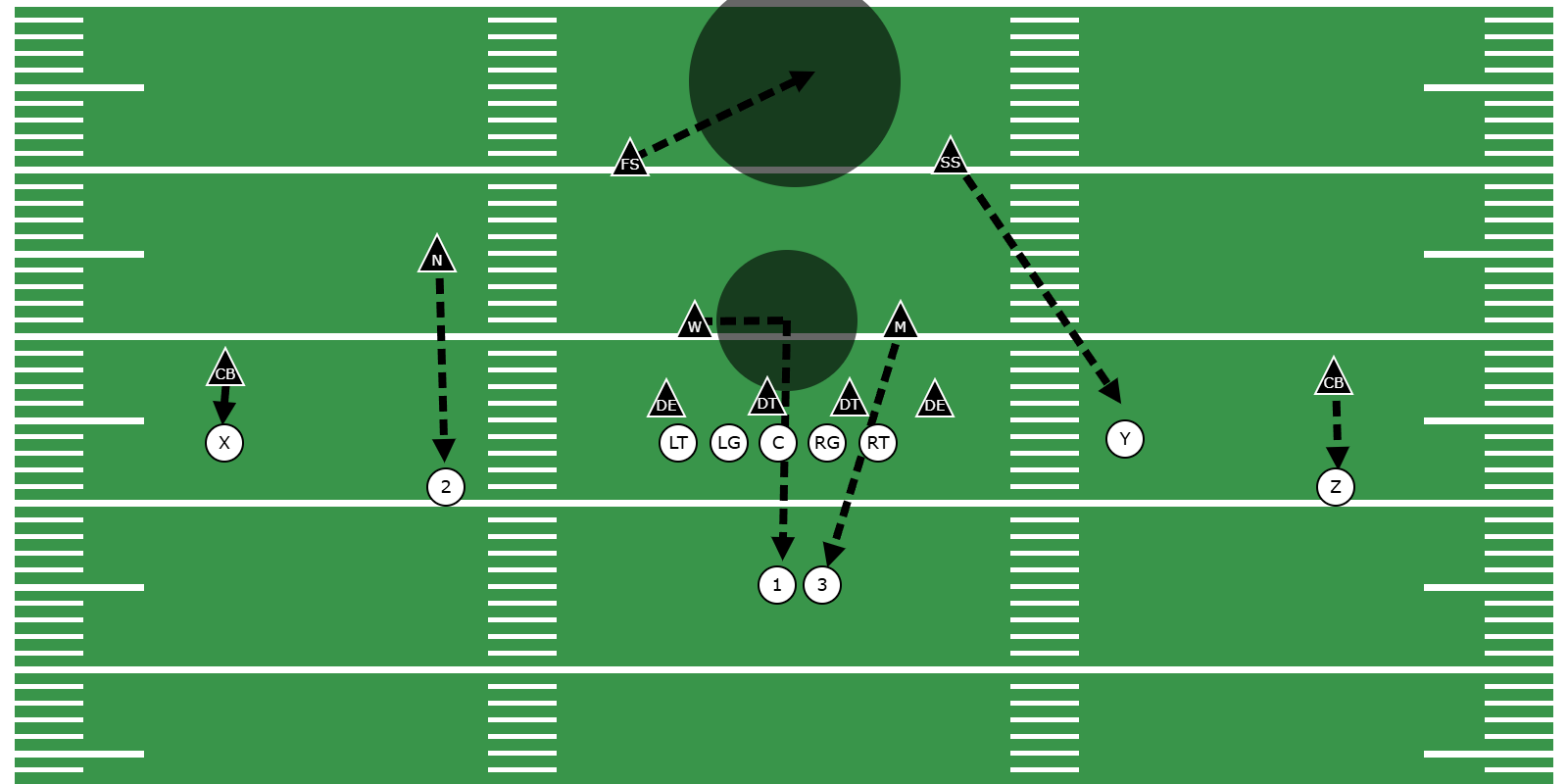
Cover 1 Rat assigns one of those remaining defenders as the rat.
The rat generally works underneath in the middle of the defense and looks for threats entering that area.
Depending on the defensive system, those threats can include:
- Shallow crossing routes.
- Slants.
- Dig routes.
- Tight end routes.
- Running backs releasing inside.
- Receivers separating from man defenders across the middle.
- A quarterback escaping the pocket.
The rat does not replace the man defenders. He provides help to them.
Basic Cover 1 Rat Structure
A typical Cover 1 Rat call includes:
- One deep post safety.
- Man coverage on eligible receivers.
- One underneath rat defender.
- A pass rush from the remaining defenders.
- Defined leverage and motion rules.
This creates two levels of help through the middle.
The rat works underneath.
The post safety works deep.
The man defenders play between and around those help defenders while maintaining responsibility for their individual matchups.
The Post Safety’s Responsibility
The post safety remains responsible for protecting the deep middle.
His primary rule is straightforward:
Stay deeper than the deepest threat.
The rat’s presence underneath should allow the safety to remain patient rather than becoming attracted to every route crossing in front of him.
The post safety should:
- Maintain deep-middle position.
- Read vertical route distribution.
- Help on deep throws when possible.
- Avoid chasing shallow routes.
- Stay alert for play-action.
- Break downhill only when the football declares and deep threats are controlled.
If the post safety becomes another underneath defender, Cover 1 Rat loses its deep protection.
The Rat Defender’s Responsibility
The rat is an underneath helper.
Rather than locking onto one receiver, he reads the developing play and protects the interior of the coverage.
A defense may coach the rat to:
- Settle in the short middle.
- Look for crossing routes.
- Collision or disrupt routes entering his area when legal.
- Close passing windows on inside-breaking routes.
- Rally to checkdowns.
- Read the quarterback.
- React to quarterback scrambles.
- Join the run fit after confirming run.
The rat must understand that helping does not mean chasing.
If he follows one shallow receiver all the way toward the sideline, he may leave the middle open for another route behind him.
His value comes from forcing the quarterback to account for an extra defender in the middle.
Who Can Play the Rat?
The rat responsibility can be assigned to different defensive positions.
Linebacker
A linebacker is often a natural choice because he already operates in the middle of the defense and can contribute immediately against the run.
Safety
A safety can rotate down and play the rat, giving the defense a more athletic underneath defender against passing offenses.
Nickel Defender
A nickel defender may become the rat in certain personnel packages if the defense can redistribute his normal coverage responsibility.
Personnel should influence the decision.
A good rat defender needs awareness, patience, tackling ability, and enough movement skill to affect routes crossing through his area.
Man-Coverage Responsibilities
Every eligible receiver still needs to be accounted for.
The man defenders remain responsible for their assignments and cannot simply release a receiver when he enters the rat’s area.
They should:
- Identify their man before the snap.
- Maintain the called leverage.
- Stay attached through the route.
- Navigate traffic created by crossers.
- Handle motion according to the defensive rules.
- Account for delayed releases.
- Finish completions with sound tackling.
The rat helps close windows and reduce separation. He normally does not take over the man assignment.
Leverage in Cover 1 Rat
The location of the rat and post safety gives man defenders useful inside help.
The defense can use that help when establishing leverage rules, but those rules need to remain consistent.
Every man defender should know:
- Who is my assignment?
- Where is my underneath help?
- Where is my deep help?
- Which leverage am I playing?
- What happens if my receiver motions?
When those answers are clear, the defense can play aggressively without relying on improvisation.
Why Defenses Use Cover 1 Rat
Cover 1 Rat gives a man-coverage defense an extra defender in one of the most commonly attacked areas of the field.
Help Against Crossers
Crossing routes are a traditional answer to man coverage. The rat gives the defense an underneath player who can disrupt those routes and close throwing lanes.
Eyes on the Quarterback
Most man defenders are occupied with their receivers. The rat can maintain vision toward the quarterback and react when the play changes.
Scramble Control
If the quarterback escapes while coverage defenders are running with receivers, the rat can become an important player in limiting the scramble.
Interior Passing Help
The rat can discourage slants, digs, and other inside-breaking routes.
Run Support
After confirming run, the rat can become another defender in the fit.
Strengths of Cover 1 Rat
Cover 1 Rat can provide several advantages:
- Man coverage on eligible receivers.
- Deep-middle protection from the post safety.
- Underneath help against crossing routes.
- An extra defender with vision toward the quarterback.
- Help against quarterback scrambles.
- Support against short inside throws.
- An additional run defender after run is confirmed.
- A natural adjustment from basic Cover 1.
The concept can be especially valuable when an opponent repeatedly attacks man coverage with shallow routes and quarterback movement.
Weaknesses of Cover 1 Rat
The coverage also has limitations.
Fewer Available Rushers
A defender assigned as the rat is generally not part of the initial pass rush.
Outside Routes
The rat has little ability to help against routes breaking toward the sideline.
Individual Matchups Still Matter
Outside receivers and other routes away from the rat can remain isolated in man coverage.
Vertical Routes
The rat is underneath and cannot replace the post safety against deep threats.
Play-Action
If the rat attacks run action too quickly, the offense can create a passing window behind him.
Eye Manipulation
A quarterback can attempt to move the rat with his eyes before throwing elsewhere.
Too Much Freedom
If the rat is told only to “find the ball,” he may wander out of position and provide no meaningful help at all.
Try The Interactive Playbook Tool: Cover 1 Rat
Draw your own Cover 1 Rat concept based play diagram right here using our embedded interactive play designer demo:
GET STARTED: To get started simply click on any of the player icons in the diagram.
Start drawing your own plays like this and build your playbook with CoachYouths Playbook Designer.
Cover 1 Rat Against Common Offensive Concepts
Mesh
Mesh is one of the most natural applications for a rat defender.
The crossing routes create traffic for man defenders, but the rat can occupy the middle, disrupt clean throwing windows, and rally to whichever crosser receives the football.
The rat should not blindly chase the first shallow route he sees.
Shallow Cross
A shallow crosser enters the rat’s working area.
Depending on the defensive rules, the rat may collision the route, settle underneath it, or rally immediately to the catch.
Slants
The rat can close the interior window and make the quarterback reconsider an otherwise favorable slant.
Dig Routes
A properly positioned rat can sit underneath a dig and force the quarterback to throw over him, around him, or move to another progression.
Running Back Checkdowns
A running back releasing underneath can become dangerous when man defenders are carried away by deeper routes. The rat can rally quickly to the checkdown and limit yards after the catch.
Four Verticals
The rat becomes less influential as receivers push vertically out of his area. The man defenders and post safety must handle the deep threats.
Cover 1 Rat Against a Mobile Quarterback
Mobile quarterbacks can create a serious problem for man coverage.
When receivers release downfield, their defenders often turn their backs to the quarterback. If the pass rush loses contain, the quarterback may escape before those defenders realize he is running.
The rat provides a defender who can keep more vision on the backfield.
A simple rule can be:
- Maintain the underneath responsibility while the quarterback remains a passer.
- Close space when the quarterback clearly becomes a runner.
The rat should not abandon coverage every time the quarterback moves inside the pocket.
Coaches need to define the point at which the quarterback becomes the rat’s responsibility.
Cover 1 Rat Against Play Action
Play-action attempts to manipulate linebackers and underneath defenders.
The rat must avoid becoming an easy target for that manipulation.
If he attacks downhill immediately, the offense can throw into the space behind him.
Teach the rat to:
- Read the assigned key.
- Maintain controlled depth.
- Confirm run.
- Locate inside routes.
- Trigger downhill when the play declares.
Patience is particularly important on early downs when run and play-action may initially look identical.
Cover 1 Rat Against Motion
Motion can alter man assignments and reveal the coverage.
The defense should establish whether it will:
- Travel with the motioning receiver.
- Bump assignments.
- Exchange responsibilities.
- Check into another coverage.
The rat should also know whether motion changes his landmark or responsibility.
For youth teams, avoid giving the rat a complicated set of formation-specific adjustments unless players have enough practice time to execute them reliably.
Cover 1 Rat Against Bunch and Stack Formations
Bunch and stack formations create traffic specifically designed to attack man coverage.
The rat can help inside, but he does not eliminate the need for release rules.
The defense may use:
- Locked man assignments.
- Banjo calls.
- Switch techniques.
- Staggered alignments.
- A coverage check.
The rat should understand where he fits within those rules rather than attempting to solve every crossing route by himself.
Cover 1 Rat and the Run Game
The rat can become an effective run defender once the play declares.
Depending on the front and run-fit structure, he may:
- Fit an open interior gap.
- Track the quarterback.
- Pursue the running back.
- Close a cutback lane.
- Replace another defender.
- Clean up runs at the second level.
The run fit must be defined.
“Go make the tackle” is not a sufficient rule because it can pull the rat out of position and create another open gap.
Cover 1 Rat and Pressure
Cover 1 Rat can still be paired with pressure, but the defense must account for the numbers.
If five defenders cover eligible receivers, one defender plays the post, and one defender plays the rat, only the remaining defenders are available for the initial rush.
The defense can still create pressure through:
- Front movement.
- Four-man rushes.
- Selected five-man pressures when the offensive structure permits.
- Simulated pressure.
- Pre-snap bluff pressure.
- Designed exchanges between rushers and underneath defenders.
The coverage and rush should be coordinated rather than installed as unrelated pieces.
Coaching Cover 1 Rat in Youth Football
Cover 1 Rat is best installed after players can execute standard Cover 1.
A practical progression is:
- Review all Cover 1 man assignments.
- Review the post safety’s deep responsibility.
- Identify the rat defender.
- Establish the rat’s starting landmark.
- Teach the rat to recognize crossers.
- Add slants and digs.
- Add running back checkdowns.
- Add quarterback scramble situations.
- Add play-action.
- Add motion.
- Practice bunch and stack adjustments.
- Run the complete coverage against team offense.
This keeps the installation manageable.
Most players continue executing familiar Cover 1 assignments while the rat learns the additional underneath responsibility.
A Simple Rat Drill
Use:
- One quarterback.
- Two or three receivers.
- Man defenders.
- One rat defender.
Rotate through:
- Slant.
- Shallow cross.
- Dig.
- Checkdown.
- Vertical route.
- Quarterback scramble.
The rat begins at his normal landmark and reads the developing play.
Grade:
- Alignment.
- Patience.
- Depth.
- Eyes.
- Route recognition.
- Break angle.
- Tackling position.
The goal is not to chase interceptions.
A successful rat defender may force the quarterback to hold the football or move to a less favorable throw.
Common Youth Football Mistakes
Chasing the First Crosser
The rat follows one shallow receiver across the entire field and opens the middle behind him.
Becoming a Spy Too Early
The rat stares exclusively at the quarterback and stops helping against routes.
Biting on Play Action
He attacks downhill before confirming run and leaves the interior passing window open.
Standing Still
Being a helper does not mean becoming passive. The rat must react once the route or throw declares.
Man Defenders Release Their Assignments
A defender assumes the rat will take an inside-breaking route and stops covering his man.
Post Safety Gets Too Aggressive
The safety attacks underneath while the rat is already present, leaving the defense without deep protection.
Undefined Run Fit
The rat sees run and simply chases the football, creating gaps elsewhere in the defense.
When to Call Cover 1 Rat
Cover 1 Rat can be useful when:
- The offense relies heavily on crossing routes.
- Mesh is a frequent passing concept.
- The quarterback is dangerous as a runner.
- The offense throws frequently to the short middle.
- The defense wants man coverage with an underneath helper.
- The defense already plays Cover 1 successfully.
- Running backs and tight ends are frequent checkdown targets.
- The defense wants an extra set of eyes inside.
It may be less useful when the offense consistently wins isolated outside matchups or attacks areas where the rat cannot realistically provide help.
Cover 1 Rat vs. Cover 1
Cover 1 uses man coverage with one deep middle safety.
Cover 1 Rat keeps those responsibilities and adds an underneath helper.
The rat strengthens the interior coverage and gives the defense a player who can react to crossing routes and quarterback scrambles, but using him may reduce the number of available rushers.
Cover 1 Rat vs. Cover 1 Hole
The terms are not universal.
Some defenses use rat and hole to describe nearly the same underneath responsibility.
Other systems distinguish them.
One practical distinction is:
Hole defender: Primarily responsible for occupying and protecting a defined underneath-middle area.
Rat defender: An underneath helper who may be coached more specifically to find crossing routes, react to the quarterback, and assist man defenders from inside.
That distinction is useful for teaching, but it should not be treated as a universal football rule.
A coach building a defensive system should explicitly define both terms if both appear in the playbook.
Cover 1 Rat vs. Cover 1 Robber
Rat and robber terminology also varies.
A useful teaching distinction is:
Rat: Works as an underneath middle helper, often emphasizing crossers, checkdowns, and quarterback movement.
Robber: May be coached more aggressively to read and cut specific inside-breaking routes based on the quarterback and route distribution.
Again, different defensive systems use these terms differently.
The assignment matters more than the label.
Key Coaching Points
- Build Cover 1 Rat from a dependable Cover 1 foundation.
- Keep the post safety deeper than the deepest threat.
- Give the rat a clear starting landmark.
- Define exactly what the rat is reading.
- Teach the rat to help without chasing.
- Practice crossing routes extensively.
- Establish a clear quarterback scramble rule.
- Maintain disciplined man assignments around the rat.
- Do not allow play-action to pull the rat out of position.
- Define the rat’s run-fit responsibility.
- Practice motion and bunch adjustments.
- Make terminology explicit within the defensive playbook.
Final Thoughts
Cover 1 Rat gives a man-coverage defense an underneath helper in the area where many offenses try to create separation.
The post safety protects the deep middle, the man defenders remain responsible for eligible receivers, and the rat works underneath to interfere with crossing routes, close interior passing windows, rally to checkdowns, and react to a scrambling quarterback.
Its effectiveness depends less on complexity than discipline. The rat must understand where he belongs, what he is looking for, and when he is allowed to leave his initial responsibility.
For youth coaches, Cover 1 Rat works best as a deliberate extension of Cover 1. Teach the base man coverage first, keep the post safety disciplined, then add one clear underneath helper with simple rules. When the rat controls the middle instead of chasing the football, the coverage can make several of the offense’s favorite man-beating answers much more difficult.
Related Articles
Published by CoachYouths Staff on 08/25/2026
You are NOT currently logged in, you may login or signup for FREE at any time: